
退变性腰椎管狭窄症患者椎旁肌脂肪浸润、矢状位脊柱骨盆排列与狭窄程度之间的关联
Association between fatty infiltration of paraspinal muscle, sagittal spinopelvic alignment and stenosis grade in patients with degenerative lumbar spinal stenosis.
作者信息
Zhang Yuancheng, Mandelli Filippo, Mündermann Annegret, Nüesch Corina, Kovacs Balázs, Schären Stefan, Netzer Cordula
机构信息
Department of Spine Surgery, University Hospital Basel, Basel, Switzerland.
Department of Biomedical Engineering, University of Basel, Basel, Switzerland.
出版信息
N Am Spine Soc J. 2021 Feb 23;5:100054. doi: 10.1016/j.xnsj.2021.100054. eCollection 2021 Mar.
INTRODUCTION
Sagittal balance and fatty infiltration of paraspinal muscle are important factors in patients with lumbar spinal stenosis (LSS) that may affect patients' quality of life. Sagittal spinopelvic parameters and fatty infiltration may be associated with the severity of LSS. The purpose of this study was to test the hypothesis that severity of fatty infiltration correlates with severity of LSS and with sagittal pelvic alignment independent of age.
METHODS
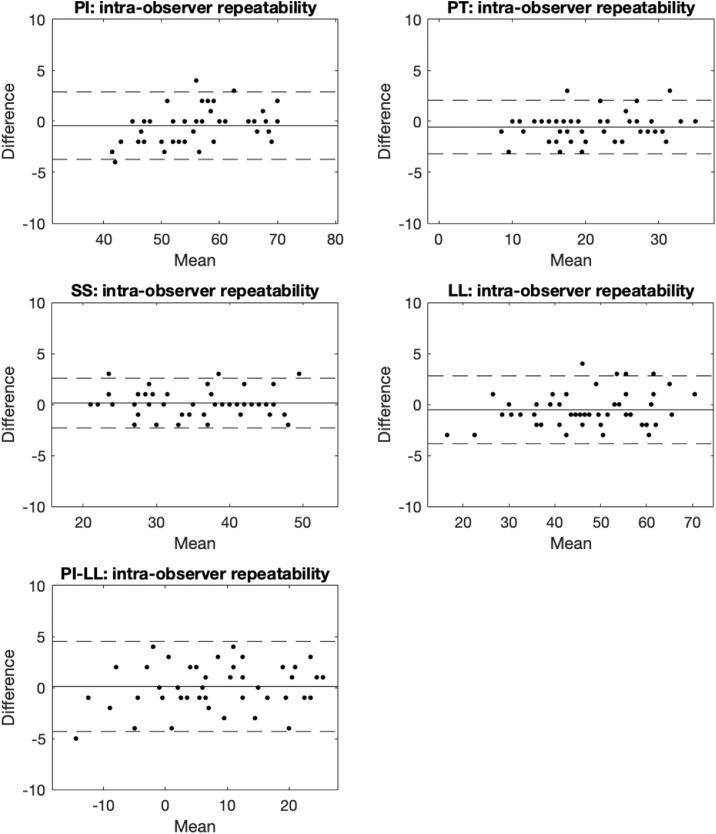
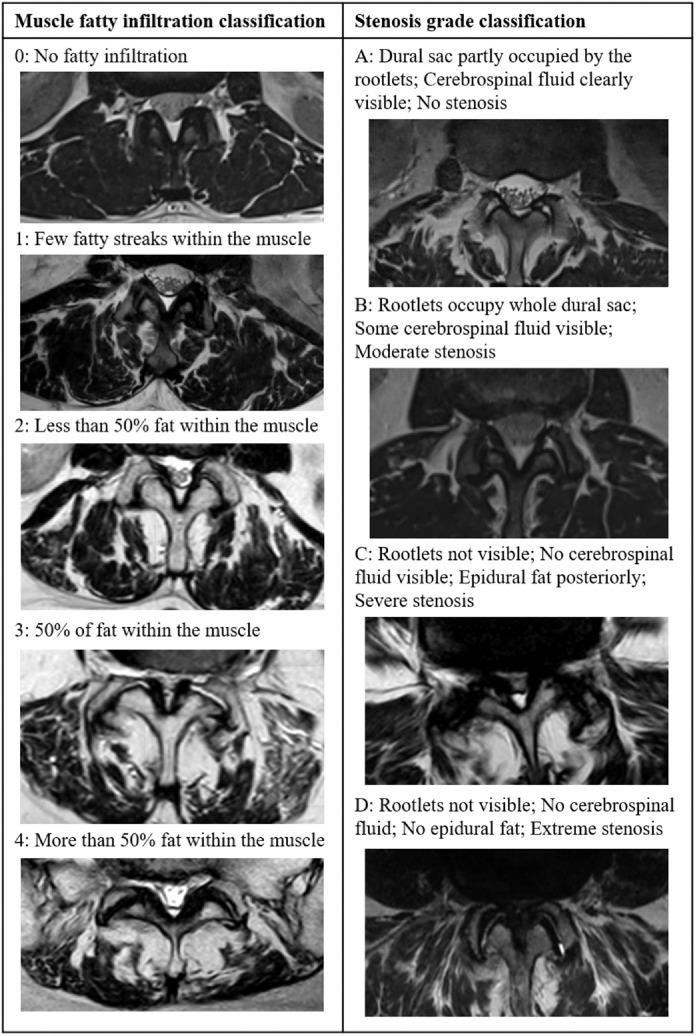
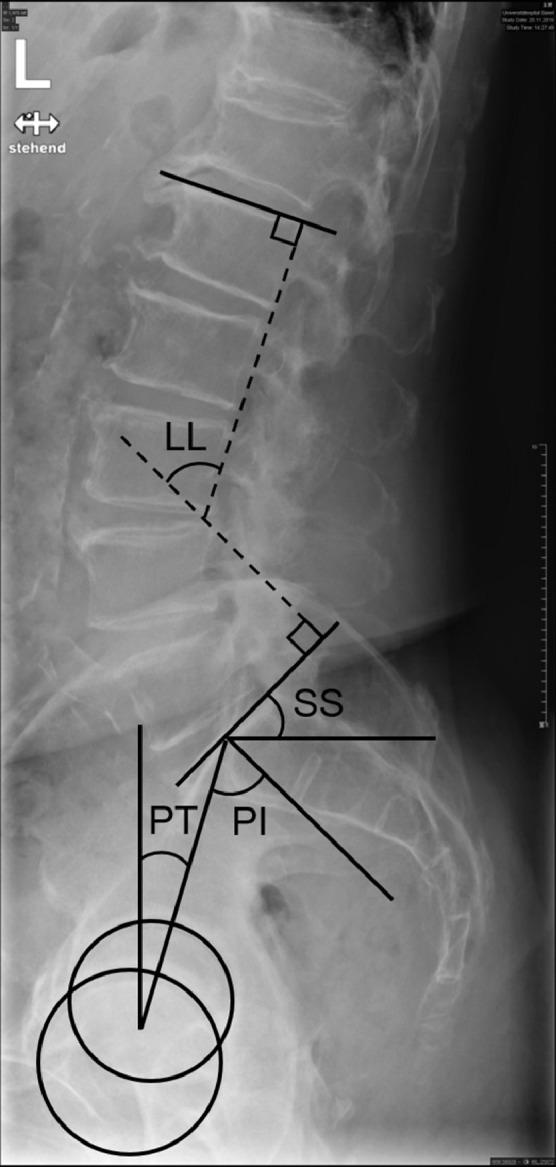
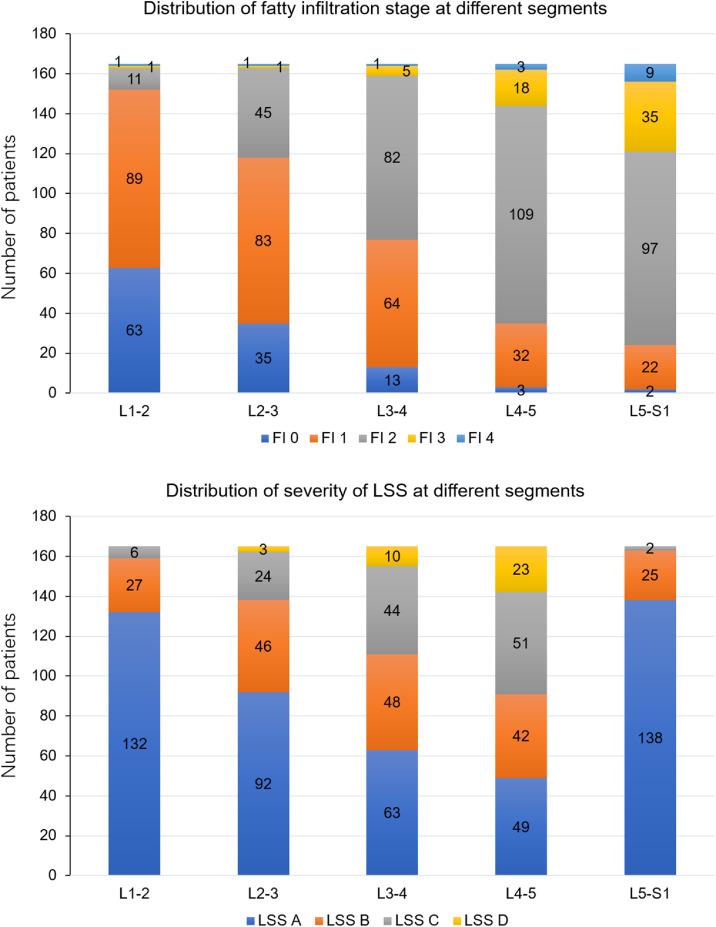
Age and body mass index (BMI) were extracted. Fatty infiltration was rated according to Goutallier classification and the severity of LSS was graded according to Schizas at five intervertebral disc levels. Overall fatty infiltration was computed as average fatty infiltration (aFI) and severity of LSS was defined as the highest severity of LSS of all segments. The sagittal spinopelvic parameters pelvic incidence (PI), pelvic tilt (PT), sacral slope (SS), lumbar lordosis (LL) and PI-LL were measured. Associations among parameters were assessed using Spearman correlation coefficients adjusted for age (α = 0.05).
RESULTS
165 LSS patients with a median age of 69 years were included. All parameters correlated with age (R>0.162, P<0.05) except BMI and LL (R<0.007, P>0.05). aFI correlated with PI, PT and PI-LL before (R>0.371, P<0.05) and after (R>0.180, P<0.05) adjusting for age. Severity of LSS correlated with PI, PT and PI-LL before (R>0.187, P<0.05) but not after (R<0.130, P>0.05) adjusting for age. aFI correlated with severity of LSS before (R=0.349, P<0.05) but not (R=0.114, P>0.05) after adjusting for age.
CONCLUSIONS
The correlation of aFI with sagittal spinopelvic parameters indicates that there might be a relationship between muscle characteristics and the sagittal alignment. Sagittal spinopelvic parameters and fatty infiltration of paraspinal muscles are not associated with radiological severity of LSS. Whether they are associated with clinical manifestation of LSS remains to be investigated.
引言
矢状面平衡和椎旁肌脂肪浸润是腰椎管狭窄症(LSS)患者的重要因素,可能影响患者的生活质量。矢状面脊柱-骨盆参数和脂肪浸润可能与LSS的严重程度相关。本研究的目的是验证以下假设:脂肪浸润的严重程度与LSS的严重程度以及矢状面骨盆排列相关,且不受年龄影响。
方法
提取年龄和体重指数(BMI)。根据Goutallier分类对脂肪浸润进行评分,并根据Schizas方法在五个椎间盘水平对LSS的严重程度进行分级。总体脂肪浸润计算为平均脂肪浸润(aFI),LSS的严重程度定义为所有节段中LSS的最高严重程度。测量矢状面脊柱-骨盆参数骨盆入射角(PI)、骨盆倾斜角(PT)、骶骨倾斜角(SS)、腰椎前凸角(LL)和PI-LL。使用经年龄调整的Spearman相关系数评估参数之间的关联(α = 0.05)。
结果
纳入165例LSS患者,中位年龄为69岁。除BMI和LL外,所有参数均与年龄相关(R>0.162,P<0.05)(R<0.007,P>0.05)。在调整年龄之前(R>0.371,P<0.05)和之后(R>0.180,P<0.05),aFI与PI、PT和PI-LL相关。在调整年龄之前(R>0.187,P<0.05),LSS的严重程度与PI、PT和PI-LL相关,但调整年龄之后则不相关(R<0.130,P>0.05)。在调整年龄之前,aFI与LSS的严重程度相关(R = 0.349,P<0.05),但调整年龄之后则不相关(R = 0.114,P>0.05)。
结论
aFI与矢状面脊柱-骨盆参数的相关性表明,肌肉特征与矢状面排列之间可能存在关系。矢状面脊柱-骨盆参数和椎旁肌脂肪浸润与LSS的放射学严重程度无关。它们是否与LSS的临床表现相关仍有待研究。
 Zotero 插件