
术前低骨密度对消化系统癌症患者预后的价值:系统评价和荟萃分析。
Prognostic value of preoperative low bone mineral density in patients with digestive cancers: a systematic review and meta-analysis.
机构信息
Department of Surgery, Division of Gastroenterological, General and Transplant Surgery, Jichi Medical University, Shimotsuke-City, Tochigi, 329-0498, Japan.
Division of Community and Family Medicine, Jichi Medical University, Shimotsuke-City, Tochigi, Japan.
出版信息
Arch Osteoporos. 2022 Feb 11;17(1):33. doi: 10.1007/s11657-022-01060-6.
PURPOSE
Osteopenia typically presents low bone mineral density (BMD) and has recently been reported as a prognostic factor in various cancers. However, the prognostic value of osteopenia in digestive tract cancers remains to be defined. We aimed to review the prognostic value of preoperative osteopenia in patients with digestive cancers.
METHODS
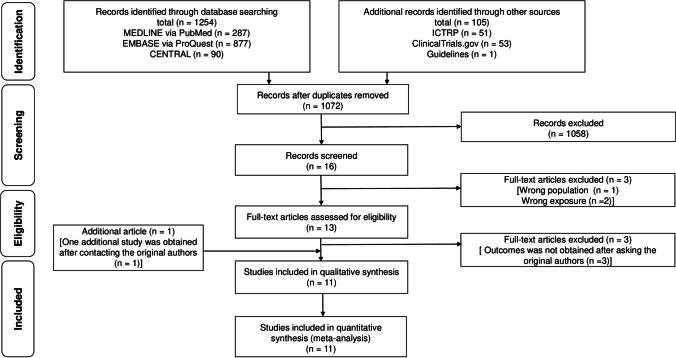
Cohort studies evaluating the prognostic value of preoperative osteopenia in digestive cancers (colorectal, esophageal, hepatic, bile duct, and pancreatic cancer) were searched using electronic databases and trial registries. The exposure was defined as low BMD estimated by computed tomography at 11 thoracic vertebra, while comparator was normal BMD. The primary outcomes were overall survival and recurrence-free survival for osteopenia. Random effect meta-analyses were performed. The Grading of Recommendations, Assessment, Development, and Evaluation approach was used to assess the certainty of evidence.
RESULTS
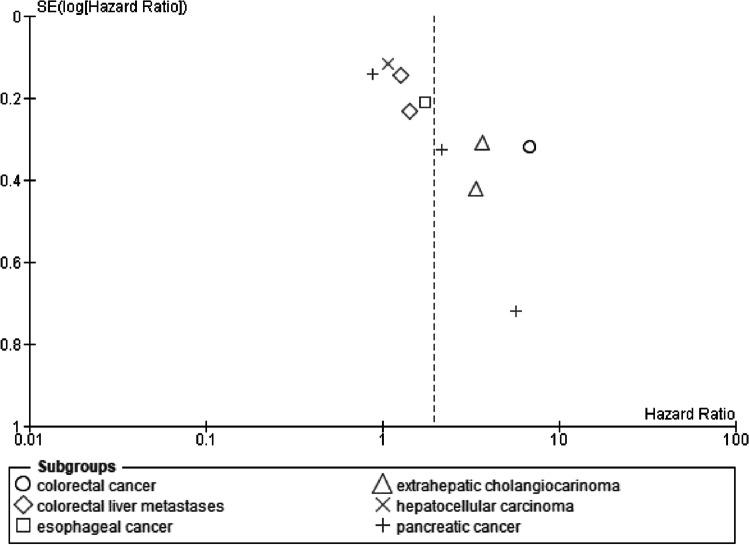
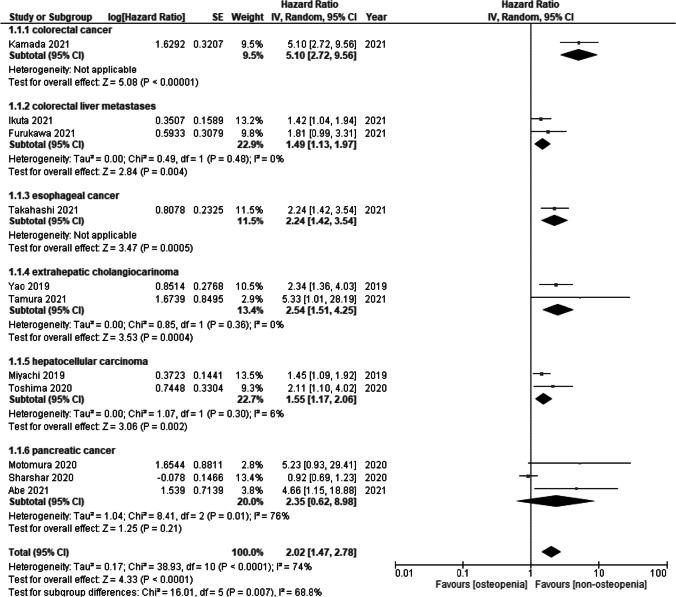
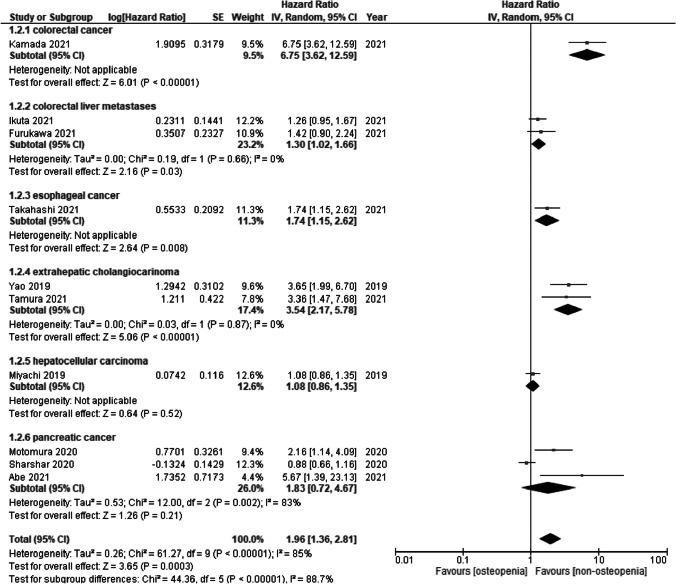
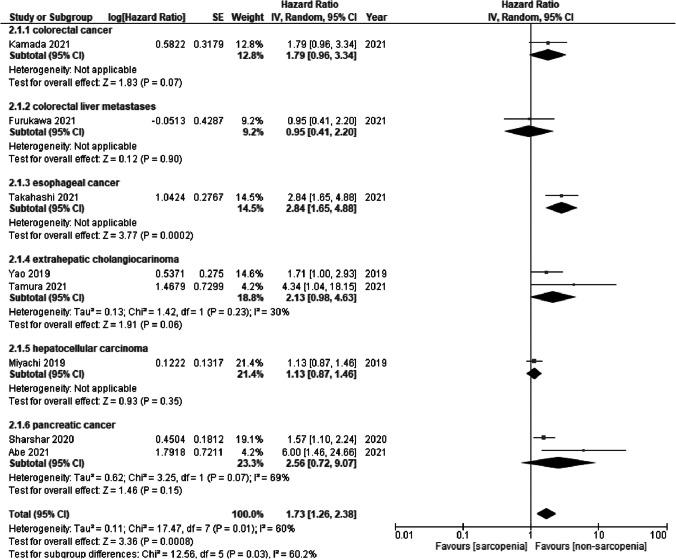
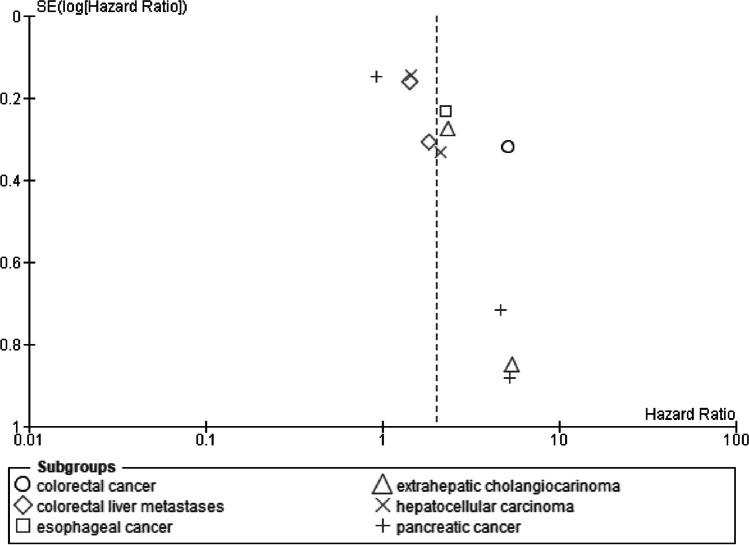
A total of 11 studies (2230 patients) were included. Osteopenia was an independent risk factor for overall survival (hazard ratio [HR] = 2.02, 95% CI = 1.47 to 2.78; I = 74%), along with sarcopenia. Osteopenia also predicted poor recurrence-free survival (HR = 1.96, 95% CI = 1.36 to 2.81; I = 85%). In subgroup analyses, osteopenia predicted prognosis in colorectal, esophageal, hepatic, and bile duct cancers, but not in pancreatic cancer. The certainty of the evidence was low due to inconsistency and publication bias.
CONCLUSION
Osteopenia may be independently associated with poor prognosis in patients with digestive tract cancer. Further studies are needed to establish the relevance of osteopenia in the operative prognosis of these patients.
目的
骨质疏松症通常表现为低骨密度(BMD),最近有报道称其是多种癌症的预后因素。然而,骨质疏松症在消化道癌症中的预后价值仍有待确定。我们旨在回顾术前骨质疏松症在消化道癌症(结直肠癌、食管癌、肝癌、胆管癌和胰腺癌)患者中的预后价值。
方法
使用电子数据库和试验登记处搜索评估术前骨质疏松症在消化道癌症(结直肠癌、食管癌、肝癌、胆管癌和胰腺癌)中的预后价值的队列研究。暴露定义为通过计算机断层扫描在 11 个胸椎处估计的低 BMD,而对照组为正常 BMD。主要结局是骨质疏松症的总生存率和无复发生存率。进行随机效应荟萃分析。使用推荐评估、制定与评价分级方法评估证据的确定性。
结果
共纳入 11 项研究(2230 名患者)。骨质疏松症是总生存率的独立危险因素(风险比[HR] = 2.02,95%置信区间[CI] = 1.47 至 2.78;I = 74%),同时也与肌肉减少症相关。骨质疏松症也预测了无复发生存率不良(HR = 1.96,95% CI = 1.36 至 2.81;I = 85%)。在亚组分析中,骨质疏松症预测了结直肠癌、食管癌、肝癌和胆管癌的预后,但对胰腺癌则不然。由于不一致性和发表偏倚,证据的确定性较低。
结论
骨质疏松症可能与消化道癌症患者的不良预后独立相关。需要进一步的研究来确定骨质疏松症在这些患者手术预后中的相关性。
 Zotero 插件