
多药耐药性(MDR):药理学治疗中的普遍现象。
Multidrug Resistance (MDR): A Widespread Phenomenon in Pharmacological Therapies.
机构信息
Department of Pharmacy-Drug Sciences, University of Bari "Aldo Moro", 70126 Bari, Italy.
Department of Pharmacy, Health and Nutritional Sciences, University of Calabria, 87036 Arcavacata di Rende, Italy.
出版信息
Molecules. 2022 Jan 18;27(3):616. doi: 10.3390/molecules27030616.
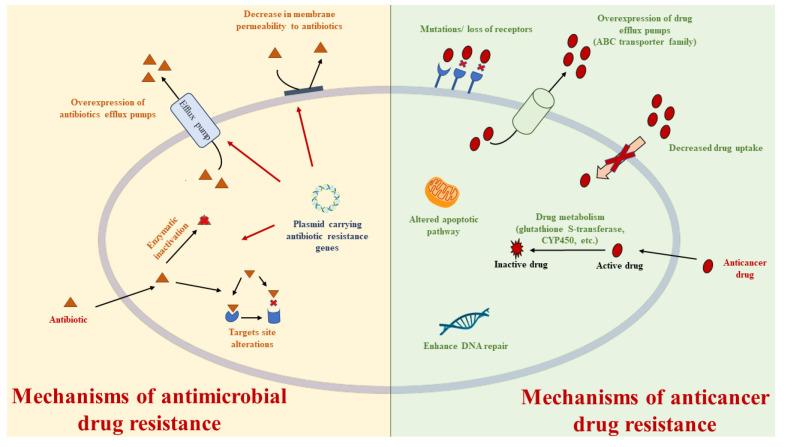
Multidrug resistance is a leading concern in public health. It describes a complex phenotype whose predominant feature is resistance to a wide range of structurally unrelated cytotoxic compounds, many of which are anticancer agents. Multidrug resistance may be also related to antimicrobial drugs, and is known to be one of the most serious global public health threats of this century. Indeed, this phenomenon has increased both mortality and morbidity as a consequence of treatment failures and its incidence in healthcare costs. The large amounts of antibiotics used in human therapies, as well as for farm animals and even for fishes in aquaculture, resulted in the selection of pathogenic bacteria resistant to multiple drugs. It is not negligible that the ongoing COVID-19 pandemic may further contribute to antimicrobial resistance. In this paper, multidrug resistance and antimicrobial resistance are underlined, focusing on the therapeutic options to overcome these obstacles in drug treatments. Lastly, some recent studies on nanodrug delivery systems have been reviewed since they may represent a significant approach for overcoming resistance.
多药耐药性是公共卫生领域的主要关注点。它描述了一种复杂的表型,其主要特征是对广泛的结构上无关的细胞毒性化合物具有耐药性,其中许多是抗癌剂。多药耐药性也可能与抗菌药物有关,并且已知是本世纪最严重的全球公共卫生威胁之一。事实上,这种现象导致治疗失败和医疗保健成本增加,导致死亡率和发病率上升。人类治疗、农场动物甚至水产养殖中的鱼类中大量使用抗生素,导致对多种药物具有耐药性的病原菌的选择。不可忽视的是,正在发生的 COVID-19 大流行可能会进一步导致抗菌药物耐药性。本文强调了多药耐药性和抗菌药物耐药性,重点介绍了克服药物治疗中这些障碍的治疗选择。最后,综述了一些关于纳米药物传递系统的最新研究,因为它们可能是克服耐药性的一种重要方法。
 Zotero 插件