
金属配合物——靶向生物膜相关感染的一种有前途的方法。
Metal Complexes-A Promising Approach to Target Biofilm Associated Infections.
机构信息
Department of Inorganic Chemistry, Faculty of Chemistry, University of Bucharest, 90-92 Panduri Str., District 5, 050663 Bucharest, Romania.
Department of Microbiology, Faculty of Biology, University of Bucharest, 1-3 Aleea Portocalelor Str., District 5, 060101 Bucharest, Romania.
出版信息
Molecules. 2022 Jan 24;27(3):758. doi: 10.3390/molecules27030758.
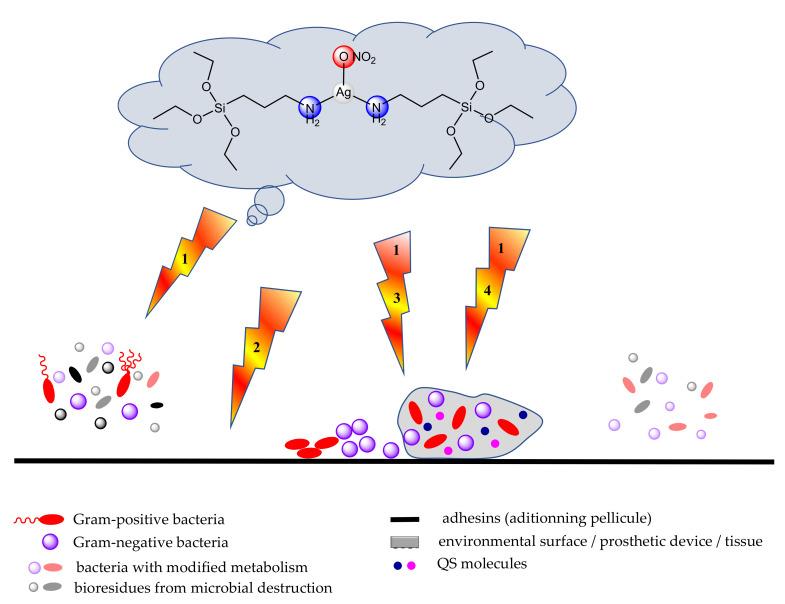
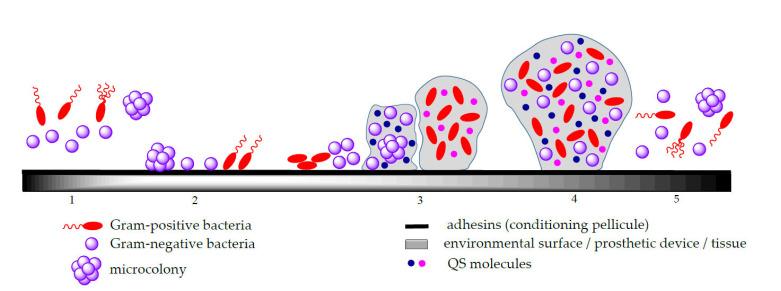
Microbial biofilms are represented by sessile microbial communities with modified gene expression and phenotype, adhered to a surface and embedded in a matrix of self-produced extracellular polymeric substances (EPS). Microbial biofilms can develop on both prosthetic devices and tissues, generating chronic and persistent infections that cannot be eradicated with classical organic-based antimicrobials, because of their increased tolerance to antimicrobials and the host immune system. Several complexes based mostly on 3D ions have shown promising potential for fighting biofilm-associated infections, due to their large spectrum antimicrobial and anti-biofilm activity. The literature usually reports species containing Mn(II), Ni(II), Co(II), Cu(II) or Zn(II) and a large variety of multidentate ligands with chelating properties such as antibiotics, Schiff bases, biguanides, N-based macrocyclic and fused rings derivatives. This review presents the progress in the development of such species and their anti-biofilm activity, as well as the contribution of biomaterials science to incorporate these complexes in composite platforms for reducing the negative impact of medical biofilms.
微生物生物膜由具有修饰的基因表达和表型的静止微生物群落组成,附着在表面上,并嵌入由自身产生的细胞外聚合物物质 (EPS) 基质中。微生物生物膜可以在假体装置和组织上形成,产生慢性和持续性感染,无法用经典的基于有机的抗菌药物消除,因为它们对抗菌药物和宿主免疫系统的耐受性增加。由于其广谱的抗菌和抗生物膜活性,基于 3D 离子的几种配合物已显示出对抗生物膜相关感染的有希望的潜力。文献通常报道含有 Mn(II)、Ni(II)、Co(II)、Cu(II)或 Zn(II)的物种,以及具有螯合特性的各种多齿配体,如抗生素、席夫碱、双胍、N 基大环和稠环衍生物。本综述介绍了此类物种的发展及其抗生物膜活性的进展,以及生物材料科学在将这些配合物纳入复合平台以减少医学生物膜负面影响方面的贡献。
 Zotero 插件