
污水促进创伤弧菌生长并改变创伤弧菌 CMCP6 中的基因转录。
Sewage Promotes Vibrio vulnificus Growth and Alters Gene Transcription in Vibrio vulnificus CMCP6.
机构信息
Department of Integrative Biology, University of South Floridagrid.170693.a, Tampa, Florida, USA.
出版信息
Microbiol Spectr. 2022 Feb 23;10(1):e0191321. doi: 10.1128/spectrum.01913-21. Epub 2022 Feb 16.
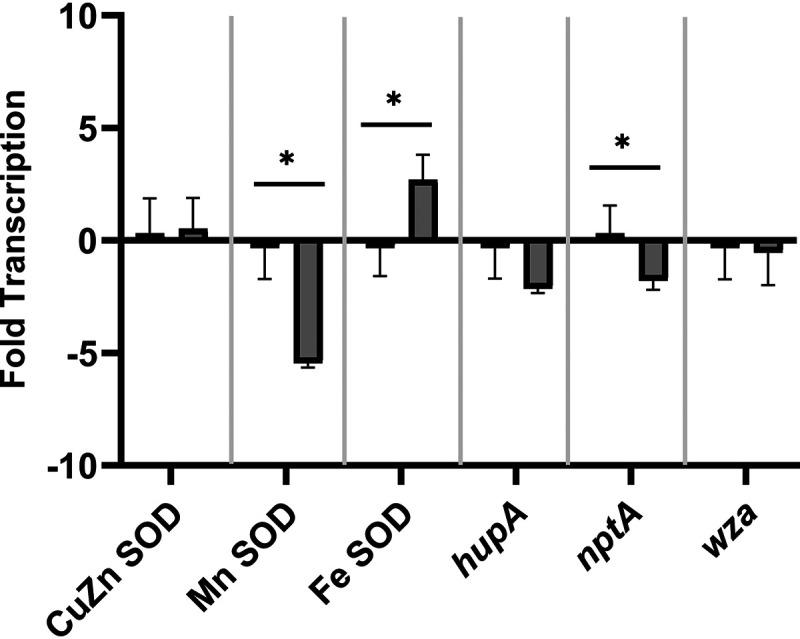
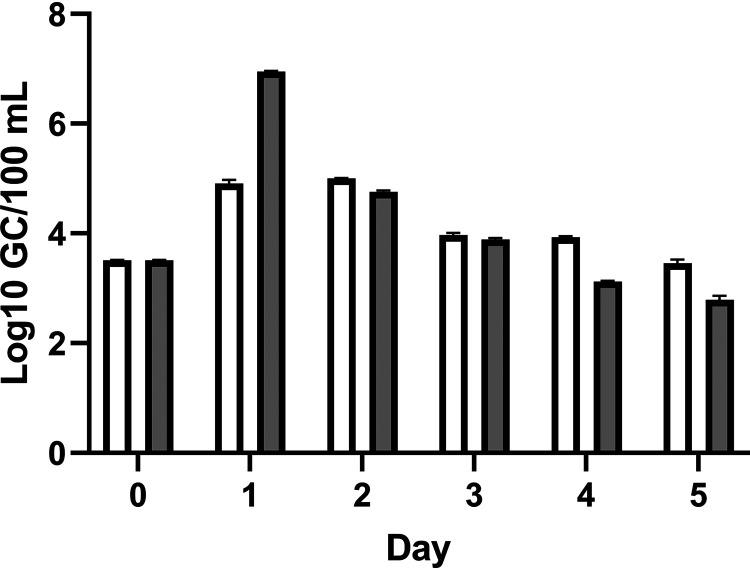
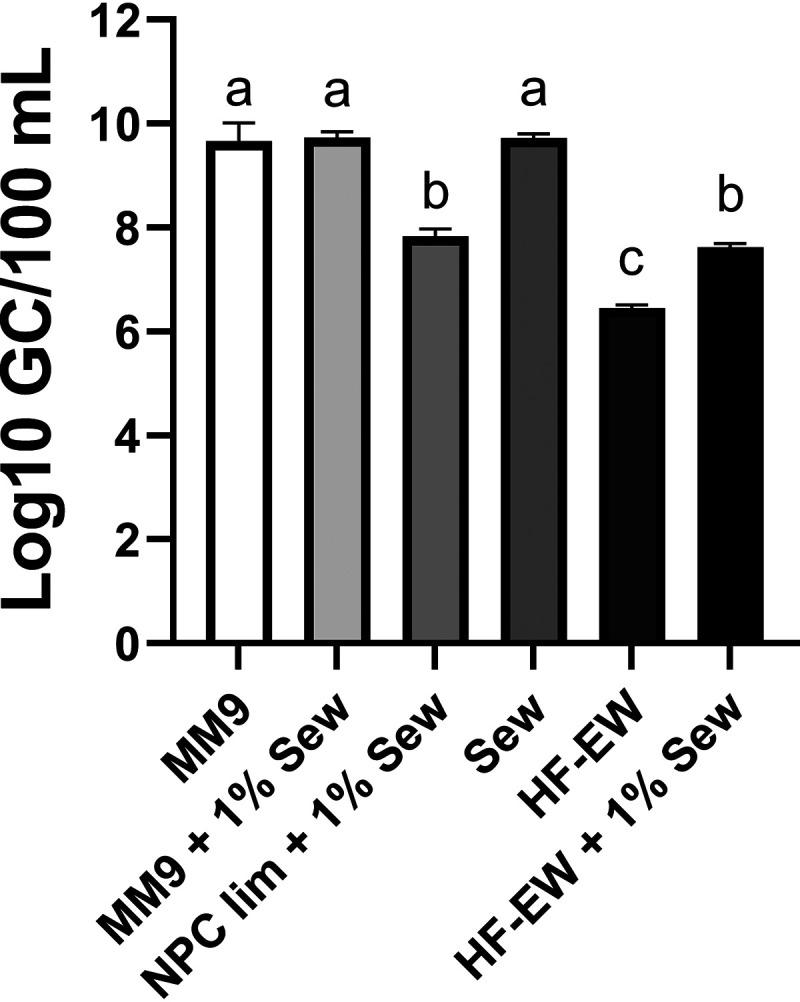
Vibrio vulnificus is a naturally occurring, potentially lethal pathogen found in coastal waters, fish, and shellfish. Sewage spills in coastal waters occur when infrastructure fails due to severe storms or age, and may affect bacterial populations by altering nutrient levels. This study investigated effects of sewage on clonal and natural V. vulnificus populations in microcosms. Addition of 1% sewage to estuarine water caused the density of a pure culture of V. vulnificus CMCP6 and a natural V. vulnificus population to increase significantly, by two to three orders of magnitude, whether measured by quantitative PCR (qPCR) or culture and in batch and continuous cultures. Changes in the transcription of six virulence- and survival-associated genes in response to sewage were assessed using continuous culture. Exposure to sewage affected transcription of genes that may be associated with virulence, i.e., it modulated the oxidative stress response by altering superoxide dismutase transcription, significantly increasing transcription while repressing Sewage also repressed transcription of which encodes a sodium-phosphate cotransporter. Sewage had no effect on transcription or the putative virulence-associated genes or The effects of environmentally relevant levels of sewage on V. vulnificus populations and gene transcription suggest that sewage spills that impact warm coastal waters could lead to an increased risk of V. vulnificus infections. Vibrio vulnificus infections have profound impacts such as limb amputation and death for individuals with predisposing conditions. The warming climate is contributing to rising V. vulnificus prevalence in waters that were previously too cold to support high levels of the pathogen. Climate change is also expected to increase precipitation in many regions, which puts more pressure on wastewater infrastructure and will result in more frequent sewage spills. The finding that 1% wastewater in estuarine water leads to 100 to over 1,000-fold greater V. vulnificus concentrations suggests that human exposure to oysters and estuarine water could have greater health impacts in the future. Further, wastewater had a significant effect on gene transcription and has the potential to affect virulence during the initial environment-to-host transition.
创伤弧菌是一种自然存在的、潜在致命的病原体,存在于沿海水域、鱼类和贝类中。由于恶劣的风暴或老化导致基础设施失效,沿海海域会发生污水溢漏,这可能会通过改变营养水平来影响细菌种群。本研究调查了污水对微生境中克隆和自然创伤弧菌种群的影响。在河口水中添加 1%的污水会导致创伤弧菌 CMCP6 的纯培养物和自然创伤弧菌种群的密度显著增加,无论是通过定量 PCR(qPCR)还是培养和批量培养和连续培养来测量,都会增加两个到三个数量级。使用连续培养评估了污水对六种与毒力和存活相关的基因转录的影响。暴露于污水会影响与毒力相关的基因转录,即通过改变超氧化物歧化酶转录来调节氧化应激反应,显著增加 的转录,同时抑制 污水还抑制了编码钠-磷酸盐共转运体的 的转录。污水对 的转录或假定的与毒力相关基因 或 没有影响。污水对创伤弧菌种群和基因转录的影响表明,影响温暖沿海水域的污水溢漏可能会导致创伤弧菌感染的风险增加。创伤弧菌感染对有易感条件的个体有深远的影响,如截肢和死亡。气候变暖导致以前水温过低而无法支持高水平病原体的水域中创伤弧菌的流行率上升。气候变化预计还会增加许多地区的降水量,这将给废水基础设施带来更大的压力,并导致污水溢漏更加频繁。在河口水中添加 1%的污水会导致创伤弧菌浓度增加 100 到 1000 倍以上,这表明人类接触牡蛎和河口水在未来可能会对健康产生更大的影响。此外,污水对基因转录有显著影响,并有可能在从环境到宿主的初始过渡过程中影响毒力。

 Zotero 插件