
二十年内智利菌株的抗菌药物耐药性动态:耐药基因座致病岛以及1类和2类整合子的作用
Antimicrobial Resistance Dynamics in Chilean Strains Within Two Decades: Role of Resistance Locus Pathogenicity Island and Class 1 and Class 2 Integrons.
作者信息
Toro Cecilia S, Salazar Juan Carlos, Montero David A, Ugalde Juan Antonio, Díaz Janepsy, Cádiz Leandro A, Henríquez Tania, García Camila, Díaz Patricia, Camponovo Rossanna, Hermosilla Germán, Ulloa María Teresa
机构信息
Programa de Microbiología y Micología, Facultad de Medicina, Instituto de Ciencias Biomédicas, Universidad de Chile, Santiago, Chile.
Programa Disciplinario de Inmunología, Facultad de Medicina, Instituto de Ciencias Biomédicas, Universidad de Chile, Santiago, Chile.
出版信息
Front Microbiol. 2022 Feb 4;12:794470. doi: 10.3389/fmicb.2021.794470. eCollection 2021.
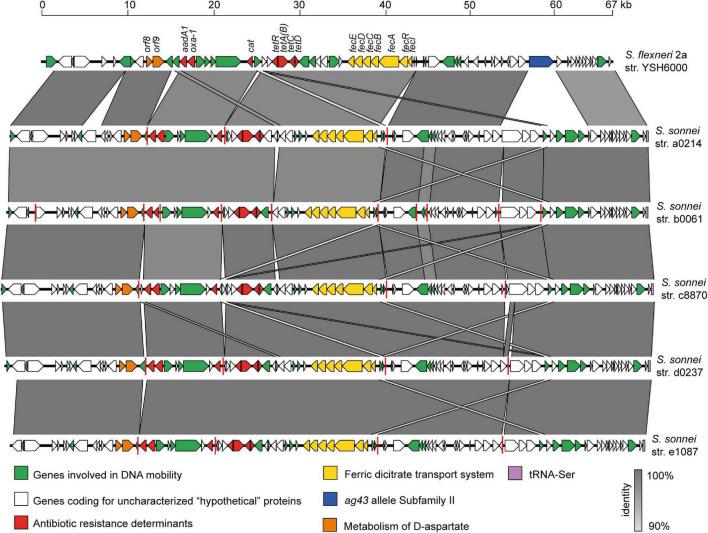
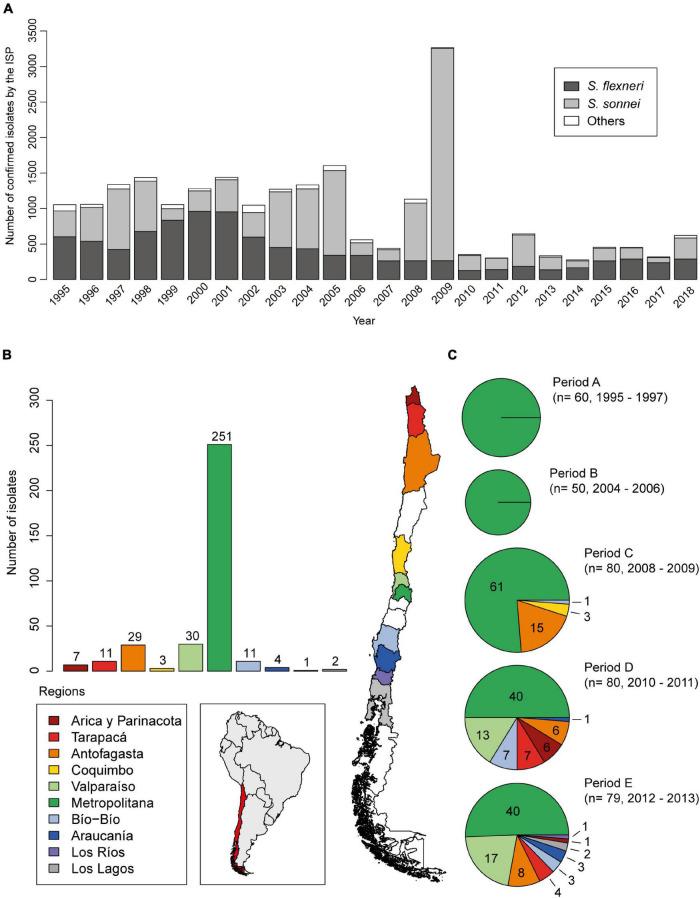
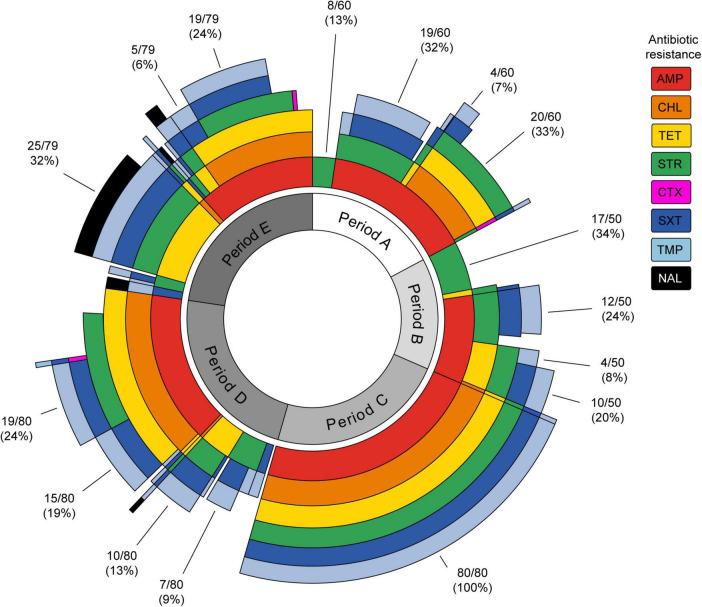
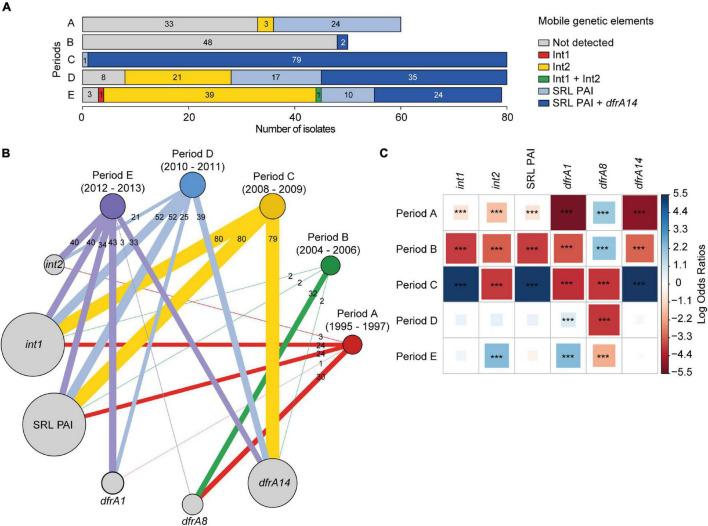
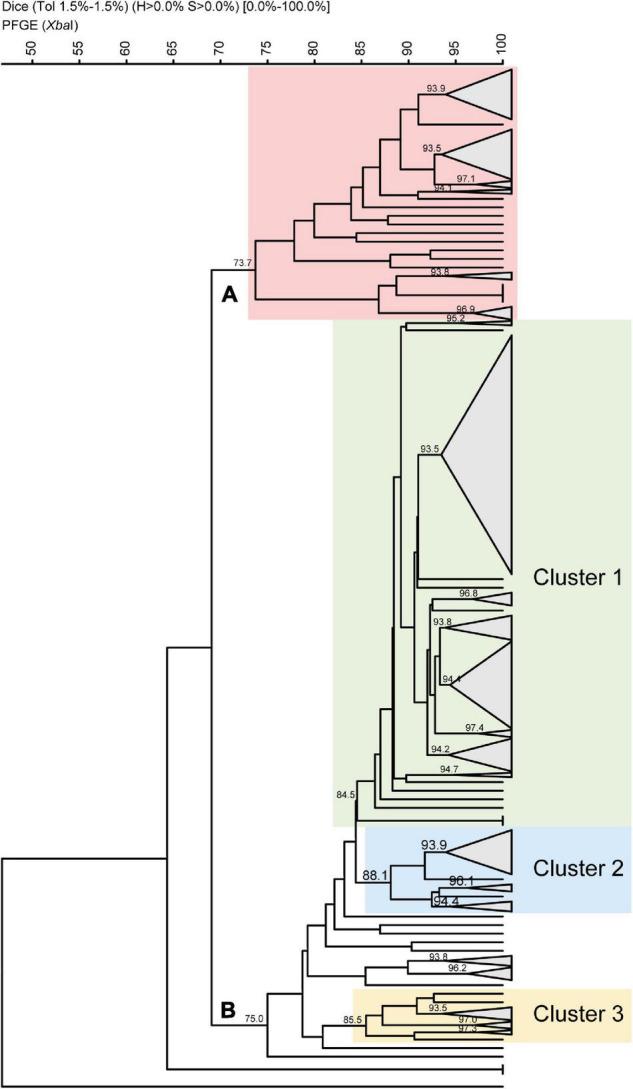
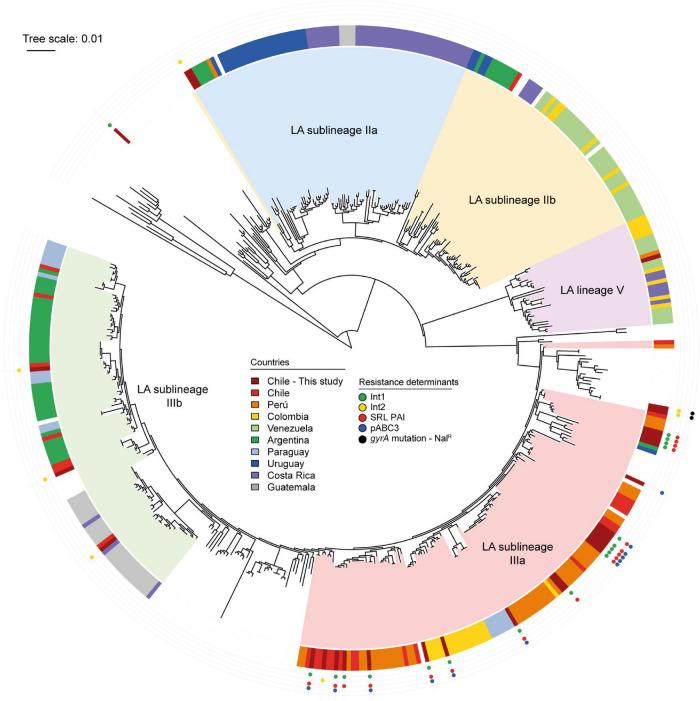
Shigellosis is an enteric infectious disease in which antibiotic treatment is effective, shortening the duration of symptoms and reducing the excretion of the pathogen into the environment. spp., the etiologic agent, are considered emerging pathogens with a high public health impact due to the increase and global spread of multidrug-resistant (MDR) strains. Since resistance phenotype varies worldwide, we present an overview of the resistance phenotypes and associated genetic determinants present in 349 Chilean strains isolated during the periods 1995-1997, 2002-2004, 2008-2009, and 2010-2013. We detected a great variability in antibiotic susceptibility patterns, finding 300 (86%) MDR strains. Mobile genetic elements (MGE), such as plasmids, integrons, and genomic islands, have been associated with the MDR phenotypes. The resistance locus pathogenicity island (SRL PAI), which encodes for ampicillin, streptomycin, chloramphenicol, and tetracycline resistance genes, was detected by PCR in 100% of the strains isolated in 2008-2009 but was less frequent in isolates from other periods. The presence or absence of SRL PAI was also differentiated by pulsed-field gel electrophoresis. An atypical class 1 integron which harbors the organization was detected as part of SRL PAI. The gene conferring trimethoprim resistance was present in 98.8% of the 2008-2009 isolates, distinguishing them from the SRL-positive strains isolated before that. Thus, it seems an SRL- clone spread during the 2008-2009 period and declined thereafter. Besides these, SRL-negative strains harboring class 2 integrons with or without resistance to nalidixic acid were detected from 2011 onward, suggesting the circulation of another clone. Whole-genome sequencing of selected strains confirmed the results obtained by PCR and phenotypic analysis. It is highlighted that 70.8% of the MDR strains harbored one or more of the MGE evaluated, while 15.2% lacked both SRL PAI and integrons. These results underscore the temporal dynamics of antimicrobial resistance in strains circulating in Chile, mainly determined by the spread of MGE conferring MDR phenotypes. Since shigellosis is endemic in Chile, constant surveillance of antimicrobial resistance phenotypes and their genetic basis is a priority to contribute to public health policies.
志贺氏菌病是一种肠道传染病,抗生素治疗对其有效,可缩短症状持续时间并减少病原体向环境中的排泄。志贺氏菌属作为病原体,由于多重耐药(MDR)菌株的增加和全球传播,被视为对公共卫生有重大影响的新兴病原体。由于耐药表型在全球范围内存在差异,我们概述了1995 - 1997年、2002 - 2004年、2008 - 2009年和2010 - 2013年期间从智利分离出的349株志贺氏菌菌株中的耐药表型及相关遗传决定因素。我们检测到抗生素敏感性模式存在很大差异,发现300株(86%)多重耐药菌株。移动遗传元件(MGE),如质粒、整合子和基因组岛,与多重耐药表型有关。通过PCR在2008 - 2009年分离出的所有菌株中均检测到编码氨苄青霉素、链霉素、氯霉素和四环素耐药基因的志贺氏菌耐药位点致病岛(SRL PAI),但在其他时期分离出的菌株中出现频率较低。通过脉冲场凝胶电泳也区分了SRL PAI的存在与否。检测到一个含有特定基因组织的非典型1类整合子,它是SRL PAI的一部分。赋予甲氧苄啶耐药性的基因存在于2008 - 2009年分离出的98.8%的菌株中,这使其与之前分离出的SRL阳性菌株有所不同。因此,似乎一个SRL - 克隆在2008 - 2009年期间传播,此后数量下降。除此之外,从2011年起检测到携带2类整合子且对萘啶酸有或无耐药性的SRL阴性菌株,这表明另一个克隆在传播。对选定菌株的全基因组测序证实了通过PCR和表型分析获得的结果。值得注意的是,70.8%的多重耐药菌株携带一种或多种所评估的MGE,而15.2%的菌株既没有SRL PAI也没有整合子。这些结果强调了智利流行的志贺氏菌菌株中抗菌药物耐药性的时间动态,主要由赋予多重耐药表型的MGE传播所决定。由于志贺氏菌病在智利是地方病,持续监测抗菌药物耐药表型及其遗传基础是为公共卫生政策做出贡献的优先事项。
 Zotero 插件