
核黄素作为一种有前景的抗菌剂?多角度综述。
Riboflavin as a promising antimicrobial agent? A multi-perspective review.
作者信息
Farah Nuratiqah, Chin Voon Kin, Chong Pei Pei, Lim Wai Feng, Lim Chee Woei, Basir Rusliza, Chang Sui Kiat, Lee Tze Yan
机构信息
Department of Human Anatomy, Faculty of Medicine and Health Sciences, UPM, 43400, Serdang, Selangor, Malaysia.
Department of Medical Microbiology, Faculty of Medicine and Health Sciences, UPM, 43400, Serdang, Selangor, Malaysia.
出版信息
Curr Res Microb Sci. 2022 Feb 10;3:100111. doi: 10.1016/j.crmicr.2022.100111. eCollection 2022.
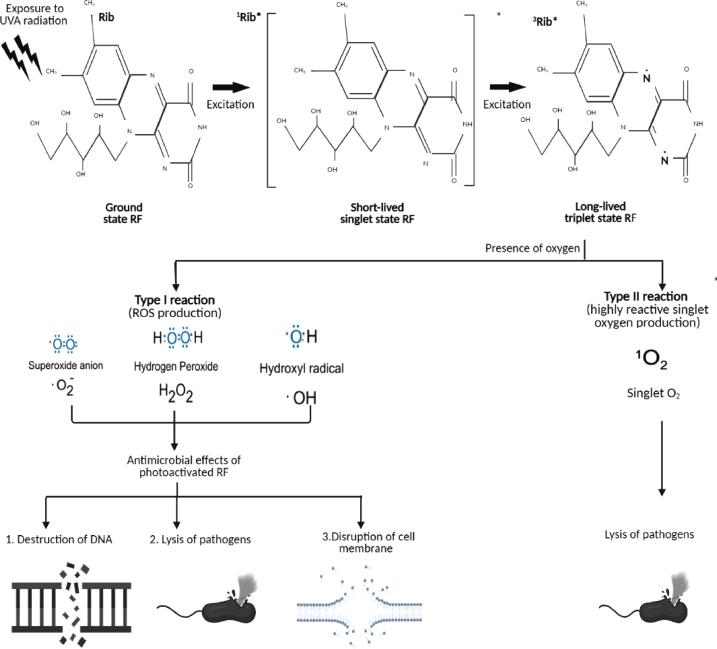
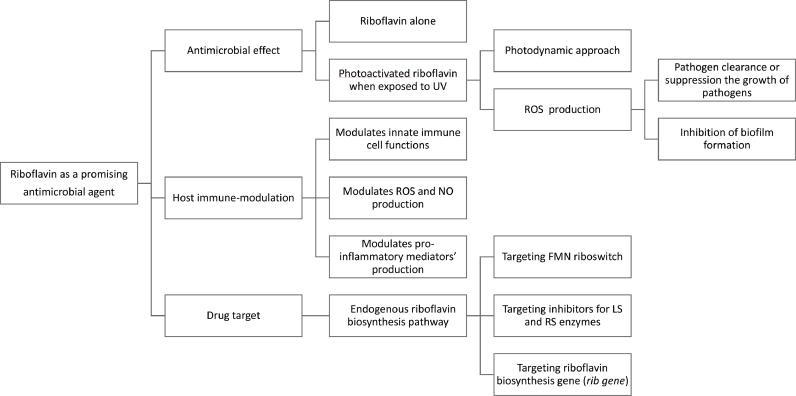
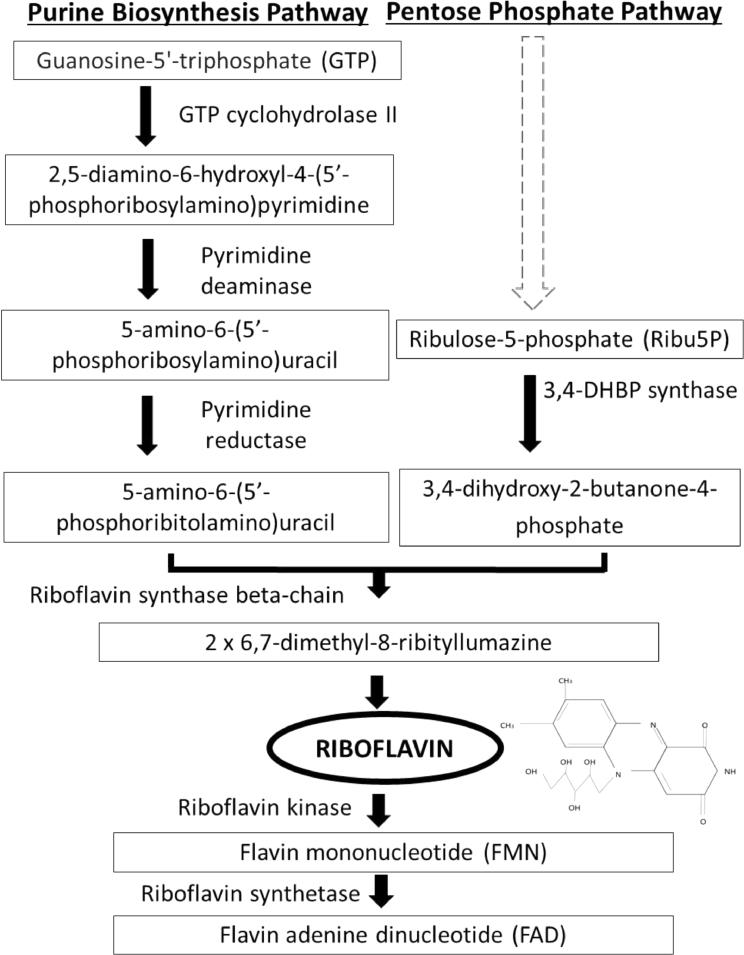
Riboflavin, or more commonly known as vitamin B2, forms part of the component of vitamin B complex. Riboflavin consisting of two important cofactors, flavin mononucleotide (FMN) and flavin adenine dinucleotide (FAD), which are involved in multiple oxidative-reduction processes and energy metabolism. Besides maintaining human health, different sources reported that riboflavin can inhibit or inactivate the growth of different pathogens including bacteria, viruses, fungi and parasites, highlighting the possible role of riboflavin as an antimicrobial agent. Moreover, riboflavin and flavins could produce reactive oxygen species (ROS) when exposed to light, inducing oxidative damage in cells and tissues, and thus are excellent natural photosensitizers. Several studies have illustrated the therapeutic efficacy of photoactivated riboflavin against nosocomial infections and multidrug resistant bacterial infections as well as microbial associated biofilm infections, revealing the potential role of riboflavin as a promising antimicrobial candidate, which could serve as one of the alternatives in fighting the global crisis of the emergence of antimicrobial resistance seen in different pathogenic microbes. Riboflavin could also be involved in modulating host immune responses, which might increase the pathogen clearance from host cells and increase host defense against microbial infections. Thus, the dual effects of riboflavin on both pathogens and host immunity, reflected by its potent bactericidal effect and alleviation of inflammation in host cells further imply that riboflavin could be a potential candidate for therapeutic intervention in resolving microbial infections. Hence, this review aimed to provide some insights on the promising role of riboflavin as an antimicrobial candidate and also a host immune-modulator from a multi-perspective view as well as to discuss the application and challenges on using riboflavin in photodynamic therapy against various pathogens and microbial biofilm-associated infections.
核黄素,更常见的名称是维生素B2,是维生素B复合体的组成部分。核黄素由两个重要的辅因子组成,即黄素单核苷酸(FMN)和黄素腺嘌呤二核苷酸(FAD),它们参与多种氧化还原过程和能量代谢。除了维持人体健康外,不同来源的报道表明,核黄素可以抑制或灭活包括细菌、病毒、真菌和寄生虫在内的不同病原体的生长,突出了核黄素作为抗菌剂的潜在作用。此外,核黄素和黄素在光照下会产生活性氧(ROS),诱导细胞和组织的氧化损伤,因此是优秀的天然光敏剂。多项研究已经阐明了光活化核黄素对医院感染、多重耐药细菌感染以及微生物相关生物膜感染的治疗效果,揭示了核黄素作为一种有前景的抗菌候选物的潜在作用,它可以作为应对不同致病微生物中出现的抗菌耐药性全球危机的替代方案之一。核黄素还可能参与调节宿主免疫反应,这可能会增加病原体从宿主细胞中的清除,并增强宿主对微生物感染的防御能力。因此,核黄素对病原体和宿主免疫的双重作用,体现在其强大的杀菌作用和减轻宿主细胞炎症方面,进一步表明核黄素可能是解决微生物感染的治疗干预的潜在候选物。因此,本综述旨在从多个角度对核黄素作为抗菌候选物和宿主免疫调节剂的前景作用提供一些见解,并讨论在光动力疗法中使用核黄素对抗各种病原体和微生物生物膜相关感染的应用和挑战。

 Zotero 插件