
过氧化物酶 3 通过清除线粒体过氧化氢来减轻加速肌少症小鼠模型的收缩功能障碍和肌肉萎缩。
Scavenging mitochondrial hydrogen peroxide by peroxiredoxin 3 overexpression attenuates contractile dysfunction and muscle atrophy in a murine model of accelerated sarcopenia.
机构信息
Aging & Metabolism Research Program, Oklahoma Medical Research Foundation, Oklahoma City, Oklahoma, USA.
Department of Internal Medicine, Wake Forest School of Medicine, Winston-Salem, North Carolina, USA.
出版信息
Aging Cell. 2022 Mar;21(3):e13569. doi: 10.1111/acel.13569. Epub 2022 Feb 24.
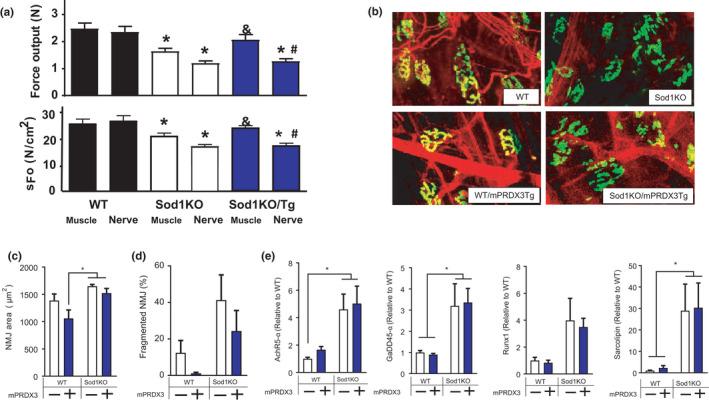
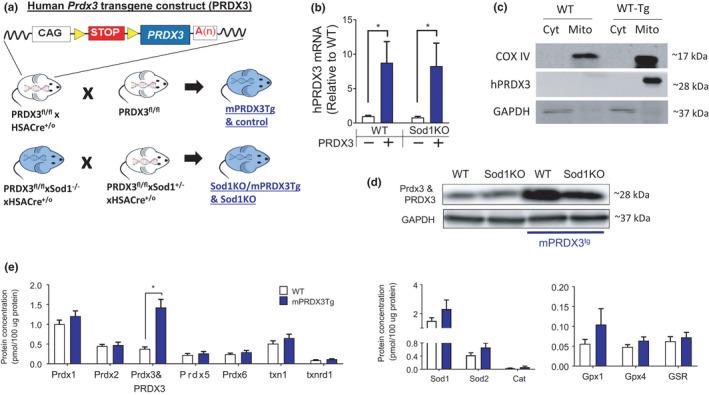
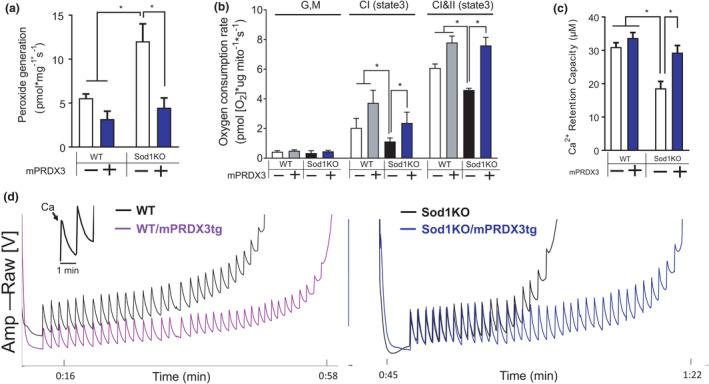
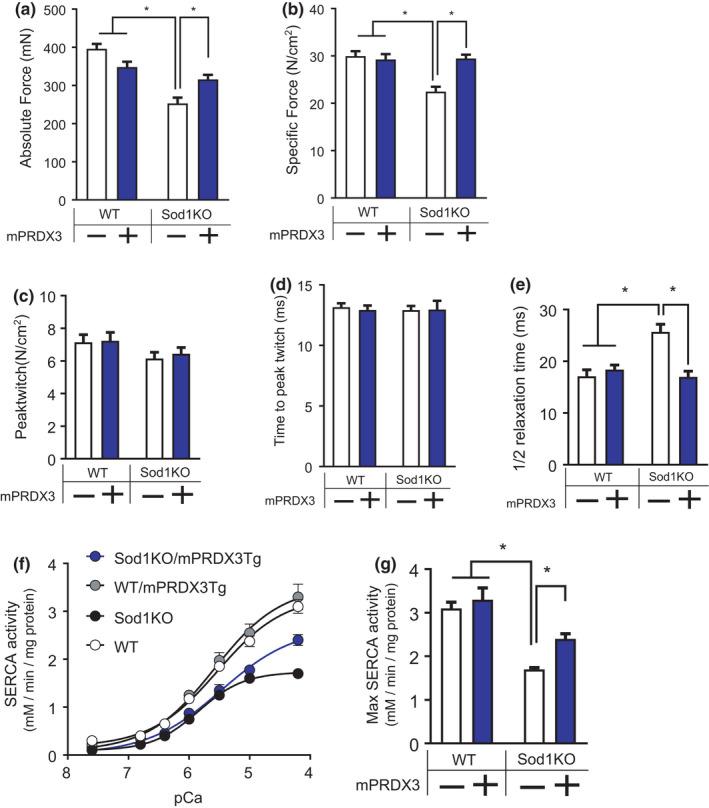
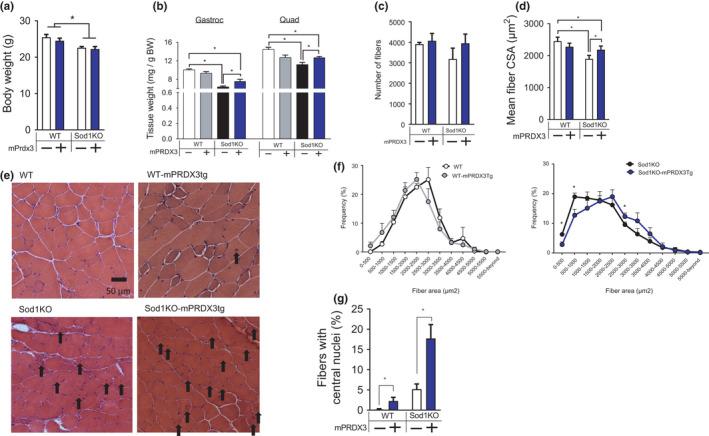
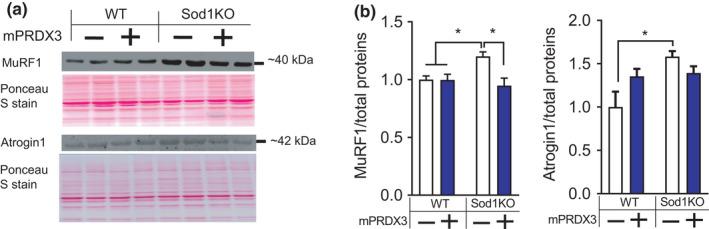
Age-related muscle atrophy and weakness, or sarcopenia, are significant contributors to compromised health and quality of life in the elderly. While the mechanisms driving this pathology are not fully defined, reactive oxygen species, neuromuscular junction (NMJ) disruption, and loss of innervation are important risk factors. The goal of this study is to determine the impact of mitochondrial hydrogen peroxide on neurogenic atrophy and contractile dysfunction. Mice with muscle-specific overexpression of the mitochondrial H O scavenger peroxiredoxin3 (mPRDX3) were crossed to Sod1KO mice, an established mouse model of sarcopenia, to determine whether reduced mitochondrial H O can prevent or delay the redox-dependent sarcopenia. Basal rates of H O generation were elevated in isolated muscle mitochondria from Sod1KO, but normalized by mPRDX3 overexpression. The mPRDX3 overexpression prevented the declines in maximum mitochondrial oxygen consumption rate and calcium retention capacity in Sod1KO. Muscle atrophy in Sod1KO was mitigated by ~20% by mPRDX3 overexpression, which was associated with an increase in myofiber cross-sectional area. With direct muscle stimulation, maximum isometric specific force was reduced by ~20% in Sod1KO mice, and mPRDX3 overexpression preserved specific force at wild-type levels. The force deficit with nerve stimulation was exacerbated in Sod1KO compared to direct muscle stimulation, suggesting NMJ disruption in Sod1KO. Notably, this defect was not resolved by overexpression of mPRDX3. Our findings demonstrate that muscle-specific PRDX3 overexpression reduces mitochondrial H O generation, improves mitochondrial function, and mitigates loss of muscle quantity and quality, despite persisting NMJ impairment in a murine model of redox-dependent sarcopenia.
年龄相关的肌肉萎缩和虚弱,即肌肉减少症,是导致老年人健康和生活质量下降的重要因素。虽然导致这种病理的机制尚未完全确定,但活性氧、神经肌肉接头(NMJ)破坏和神经支配丧失是重要的危险因素。本研究旨在确定线粒体过氧化氢对神经源性萎缩和收缩功能障碍的影响。将肌肉特异性过表达线粒体 H O 清除剂过氧化物酶 3(mPRDX3)的小鼠与 Sod1KO 小鼠(肌肉减少症的一种既定小鼠模型)杂交,以确定减少线粒体 H O 是否可以预防或延迟氧化还原依赖性肌肉减少症。从 Sod1KO 分离的肌肉线粒体中 H O 的基础生成率升高,但通过 mPRDX3 过表达得到正常化。mPRDX3 过表达可防止 Sod1KO 中最大线粒体耗氧量和钙保留能力的下降。mPRDX3 过表达减轻了 Sod1KO 中约 20%的肌肉萎缩,这与肌纤维横截面积的增加有关。通过直接肌肉刺激,Sod1KO 小鼠的最大等长比肌力降低了约 20%,而过表达 mPRDX3 将比肌力保持在野生型水平。与直接肌肉刺激相比,Sod1KO 中的神经刺激引起的肌力缺陷加剧,表明 Sod1KO 中的 NMJ 破坏。值得注意的是,过表达 mPRDX3 并不能解决这一缺陷。我们的研究结果表明,肌肉特异性 PRDX3 过表达可减少线粒体 H O 的产生,改善线粒体功能,并减轻肌肉数量和质量的损失,尽管在氧化还原依赖性肌肉减少症的小鼠模型中仍然存在 NMJ 损伤。
 Zotero 插件