
植物中50种多酚类化合物的计算机模拟研究方法;生物利用度和生物活性数据比较
In Silico Study Approach on a Series of 50 Polyphenolic Compounds in Plants; A Comparison on the Bioavailability and Bioactivity Data.
作者信息
Stefaniu Amalia, Pirvu Lucia Camelia
机构信息
Department of Pharmaceutical Biotechnologies, National Institute for Chemical-Pharmaceutical Research and Development, ICCF, 112 Vitan Av., 031299 Bucharest, Romania.
出版信息
Molecules. 2022 Feb 19;27(4):1413. doi: 10.3390/molecules27041413.
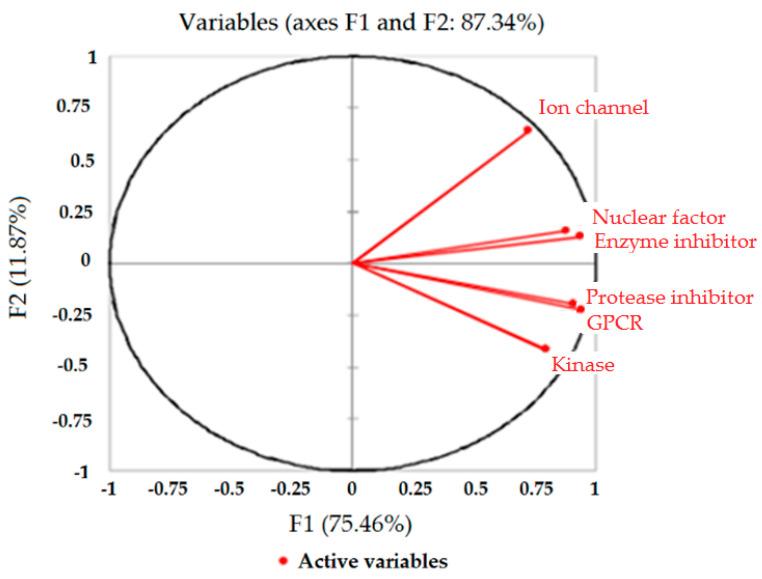
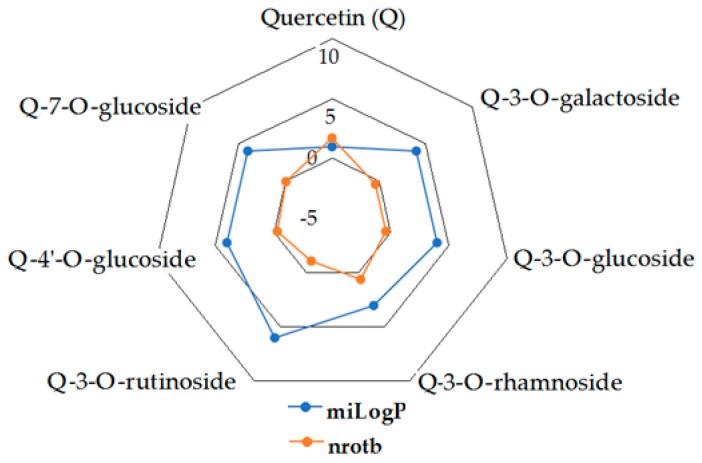
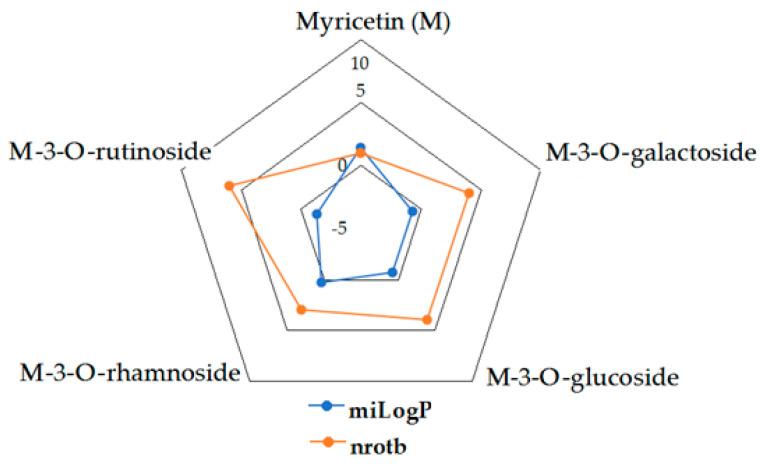
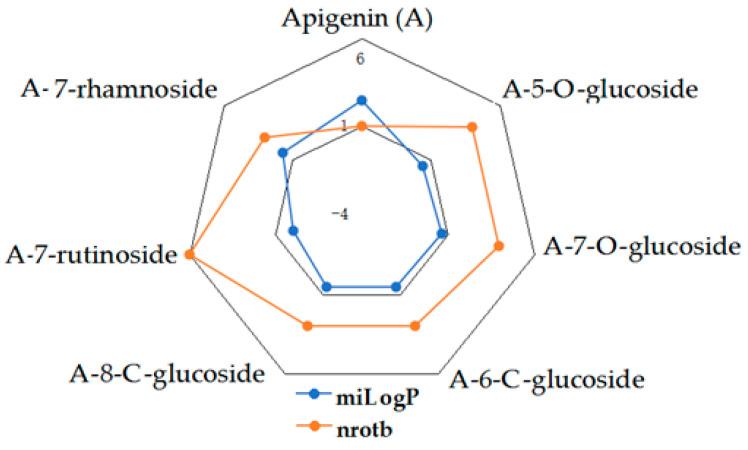
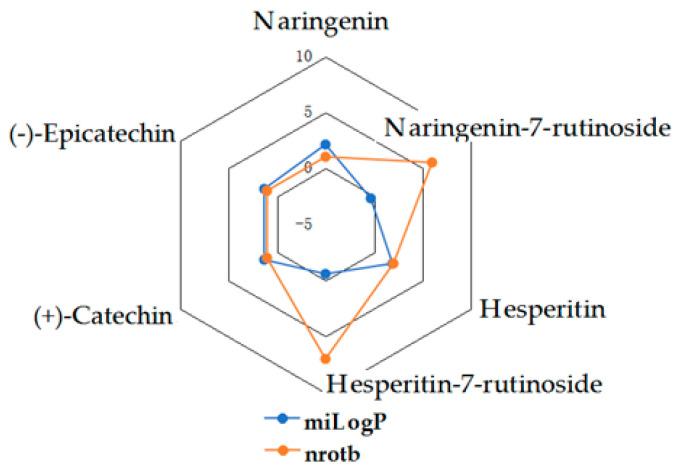
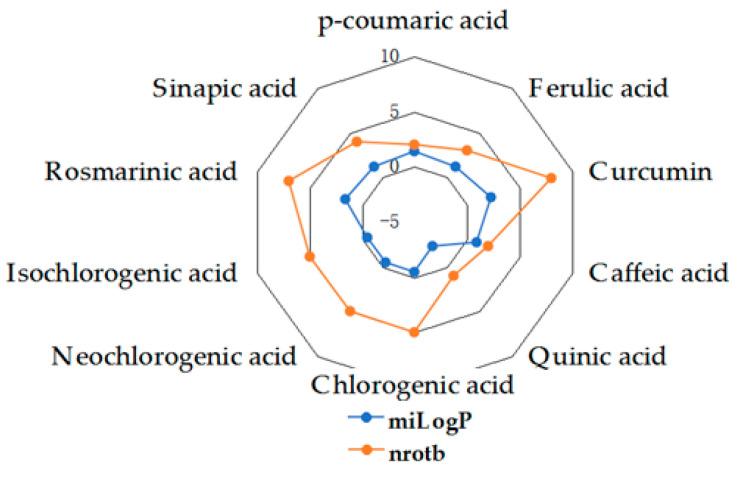
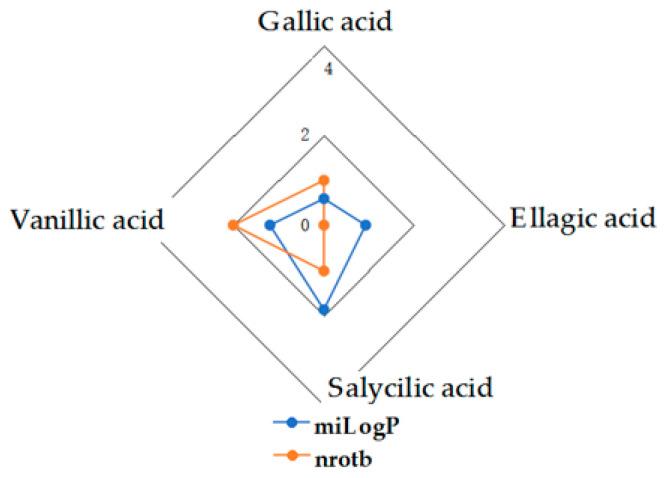
Fifty (50) phytocompounds from several subclasses of polyphenols, chosen based on their abundance in the plant world, were analyzed through density functional methods, using computational tools to evaluate their oral availability and particular bioactivity on several cell modulators; key descriptors and molecular features related to the electron density and electrostatic potential for the lowest energy conformers of the investigated molecules were computed. An analysis of the bioactivity scores towards six cell modulators (GPCR ligand, ion channel modulator, kinase inhibitor, nuclear receptor ligand, protease inhibitor and enzyme inhibitor) was also achieved, in the context of investigating their potential side effects on the human digestive processes. Summarizing, computational results confirmed in vivo and in vitro data regarding the high bioavailability of soy isoflavones and better bioavailability of free aglycones in comparison with their esterified and glycosylated forms. However, by a computational approach analyzing Lipinski's rule, apigenin and apigenin-7--rhamnoside, naringenin, hesperetin, genistein, daidzin, biochanin A and formonetin in the flavonoid series and all hydroxycinnamic acids and all hydroxybenzoic acids excepting ellagic acid were proved to have the best bioavailability data; rhamnoside derivatives, the predominant glycosides in green plants, which were reported to have the lowest bioavailability values by in vivo studies, were revealed to have the best bioavailability data among the studied flavonoids in the computational approach. Results of in silico screening on the phenolic derivatives series also revealed their real inhibitory potency on the six parameters studied, showing a remarkable similitude between the flavonoid series, while flavonoids were more powerful natural cell modulators than the phenyl carboxylic acids tested. Thus, it can be concluded that there is a need for supplementation with digestive enzymes, mainly in the case of individuals with low digestive efficiency, to obtain the best health benefits of polyphenols in humans.
从多酚的几个亚类中选取了50种植物化合物,这些化合物是根据其在植物界的丰富程度挑选出来的,通过密度泛函方法进行分析,使用计算工具评估它们的口服可用性以及对几种细胞调节剂的特定生物活性;计算了与所研究分子最低能量构象的电子密度和静电势相关的关键描述符和分子特征。在研究它们对人类消化过程的潜在副作用的背景下,还对六种细胞调节剂(GPCR配体、离子通道调节剂、激酶抑制剂、核受体配体、蛋白酶抑制剂和酶抑制剂)的生物活性评分进行了分析。总之,计算结果证实了体内和体外数据,即大豆异黄酮具有高生物利用度,与它们的酯化和糖基化形式相比,游离苷元具有更好的生物利用度。然而,通过计算方法分析Lipinski规则,黄酮类系列中的芹菜素和芹菜素-7-鼠李糖苷、柚皮素、橙皮素、染料木黄酮、大豆苷、鹰嘴豆芽素A和刺芒柄花素以及除鞣花酸外的所有羟基肉桂酸和所有羟基苯甲酸被证明具有最佳的生物利用度数据;鼠李糖苷衍生物是绿色植物中的主要糖苷,体内研究报告其生物利用度值最低,但在计算方法中,它们在所研究的黄酮类化合物中具有最佳的生物利用度数据。对酚类衍生物系列的计算机筛选结果还揭示了它们对所研究的六个参数的实际抑制效力,显示出黄酮类系列之间有显著的相似性,而黄酮类比测试的苯基羧酸是更强有力的天然细胞调节剂。因此,可以得出结论,主要是消化效率低的个体需要补充消化酶,以获得多酚对人类的最佳健康益处。



 Zotero 插件