
Stathmin 1 是诊断微血管侵犯的生物标志物,可预测早期肝细胞癌的预后。
Stathmin 1 is a biomarker for diagnosis of microvascular invasion to predict prognosis of early hepatocellular carcinoma.
机构信息
Institute for Regenerative Medicine, Shanghai East Hospital, School of Life Sciences and Technology, Tongji University School of Medicine, Shanghai, 200123, P. R. China.
Shanghai Engineering Research Center of Stem Cells Translational Medicine, Shanghai, 200335, P. R. China.
出版信息
Cell Death Dis. 2022 Feb 24;13(2):176. doi: 10.1038/s41419-022-04625-y.
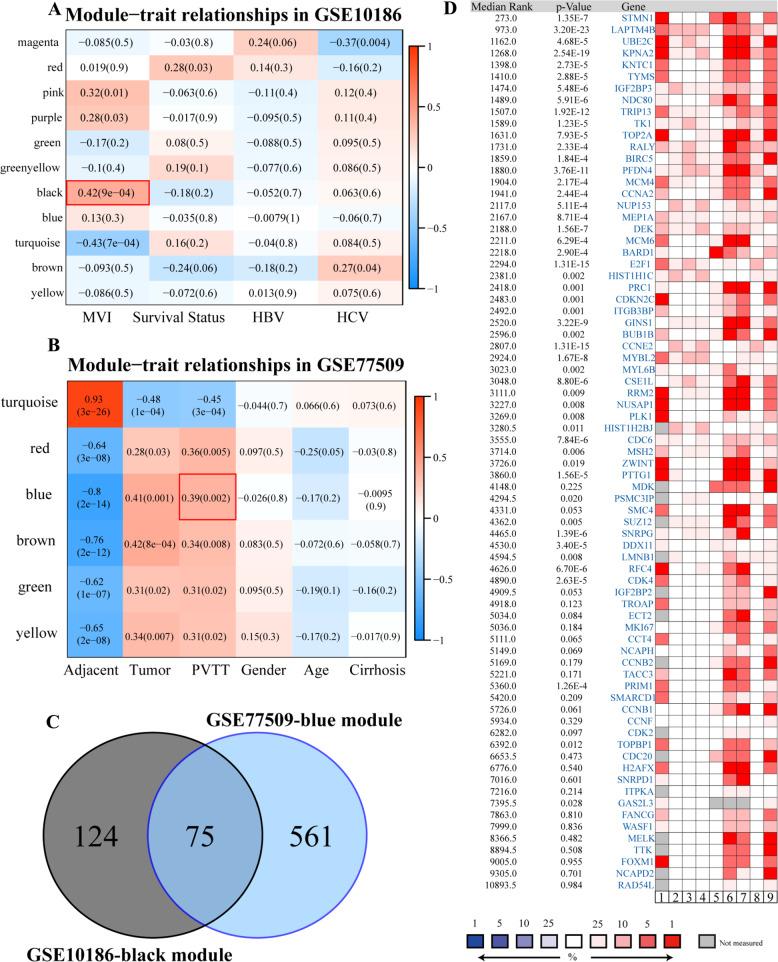
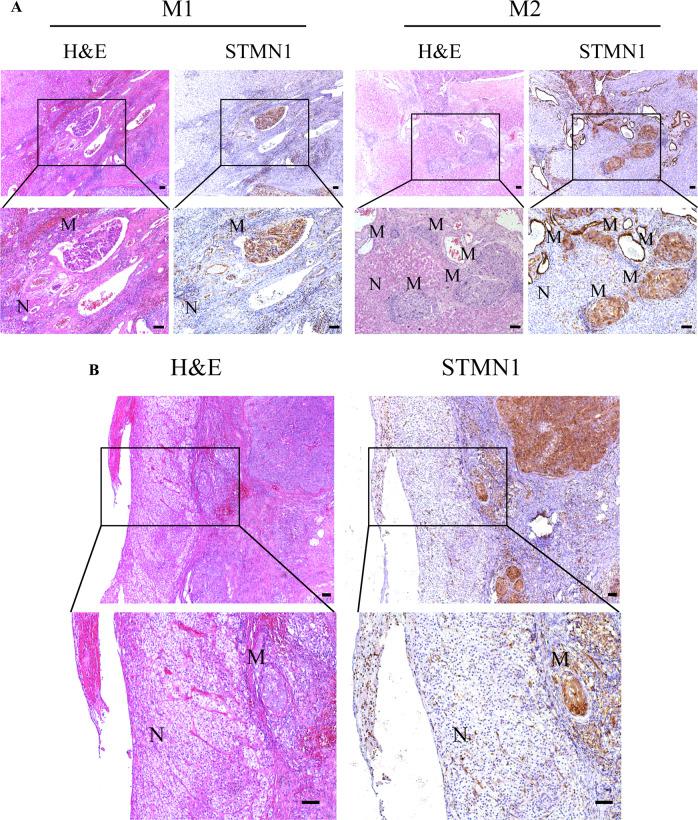
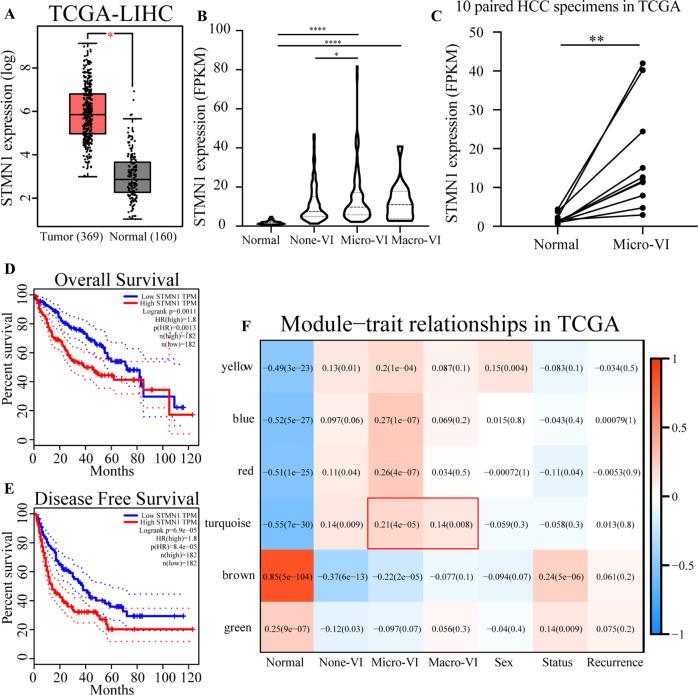
Microvascular invasion (MVI) is presently evaluated as a high-risk factor to be directly relative to postoperative prognosis of hepatocellular carcinoma (HCC). Up to now, diagnosis of MVI mainly depends on the postoperative pathological analyses with H&E staining assay, based on numbers and distribution characteristics of MVI to classify the risk levels of MVI. However, such pathological analyses lack the specificity to discriminate MVI in HCC specimens, especially in complicated pathological tissues. In addition, the efficiency to precisely define stages of MVI is not satisfied. Thus, any biomarker for both conforming diagnosis of MVI and staging its levels will efficiently and effectively promote the prediction of early postoperative recurrence and metastasis for HCC. Through bioinformatics analysis and clinical sample verification, we discovered that Stathmin 1 (STMN1) gene was significantly up-regulated at the locations of MVI. Combining STMN1 immunostaining with classic H&E staining assays, we established a new protocol for MVI pathological diagnosis. Next, we found that the degrees of MVI risk could be graded according to expression levels of STMN1 for prognosis prediction on recurrence rates and overall survival in early HCC patients. STMN1 affected epithelial-mesenchymal transformation (EMT) of HCC cells by regulating the dynamic balance of microtubules through signaling of "STMN1-Microtubule-EMT" axis. Inhibition of STMN1 expression in HCC cells reduced their lung metastatic ability in recipients of mouse model, suggesting that STMN1 also could be a potential therapeutic target for inhibiting HCC metastasis. Therefore, we conclude that STMN1 has potentials for clinical applications as a biomarker for both pathological diagnosis and prognostic prediction, as well as a therapeutic target for HCC.
微血管侵犯(MVI)目前被评估为与肝细胞癌(HCC)术后预后直接相关的高危因素。到目前为止,MVI 的诊断主要依赖于术后 H&E 染色分析的病理检查,根据 MVI 的数量和分布特征对 MVI 的风险水平进行分类。然而,这种病理分析缺乏特异性来区分 HCC 标本中的 MVI,尤其是在复杂的病理组织中。此外,准确界定 MVI 分期的效率也不令人满意。因此,任何能够同时用于 MVI 诊断和分期的生物标志物都将有效地促进 HCC 术后早期复发和转移的预测。通过生物信息学分析和临床样本验证,我们发现微管蛋白 1(STMN1)基因在 MVI 部位显著上调。结合 STMN1 免疫染色和经典的 H&E 染色检测,我们建立了一种新的 MVI 病理诊断方案。接下来,我们发现根据 STMN1 表达水平可以对 MVI 风险程度进行分级,从而预测早期 HCC 患者的复发率和总生存率。STMN1 通过“STMN1-微管-EMT”轴信号调节微管的动态平衡,影响 HCC 细胞的上皮间质转化(EMT)。抑制 HCC 细胞中 STMN1 的表达可降低其在小鼠模型受体中的肺转移能力,表明 STMN1 也可能是抑制 HCC 转移的潜在治疗靶点。因此,我们得出结论,STMN1 具有作为病理诊断和预后预测的生物标志物以及 HCC 治疗靶点的临床应用潜力。




 Zotero 插件