
毛霉菌病:2019冠状病毒病大流行期间的危险因素、诊断、治疗及挑战
Mucormycosis: risk factors, diagnosis, treatments, and challenges during COVID-19 pandemic.
作者信息
Sharma Ayushi, Goel Anjana
机构信息
Department of Biotechnology, Institute of Applied Sciences & Humanities, GLA University, 281 406, Mathura, UP, India.
出版信息
Folia Microbiol (Praha). 2022 Jun;67(3):363-387. doi: 10.1007/s12223-021-00934-5. Epub 2022 Feb 26.
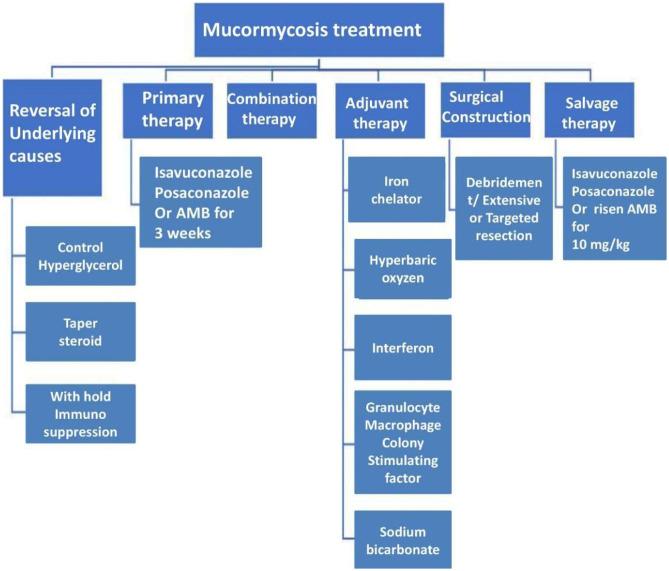
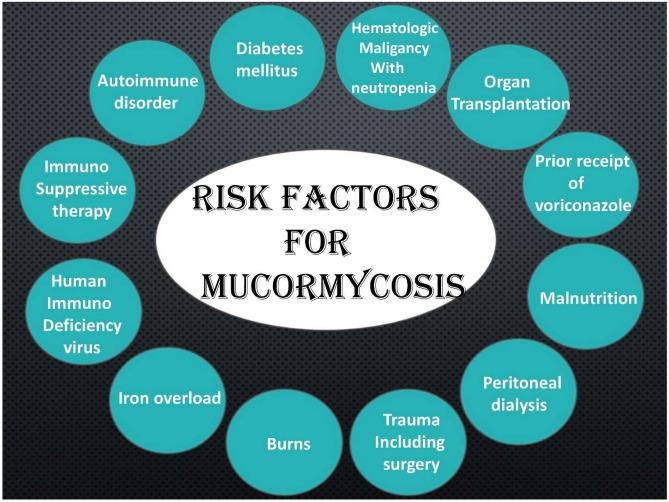
Mucormycosis is a deadly opportunistic disease caused by a group of fungus named mucormycetes. Fungal spores are normally present in the environment and the immune system of the body prevents them from causing disease in a healthy immunocompetent individual. But when the defense mechanism of the body is compromised such as in the patients of diabetes mellites, neustropenia, organ transplantation recipients, and other immune-compromised states, these fungal spores invade our defense mechanism easily causing a severe systemic infection with approximately 45-80% of case fatality. In the present scenario, during the COVID-19 pandemic, patients are on immunosuppressive drugs, glucocorticoids, thus are at high risk of mucormycosis. Patients with diabetes mellitus are further getting a high chance of infection. Usually, the spores gain entry through our respiratory tract affecting the lungs and paranasal sinuses. Besides, they can also enter through damage into the skin or through the gastrointestinal route. This review article presents the current statistics, the causes of this infection in the human body, and its diagnosis with available recent therapies through recent databases collected from several clinics and agencies. The diagnosis and identification of the infection were made possible through various latest medical techniques such as computed tomography scans, direct microscopic observations, MALDI-TOF mass spectrometry, serology, molecular assay, and histopathology. Mucormycosis is so uncommon, no randomized controlled treatment studies have been conducted. The newer triazoles, posaconazole (POSA) and isavuconazole (ISAV) (the active component of the prodrug isavuconazonium sulfate) may be beneficial in patients who are refractory to or intolerant of Liposomal Amphotericin B. but due to lack of early diagnosis and aggressive surgical debridement or excision, the mortality rate remains high. In the course of COVID-19 treatments, there must be more vigilance and alertness are required from clinicians to evaluate these invasive fungal infections.
毛霉病是一种由名为毛霉菌的一类真菌引起的致命性机会性疾病。真菌孢子通常存在于环境中,人体免疫系统可防止它们在免疫功能正常的健康个体中引发疾病。但当人体的防御机制受损时,如糖尿病、中性粒细胞减少症患者、器官移植受者及其他免疫功能低下状态,这些真菌孢子就容易侵入我们的防御机制,引发严重的全身感染,病死率约为45%-80%。在当前情况下,在新冠疫情期间,患者正在使用免疫抑制药物、糖皮质激素,因此患毛霉病的风险很高。糖尿病患者感染的几率更高。通常,孢子通过呼吸道进入人体,影响肺部和鼻窦。此外,它们也可通过皮肤损伤或胃肠道途径进入。这篇综述文章通过从多家诊所和机构收集的最新数据库,介绍了当前的统计数据、人体感染的原因、诊断方法以及现有的最新治疗方法。通过计算机断层扫描、直接显微镜观察、基质辅助激光解吸电离飞行时间质谱、血清学、分子检测和组织病理学等各种最新医学技术,实现了对感染的诊断和鉴定。毛霉病非常罕见,尚未进行随机对照治疗研究。新型三唑类药物泊沙康唑(POSA)和艾沙康唑(ISAV)(前药硫酸艾沙康唑的活性成分)可能对脂质体两性霉素B难治或不耐受的患者有益。但由于缺乏早期诊断以及积极的手术清创或切除,死亡率仍然很高。在新冠治疗过程中,临床医生必须更加警惕,以评估这些侵袭性真菌感染。
 Zotero 插件