
驱动基因突变对接受新辅助免疫和化疗的早期肺癌患者治疗结局的影响。
The impact of driver mutation on the treatment outcome of early-stage lung cancer patients receiving neoadjuvant immunotherapy and chemotherapy.
机构信息
Department of Internal Medicine, National Cheng Kung University Hospital, College of Medicine, National Cheng Kung University, Tainan, Taiwan.
Department of Internal Medicine, E-Da Hospital, Kaohsiung, Taiwan.
出版信息
Sci Rep. 2022 Feb 28;12(1):3319. doi: 10.1038/s41598-022-07423-w.
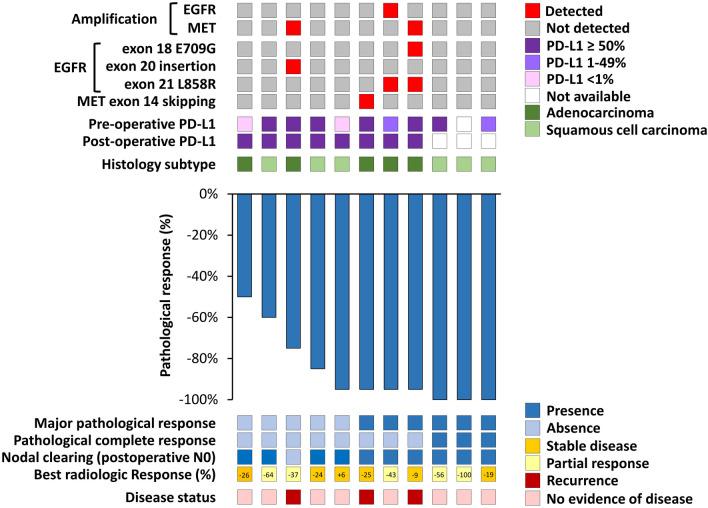
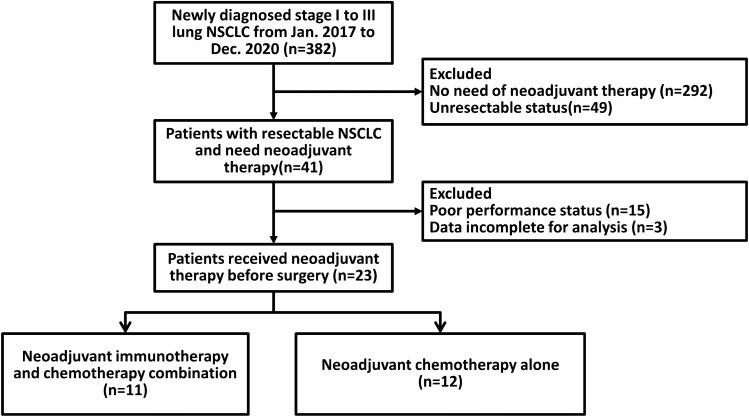
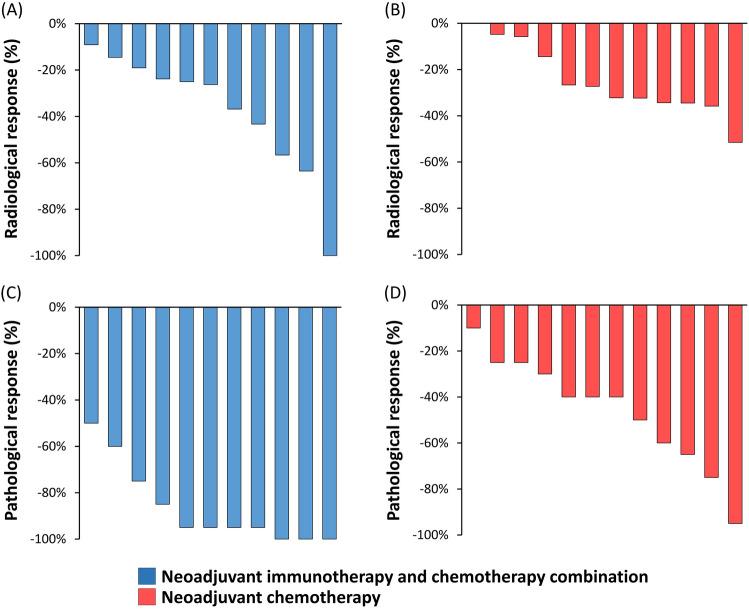
Neoadjuvant immunotherapy and chemotherapy have improved the major pathological response (MPR) in patients with early-stage operable non-small cell lung cancer (NSCLC). This study aimed to assess whether the presence of targetable driver mutations affects the efficacy of the combination of immunotherapy and chemotherapy. We enrolled patients with early-stage operable NSCLC who received preoperative neoadjuvant therapy between January 1, 2017, and December 30, 2020. Neoadjuvant therapy was delivered with platinum-doublet chemotherapy; moreover, pembrolizumab was added at the attending physician's discretion based on patient's request. Pathological responses were assessed; moreover, disease-free survival was estimated. Next-generation sequencing was performed in case sufficient preoperative biopsy specimens were obtained. We included 23 patients; among them, 11 received a combination of neoadjuvant immunotherapy and chemotherapy while 12 received neoadjuvant chemotherapy alone. The MPR and pathological complete response rates were 54.5% and 27.3%, respectively, in patients who received a combination of neoadjuvant immunotherapy and chemotherapy. These rates were significantly higher than those in patients who only received neoadjuvant chemotherapy. Three patients in the combination group experienced disease recurrence during the follow-up period even though two of them showed an MPR. These three patients had targetable driver mutations, including an EGFR exon 20 insertion, EGFR exon 21 L858R substitution, and MET exon 14 skipping. Only one patient who remained disease-free had a targetable driver mutation. Among patients with early-stage operable NSCLC requiring neoadjuvant therapy, comprehensive genomic profiling is crucial before the administration of the combination of neoadjuvant immunotherapy and chemotherapy.
新辅助免疫治疗和化疗提高了可手术早期非小细胞肺癌(NSCLC)患者的主要病理缓解(MPR)。本研究旨在评估可靶向驱动突变的存在是否影响免疫治疗和化疗联合的疗效。我们纳入了 2017 年 1 月 1 日至 2020 年 12 月 30 日期间接受术前新辅助治疗的可手术早期 NSCLC 患者。新辅助治疗采用铂类双联化疗;此外,根据患者要求和主治医生的判断,加入帕博利珠单抗。评估病理反应;此外,估计无病生存。在下述情况下进行下一代测序:获得足够的术前活检标本。我们纳入了 23 例患者;其中 11 例接受新辅助免疫治疗和化疗联合治疗,12 例接受新辅助化疗。接受新辅助免疫治疗和化疗联合治疗的患者的 MPR 和病理完全缓解率分别为 54.5%和 27.3%,显著高于仅接受新辅助化疗的患者。联合组的 3 例患者在随访期间复发,尽管其中 2 例有 MPR。这 3 例患者有可靶向驱动突变,包括 EGFR 外显子 20 插入、EGFR 外显子 21 L858R 取代和 MET 外显子 14 跳跃。仅 1 例无疾病患者有可靶向驱动突变。在需要新辅助治疗的可手术早期 NSCLC 患者中,在接受新辅助免疫治疗和化疗联合治疗之前,进行全面的基因组分析至关重要。
 Zotero 插件