
稠环在双环三唑鎓有机催化剂中的作用:动力学、X射线和密度泛函理论见解
The Role of the Fused Ring in Bicyclic Triazolium Organocatalysts: Kinetic, X-ray, and DFT Insights.
作者信息
Zhu Jiayun, Moreno Inmaculada, Quinn Peter, Yufit Dmitry S, Song Lijuan, Young Claire M, Duan Zhuan, Tyler Andrew R, Waddell Paul G, Hall Michael J, Probert Michael R, Smith Andrew D, O'Donoghue AnnMarie C
机构信息
Department of Chemistry, Durham University, South Road, Durham DH1 3LE, U.K.
Dpto. de Química Física, Facultad de Ciencias y Tecnologías Químicas, Universidad de Castilla - La Mancha, Avda. Camilo José Cela s/N, 13071 Ciudad Real, Spain.
出版信息
J Org Chem. 2022 Mar 18;87(6):4241-4253. doi: 10.1021/acs.joc.1c03073. Epub 2022 Mar 1.
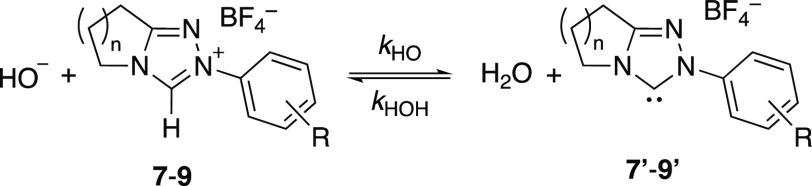
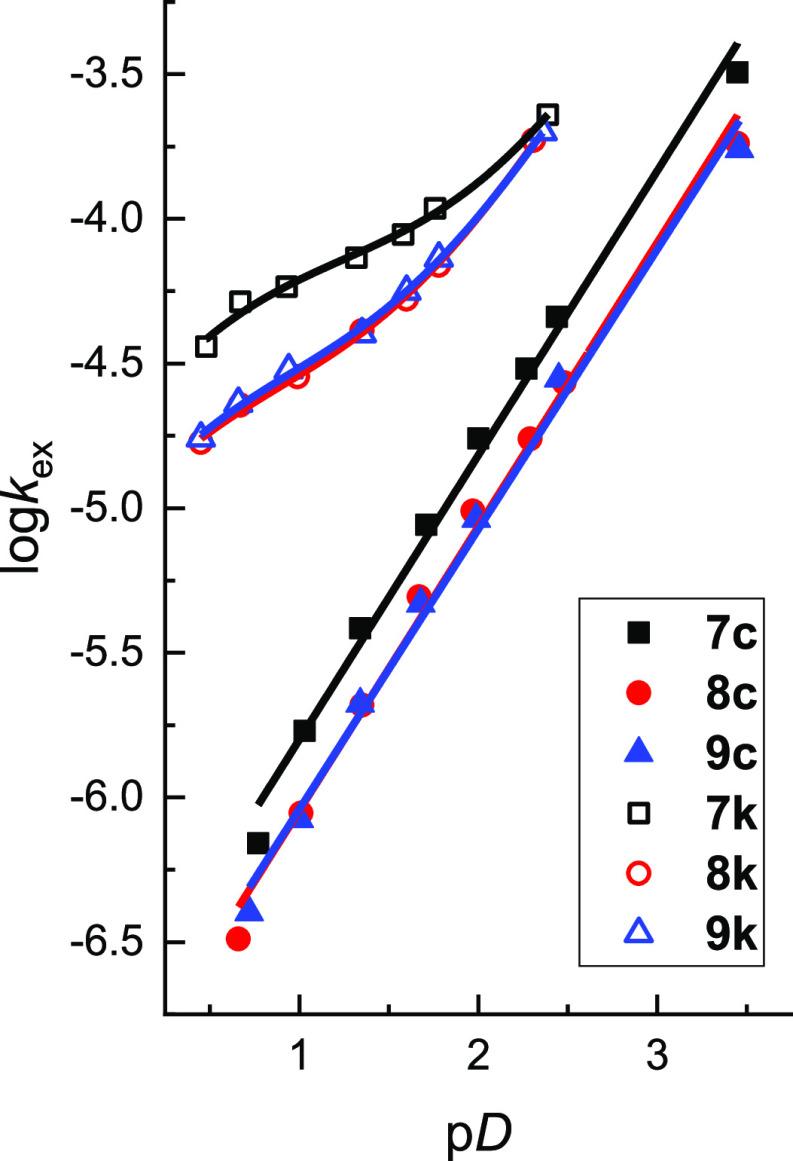
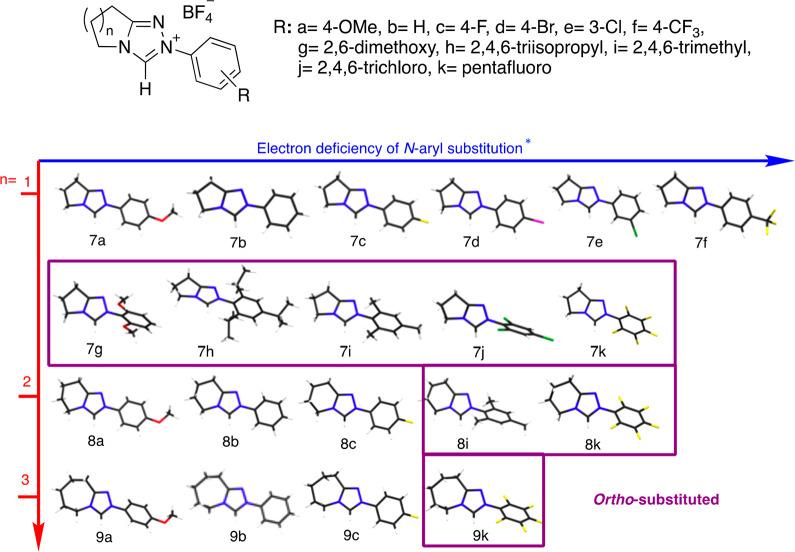
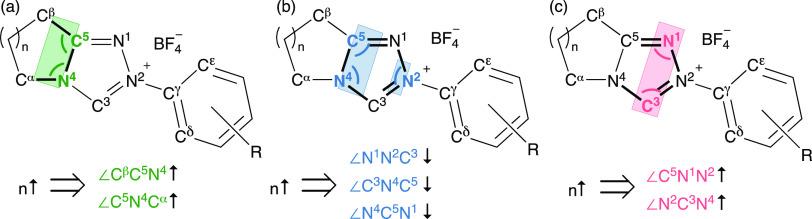
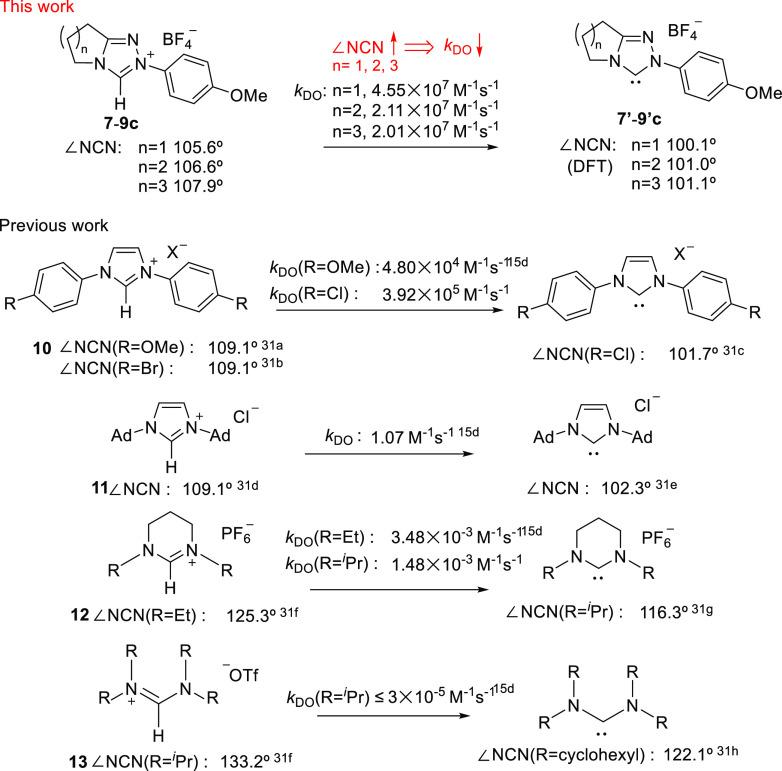
Bicyclic triazolium scaffolds are widely employed in -heterocyclic carbene (NHC) organocatalysis. While the incorporation of a fused ring was initially for synthetic utility in accessing chiral, modular triazolyl scaffolds, recent results highlight the potential for impact upon reaction outcome with the underpinning origins unclear. The common first step to all triazolium-catalyzed transformations is C(3)-H deprotonation to form the triazolylidene NHC. Herein, we report an analysis of the impact of size of the fused (5-, 6-, and 7-membered, = 1, 2, and 3, respectively) ring on the C(3) proton transfer reactions of a series of bicyclic triazolium salts. Rate constants for the deuteroxide-catalyzed C(3)-H/D-exchange of triazolium salts, , were significantly influenced by the size of the adjacent fused ring, with the kinetic acidity trend, or protofugalities, following the order ( = 1) > ( = 2) ≈ ( = 3). Detailed analyses of X-ray diffraction (XRD) data for 20 triazolium salts (including 16 new structures) and of computational data for the corresponding triazolylidene NHCs provide insight on structural effects of alteration of fused ring size. In particular, changes in internal triazolyl NCN angle and positioning of the most proximal CH with variation in fused ring size are proposed to influence the experimental protofugality order.
双环三唑鎓支架广泛应用于N-杂环卡宾(NHC)有机催化。虽然稠环的引入最初是为了合成用途,以获得手性、模块化的三唑基支架,但最近的结果突出了其对反应结果产生影响的潜力,但其潜在原因尚不清楚。所有三唑鎓催化转化的常见第一步是C(3)-H去质子化以形成三唑亚基NHC。在此,我们报告了对稠合环(分别为5、6和7元环,n = 1、2和3)大小对一系列双环三唑鎓盐的C(3)质子转移反应的影响的分析。三唑鎓盐的氘氧化物催化的C(3)-H/D交换的速率常数kH/kD受到相邻稠合环大小的显著影响,动力学酸度趋势或离去质子能力遵循顺序kH/kD (n = 1) > kH/kD (n = 2) ≈ kH/kD (n = 3)。对20种三唑鎓盐(包括16种新结构)的X射线衍射(XRD)数据以及相应三唑亚基NHC的计算数据的详细分析提供了关于稠合环大小改变的结构效应的见解。特别是,提出随着稠合环大小的变化,内部三唑基NCN角的变化和最接近的CH的位置会影响实验离去质子能力顺序。




 Zotero 插件