
利用可编程靶向纳米孔测序进行串联重复扩展疾病的综合基因诊断。
Comprehensive genetic diagnosis of tandem repeat expansion disorders with programmable targeted nanopore sequencing.
机构信息
Kinghorn Centre for Clinical Genomics, Garvan Institute of Medical Research, Sydney, NSW, Australia.
School of Medicine, University of New South Wales, Sydney, NSW, Australia.
出版信息
Sci Adv. 2022 Mar 4;8(9):eabm5386. doi: 10.1126/sciadv.abm5386.
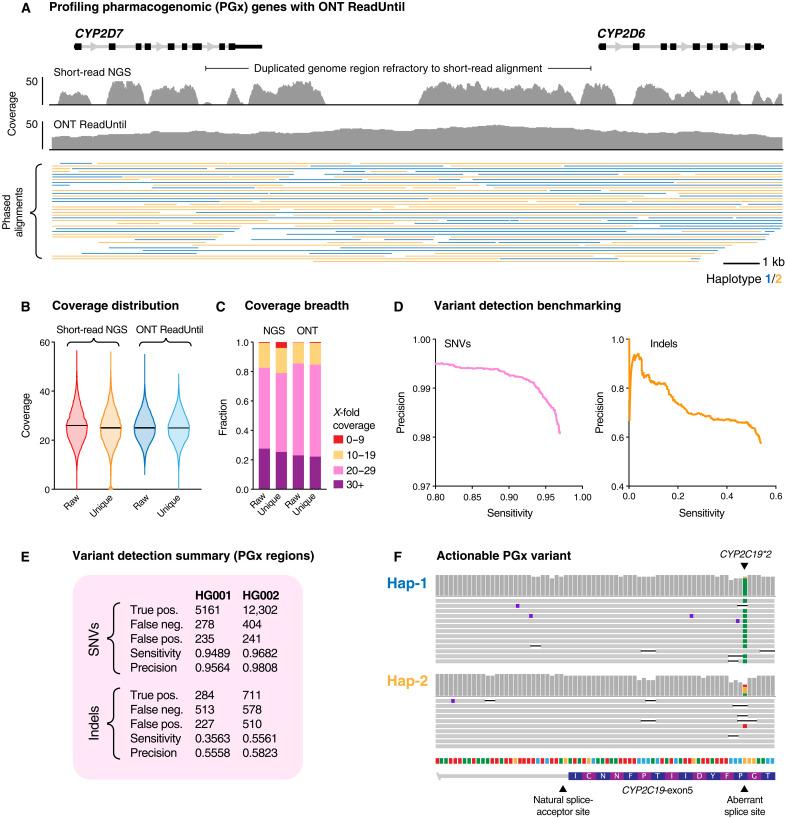
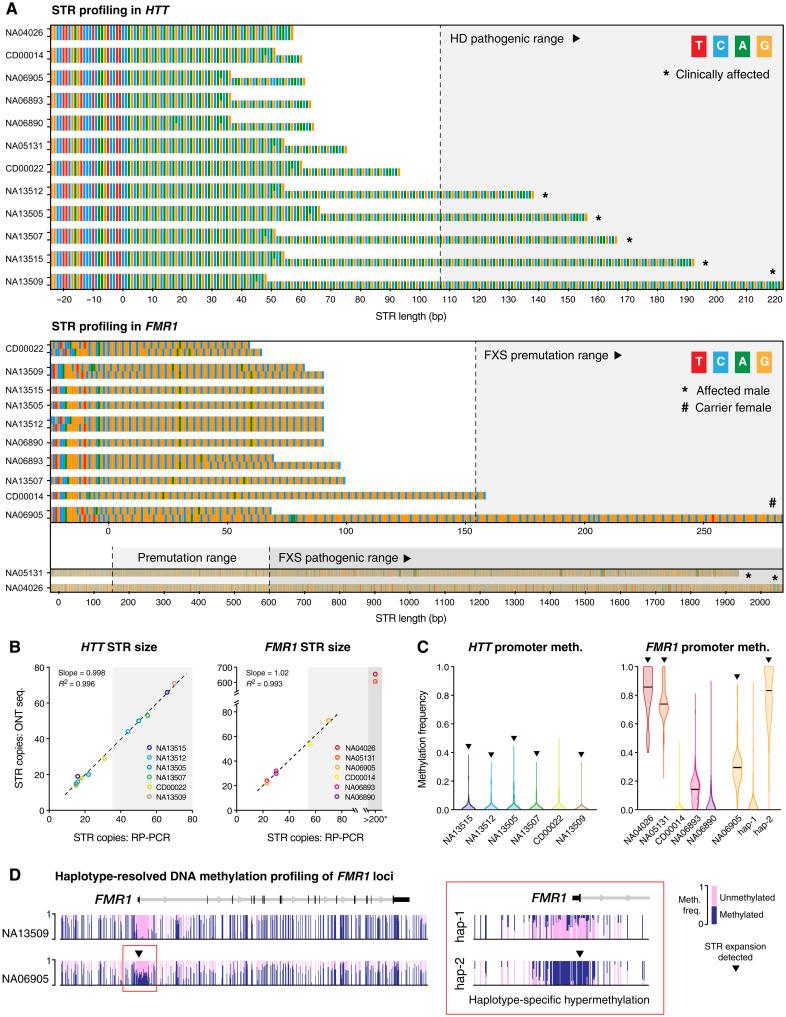
More than 50 neurological and neuromuscular diseases are caused by short tandem repeat (STR) expansions, with 37 different genes implicated to date. We describe the use of programmable targeted long-read sequencing with Oxford Nanopore's ReadUntil function for parallel genotyping of all known neuropathogenic STRs in a single assay. Our approach enables accurate, haplotype-resolved assembly and DNA methylation profiling of STR sites, from a list of predetermined candidates. This correctly diagnoses all individuals in a small cohort ( = 37) including patients with various neurogenetic diseases ( = 25). Targeted long-read sequencing solves large and complex STR expansions that confound established molecular tests and short-read sequencing and identifies noncanonical STR motif conformations and internal sequence interruptions. We observe a diversity of STR alleles of known and unknown pathogenicity, suggesting that long-read sequencing will redefine the genetic landscape of repeat disorders. Last, we show how the inclusion of pharmacogenomic genes as secondary ReadUntil targets can further inform patient care.
超过 50 种神经和神经肌肉疾病是由短串联重复(STR)扩展引起的,迄今为止已有 37 个不同的基因被牵连。我们描述了使用可编程靶向长读测序和 Oxford Nanopore 的 ReadUntil 功能,在单个测定中平行基因分型所有已知的神经病变 STR。我们的方法能够从预定候选者列表中准确、单倍型解析组装和 DNA 甲基化分析 STR 位点。这种方法可以正确诊断一小部分人群(n=37)中的所有个体,包括患有各种神经遗传疾病的患者(n=25)。靶向长读测序可以解决困扰现有分子测试和短读测序的大型和复杂 STR 扩展问题,并识别非典型 STR 基序构象和内部序列中断。我们观察到已知和未知致病性的 STR 等位基因的多样性,这表明长读测序将重新定义重复障碍的遗传景观。最后,我们展示了如何将药物基因组学基因作为二级 ReadUntil 目标纳入,从而进一步为患者护理提供信息。



 Zotero 插件