
多基因检测面板在有近亲结婚及乳腺癌家族史患者中的重要性。
Importance of multigene panel test in patients with consanguineous marriage and family history of breast cancer.
作者信息
Ozmen Vahit, Caglayan Ahmet Okay, Yararbas Kanay, Ordu Cetin, Aktepe Fatma, Ozmen Tolga, Ilgun Ahmet Serkan, Soybir Gursel, Alco Gul, Tsaousis Georgios N, Papadopoulou Eirini, Agiannitopoulos Konstantinos, Pepe Georgia, Kampouri Stavroula, Nasioulas George, Sezgin Efe, Soran Atilla
机构信息
Department of Surgery, Istanbul Faculty of Medicine, Istanbul University, Istanbul 34093, Turkey.
Department of Medical Genetics, Dokuz Eylul University, Izmir 35330, Turkey.
出版信息
Oncol Lett. 2022 Apr;23(4):118. doi: 10.3892/ol.2022.13238. Epub 2022 Feb 9.
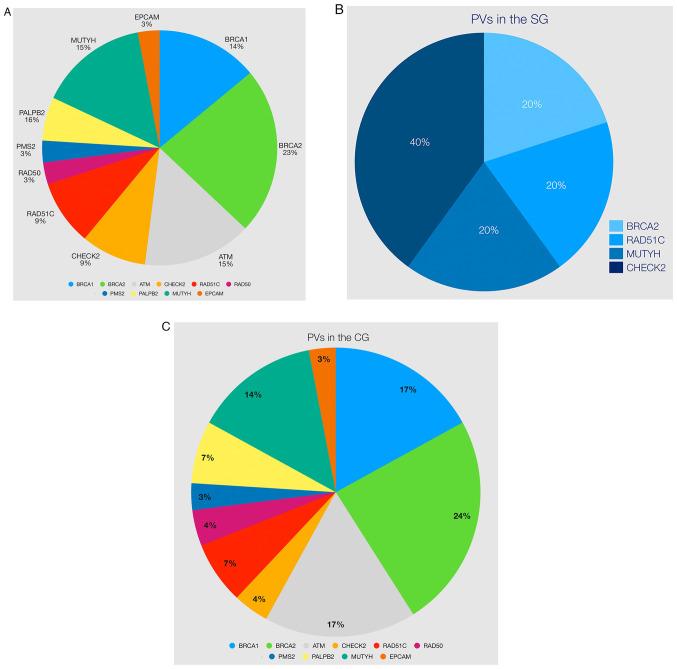
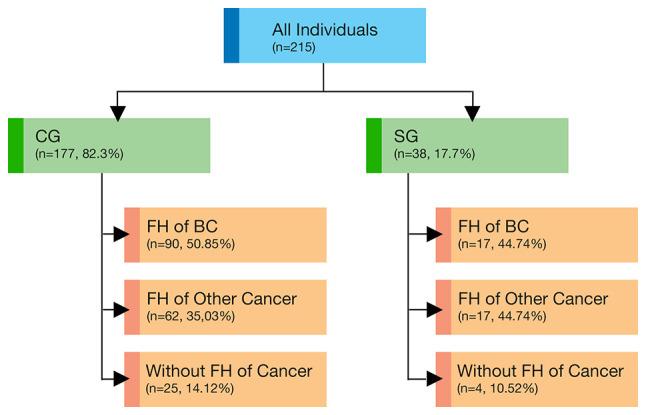
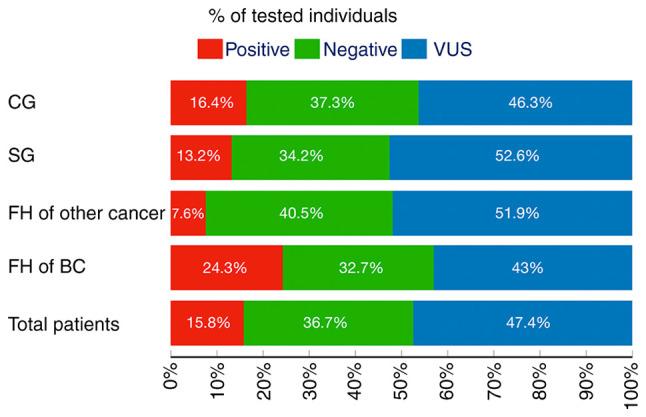
Next-generation sequencing (NGS) technology is used to evaluate hereditary cancer risks of patients worldwide; however, information concerning the germline multigene mutational spectrum among patients with breast cancer (BC) with consanguineous marriage (CM) is limited. Therefore, this prospective study aimed to determine the molecular characteristics of patients with BC who were tested with multigene hereditary cancer predisposition NGS panel and to show the effect of CM on cancer-related genes. Patients with BC with or without CM and family history (FH) of BC treated in our breast center were selected according to The National Comprehensive Cancer Network (NCCN) criteria for hereditary BC. In these patients, the analysis of a panel of 33 genes involved in hereditary cancer predisposition was performed after genetic counseling by using NGS. The pathogenic variant (PV) and the variant of uncertain significance (VUS) were found to be 15.8 and 47.4%, respectively. PVs were identified in 10/33 genes in 34 patients; 38.2% in BRCA1/2 genes; 6, 24, and 14% in other high, moderate and low-risk genes, respectively. The CM rate was 17.7% among the 215 patients with BC. The PV rate was 13.2% in patients with CM and 16.4% in patients without CM (P=0.80). When PV and VUS were evaluated together, the PV+VUS ratio was significantly higher in patients with CM and FH of BC than patients without CM and FH of BC (88.2 vs. 63.3%, P=0.045). Analysis of multigene panel provided 9.76% additional PVs in moderate/low-risk genes. The PV rate was similar in patients with BC with or without CM. A high PV+VUS ratio in patients with CM and FH of BC suggests that genes whose importance are unknown are likely to be pathogenic genes later.
下一代测序(NGS)技术用于评估全球患者的遗传性癌症风险;然而,关于近亲结婚(CM)的乳腺癌(BC)患者种系多基因突变谱的信息有限。因此,这项前瞻性研究旨在确定接受多基因遗传性癌症易感性NGS检测的BC患者的分子特征,并展示CM对癌症相关基因的影响。根据美国国立综合癌症网络(NCCN)遗传性BC的标准,选择在我们乳腺中心接受治疗的有或无CM及BC家族史(FH)的BC患者。在这些患者中,经遗传咨询后,使用NGS对一组33个参与遗传性癌症易感性的基因进行分析。发现致病性变异(PV)和意义未明变异(VUS)的比例分别为15.8%和47.4%。在34例患者的33个基因中的10个基因中鉴定出PV;BRCA1/2基因中为38.2%;其他高、中、低风险基因中分别为6%、24%和14%。215例BC患者中的CM率为17.7%。CM患者的PV率为13.2%,非CM患者为16.4%(P = 0.80)。当一起评估PV和VUS时,有CM及BC家族史的患者的PV + VUS比例显著高于无CM及BC家族史的患者(88.2%对63.3%,P = 0.045)。多基因检测分析在中/低风险基因中额外提供了9.76%的PV。有或无CM的BC患者的PV率相似。有CM及BC家族史的患者中高PV + VUS比例表明,重要性未知的基因可能随后成为致病基因。
 Zotero 插件