
甲状腺发育不良导致先天性甲状腺功能减退症的全外显子组测序。
Whole-Exome Sequencing in Congenital Hypothyroidism Due to Thyroid Dysgenesis.
机构信息
Research Center of Centre Hospitalier Universitaire Sainte-Justine, Université de Montréal, Montréal, Canada.
Department of Biochemistry, Université de Montréal, Montréal, Canada.
出版信息
Thyroid. 2022 May;32(5):486-495. doi: 10.1089/thy.2021.0597. Epub 2022 Apr 25.
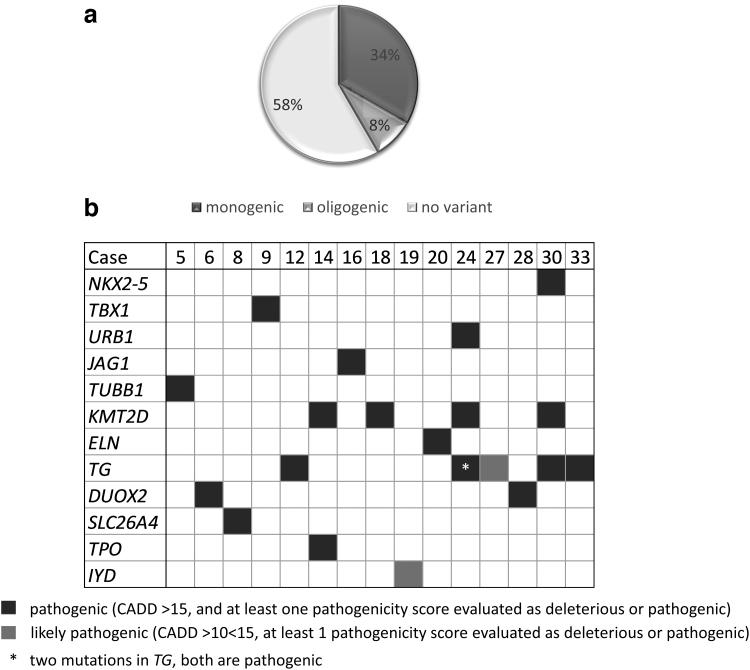
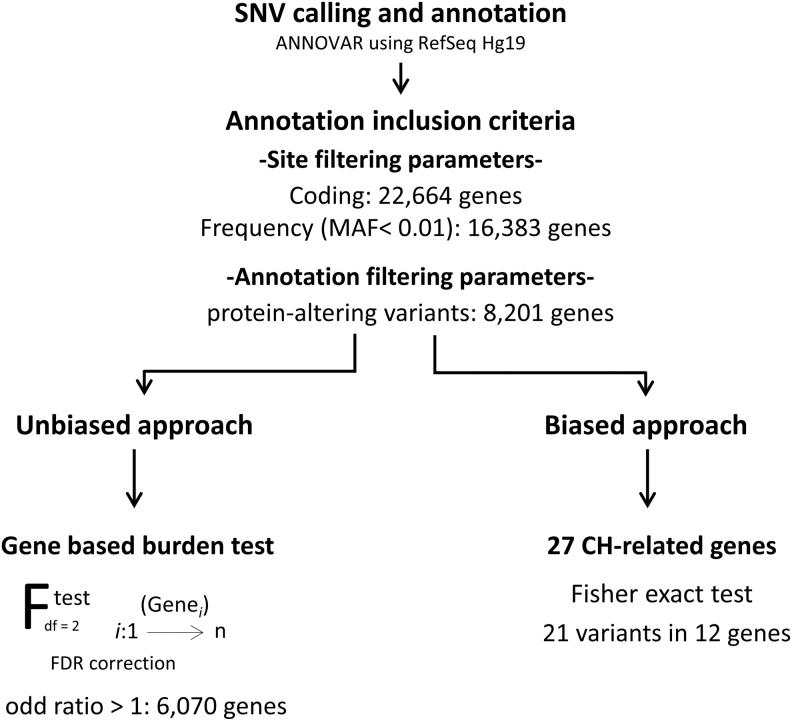
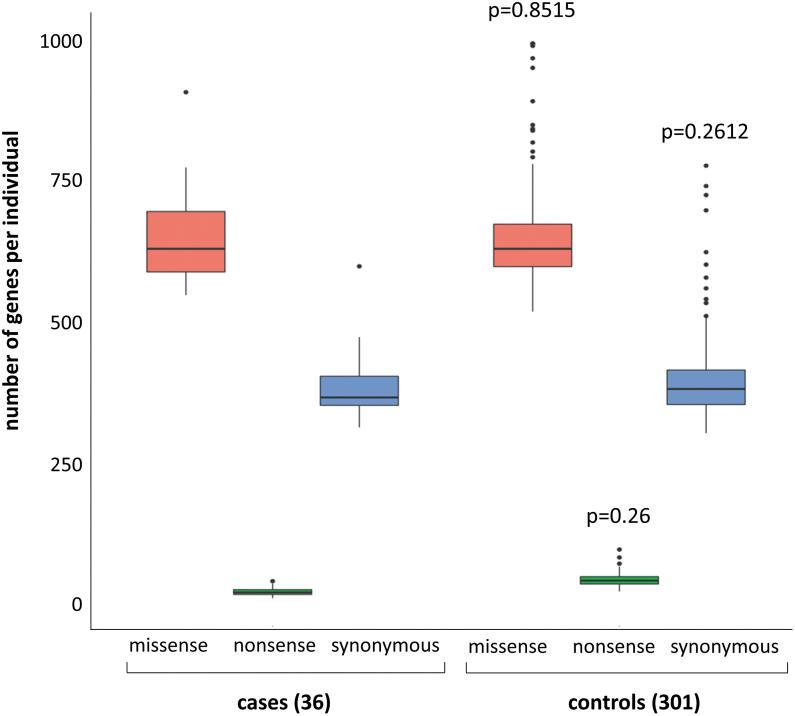
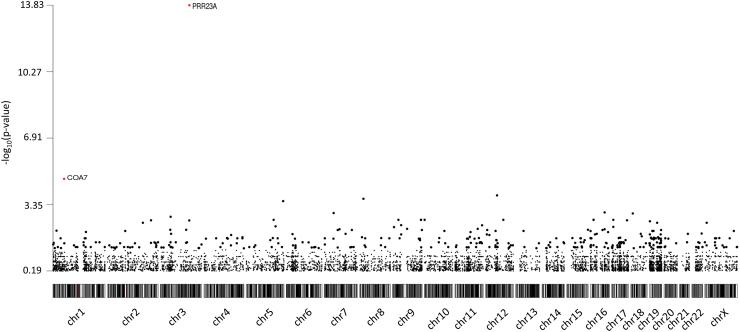
Congenital hypothyroidism due to thyroid dysgenesis (CHTD) is a predominantly sporadic and nonsyndromic (NS) condition of unknown etiology. NS-CHTD shows a 40-fold increase in relative risk among first-degree relatives (1 in 100 compared with a birth prevalence of 1 in 4000 in the general population), but a discordance rate between monozygotic (MZ) twins of 92%. This suggests a two-hit mechanism, combining a genetic predisposition (incomplete penetrance of inherited variants) with postzygotic events (accounting for MZ twin discordance). To evaluate whether whole-exome sequencing (WES) allows to identify new predisposing genes in NS-CHTD. We performed a case-control study by comparing the whole exome of 36 nonconsanguineous cases of NS-CHTD (33 with lingual thyroid ectopy and 3 with athyreosis, based on technetium pertechnetate scintigraphy at diagnosis) with that of 301 unaffected controls to assess for enrichment in rare protein-altering variants. We performed an unbiased approach using a gene-based burden with a false discovery rate correction. Moreover, we identified all rare pathogenic and likely pathogenic variants, based on prediction tools, in 27 genes previously associated with congenital hypothyroidism (CH) (thyroid dysgenesis [TD] and dyshormonogenesis). After correction for multiple testing, no enrichment in rare protein-altering variants was observed in NS-CHTD. Pathogenic or likely pathogenic variants (21 variants in 12 CH genes) were identified in 42% of cases. Eight percent of cases had variants in more than one gene (oligogenic group); these were not more severely affected than monogenic cases. Moreover, cases with protein-altering variants in dyshormonogenesis-related genes were not more severely affected than those without. No new predisposing genes were identified following an unbiased analysis of WES data in a well-characterized NS-CHTD cohort. Nonetheless, the discovery rate of rare pathogenic or likely pathogenic variants was 42%. Eight percent of the cases harbored multiple variants in genes associated with TD or dyshormonogenesis, but these variants did not explain the variability of hypothyroidism observed in dysgenesis. WES did not identify a genetic cause in NS-CHTD cases, confirming the complex etiology of this disease. Additional studies in larger cohorts and/or novel discovery approaches are required.
由于甲状腺发育不良导致的先天性甲状腺功能减退症(CHTD)是一种主要为散发性和非综合征性(NS)的疾病,病因不明。NS-CHTD 使一级亲属的相对风险增加了 40 倍(每 100 人中有 1 人,而一般人群中的出生患病率为每 4000 人中有 1 人),但同卵双胞胎(MZ)的不一致率为 92%。这表明存在双打击机制,即遗传易感性(遗传变异的不完全外显率)与合子后事件(解释 MZ 双胞胎的不一致性)相结合。为了评估全外显子组测序(WES)是否可以识别 NS-CHTD 中的新易患基因。我们通过比较 36 例非近亲 NS-CHTD 病例(33 例有舌甲状腺异位和 3 例无甲状腺,根据诊断时锝-99m 放射性核素扫描)的全外显子组与 301 例无受影响对照者的全外显子组,以评估罕见蛋白改变变异体的富集情况,进行了病例对照研究。我们使用基于基因的负担进行了无偏方法,并进行了假发现率校正。此外,我们根据先前与先天性甲状腺功能减退症(CH)相关的 27 个基因(甲状腺发育不良[TD]和激素生成障碍)的预测工具,确定了所有罕见的致病性和可能致病性变异体。经过多次测试校正,在 NS-CHTD 中未观察到罕见蛋白改变变异体的富集。在 42%的病例中发现了 21 种致病性或可能致病性变异体(12 个 CH 基因中的变异体)。8%的病例有一个以上基因的变异体(多基因组);这些病例的病情并不比单基因病例严重。此外,在与激素生成障碍相关基因中存在蛋白改变变异体的病例,其病情并不比无变异体的病例严重。在对一个具有良好特征的 NS-CHTD 队列进行 WES 数据的无偏分析后,没有发现新的易患基因。然而,罕见的致病性或可能致病性变异体的发现率为 42%。8%的病例携带有 TD 或激素生成障碍相关基因的多个变异体,但这些变异体并不能解释发育不良中观察到的甲状腺功能减退症的可变性。WES 并未在 NS-CHTD 病例中发现遗传原因,这证实了该疾病的复杂病因。需要在更大的队列中进行额外的研究和/或采用新的发现方法。
 Zotero 插件