
腹泻犬中新兴多重耐药性产志贺毒素大肠杆菌的毒力决定因素及抗菌药物耐药特性
Virulence determinant and antimicrobial resistance traits of Emerging MDR Shiga toxigenic E. coli in diarrheic dogs.
作者信息
Algammal Abdelazeem M, El-Tarabili Reham M, Alfifi Khyreyah J, Al-Otaibi Amenah S, Hashem Marwa E Abo, El-Maghraby Mamdouh M, Mahmoud Ahmed E
机构信息
Department of Bacteriology, Immunology and Mycology, Faculty of Veterinary Medicine, Suez Canal University, Ismailia, 41522, Egypt.
Biology Department, Faculty of Science, Tabuk University, Tabuk, 71491, Saudi Arabia.
出版信息
AMB Express. 2022 Mar 17;12(1):34. doi: 10.1186/s13568-022-01371-4.
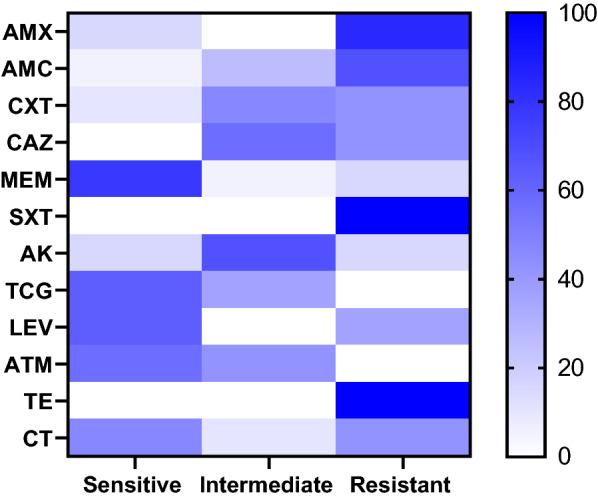
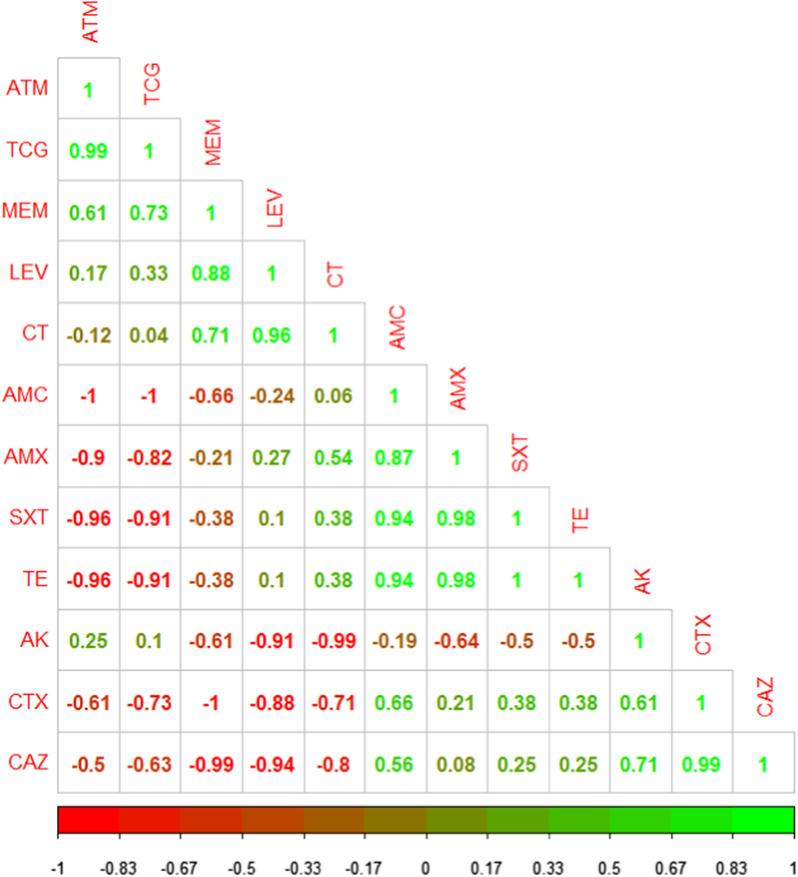
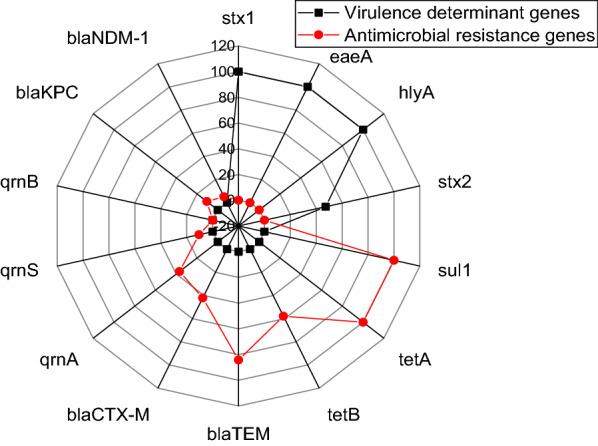
Shiga-toxigenic Escherichia coli (STEC) is incriminated in severe hemorrhagic enteritis in dogs, which is considered a veterinary and public health alarm. To investigate the prevalence, antimicrobial resistance patterns, virulence determinants, and distribution of antimicrobial resistance genes in STEC strains isolated from dogs: 80 fecal samples were obtained from diseased dogs suffering from hemorrhagic diarrhea from pet animal clinics in Ismailia governorate, Egypt. The obtained samples were examined bacteriologically. Moreover, the retrieved isolates were tested for serogrouping, Congo-red binding, antimicrobial resistance, and PCR-based determination of virulence and antimicrobial resistance genes. The prevalence of E. coli in the examined diseased dogs was 23.75% (19/80). The serogrouping of the recovered isolates revealed that 84.2% of the tested isolates were distributed into three serogroups: O146 (36.8%), O111 (31.5%), and O26 (15.7%). Meanwhile, three isolates were untypable (15.8%). Moreover, all the tested E. coli serovars were positive for CR-binding. PCR revealed that the prevalence of stx1, eaeA, hlyA, and stx2 virulence genes was 100%, 100%, 100%, and 47.3%, respectively. Our findings revealed that 31.5% of the recovered isolates showed MDR to five antimicrobial classes and harbored bla, bla, tetA, tetB, and sul1 genes. Alarmingly, three isolates were carbapenem-resistant. Two strains harbored the bla gene, while one strain carried the bla gene. Concisely, as far as we know, this is the first study that reported the existence of MDR-STEC in dogs in Egypt. The stx1 gene is the most predominant Shiga toxin gene that accompanied the STEC isolated from hemorrhagic enteritis in dogs. The emerging MDR-STEC in dogs commonly harbors bla, bla, sul1, tetA, tetB, and qnrA resistance genes. Meropenem, levofloxacin, and tigecycline exhibited talented antimicrobial activity against MDR-STEC isolated from dogs.
产志贺毒素大肠杆菌(STEC)被认为与犬类严重出血性肠炎有关,这被视为兽医和公共卫生警报。为了调查从犬类分离的STEC菌株的流行情况、抗菌药物耐药模式、毒力决定因素以及抗菌药物耐药基因的分布:从埃及伊斯梅利亚省宠物诊所患有出血性腹泻的患病犬只中采集了80份粪便样本。对采集的样本进行了细菌学检查。此外,对分离出的菌株进行了血清分型、刚果红结合试验、抗菌药物耐药性检测以及基于PCR的毒力和抗菌药物耐药基因测定。在所检查的患病犬中,大肠杆菌的流行率为23.75%(19/80)。对回收菌株的血清分型显示,84.2%的检测菌株分布在三个血清型中:O146(36.8%)、O111(31.5%)和O26(15.7%)。同时,有三株无法分型(15.8%)。此外,所有检测的大肠杆菌血清型对刚果红结合试验均呈阳性。PCR结果显示,stx1、eaeA、hlyA和stx2毒力基因的流行率分别为100%、100%、100%和47.3%。我们的研究结果显示,31.5%的回收菌株对五类抗菌药物表现出多重耐药性,并携带bla、bla、tetA、tetB和sul1基因。令人担忧的是,有三株菌株对碳青霉烯类耐药。两株菌株携带bla基因,而一株携带bla基因。简而言之,据我们所知,这是首次报道埃及犬类中存在多重耐药性STEC的研究。stx1基因是伴随从犬类出血性肠炎中分离出的STEC的最主要志贺毒素基因。犬类中出现的多重耐药性STEC通常携带bla、bla、sul1、tetA、tetB和qnrA耐药基因。美罗培南、左氧氟沙星和替加环素对从犬类分离出的多重耐药性STEC表现出良好的抗菌活性。


 Zotero 插件