
CISD1过表达预示肝癌患者预后更差。
Overexpression of CISD1 Predicts Worse Survival in Hepatocarcinoma Patients.
作者信息
Lu Tailiang, Li Chenglong, Xiang Cailing, Gong Yongqiang, Peng Wei, Chen Chaowu
机构信息
Department of General Surgery, Hunan Provincial People's Hospital (the First Affiliated Hospital of Hunan Normal University), Changsha, Hunan Province, China.
出版信息
Biomed Res Int. 2022 Mar 11;2022:7823191. doi: 10.1155/2022/7823191. eCollection 2022.
BACKGROUND
Ferroptosis plays a vital role in hepatocellular carcinoma (HCC). CISD1 is known to regulate ferroptosis negatively. However, the correlations of CISD1 to prognosis in HCC and its potential mechanism remain unclear.
AIM
To investigate the expression level and prognostic value of CISD1 in HCC.
METHODS
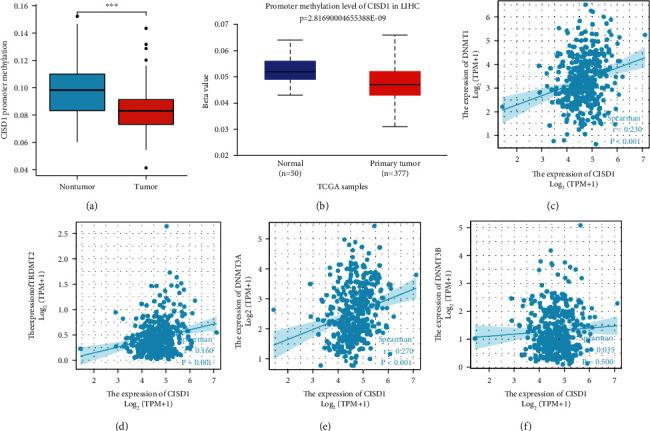
Gene expression and clinical data for 33 cancer types in TCGA were downloaded from the UCSC Xena platform. Pan-cancer analysis was performed to determine the expression profile and prognostic value of CISD1 in human cancers. GEO datasets and Human Protein Atlas (HPA) were used to verify the mRNA and protein expression levels. The influence of CISD1 on clinical prognosis in HCC was evaluated using a Kaplan-Meier plotter. The PPI network was constructed using the STRING database and Cytoscape. GO and KEGG pathways were constructed using the "clusterProfiler" R package with the FDR cutoff of 0.05. The methylation at the CISD1 promoter was detected using UALCAN and GEO datasets. The correlations between CISD1 and HCC immune infiltrates were investigated via TIMER.
RESULTS
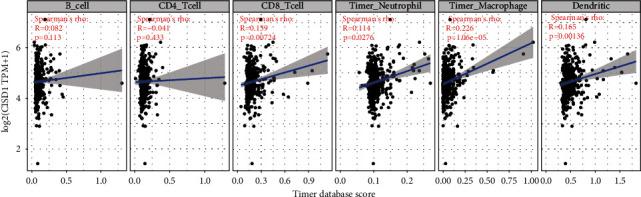
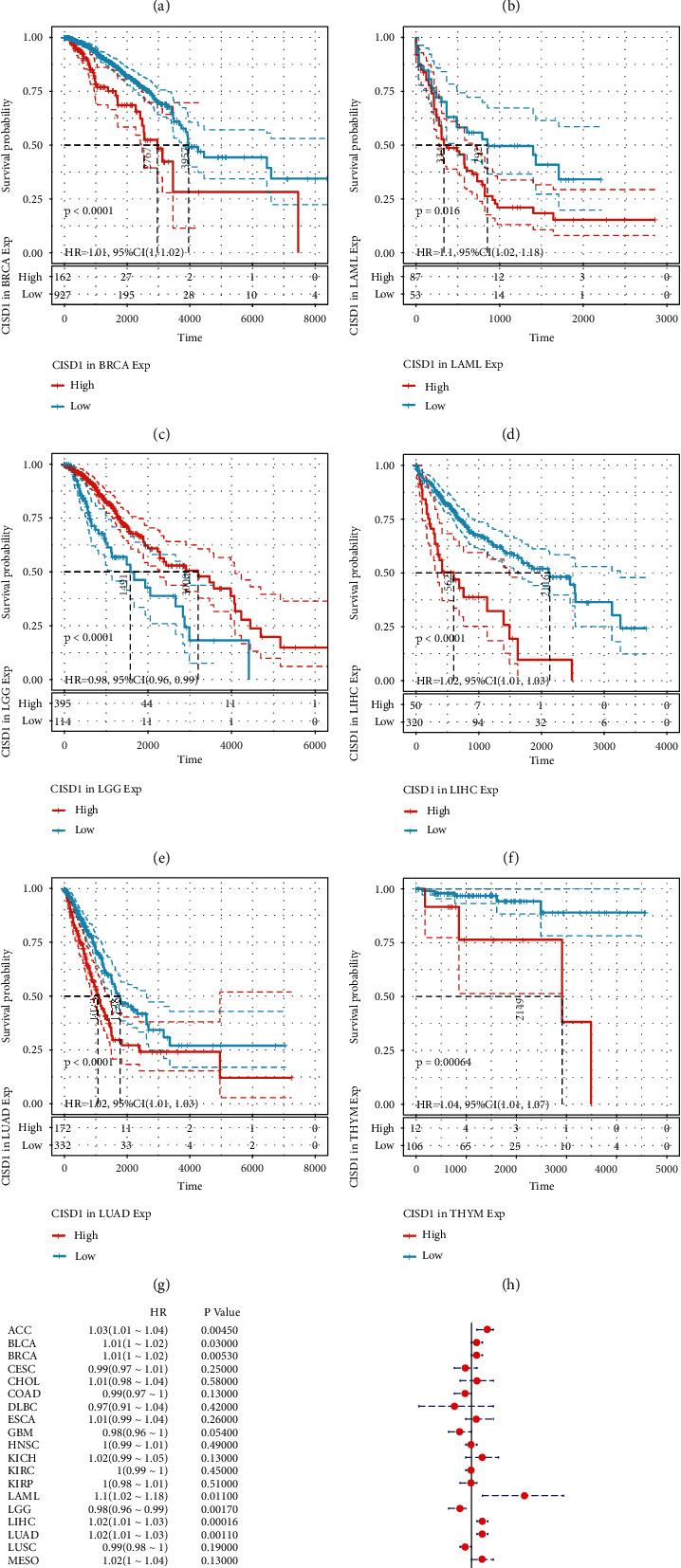
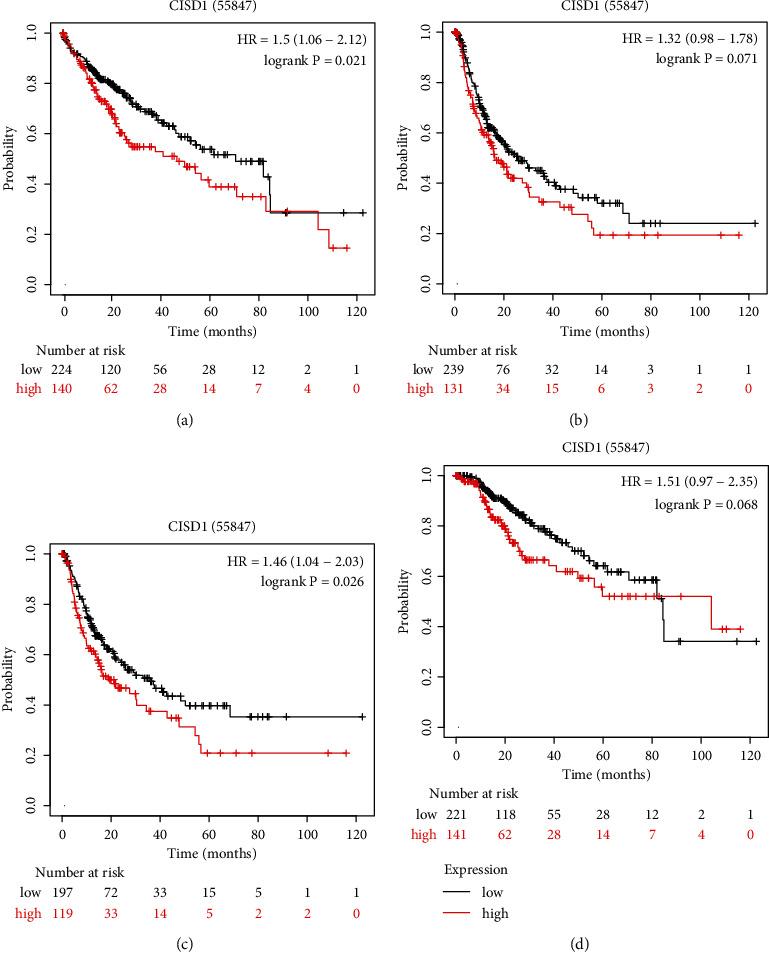
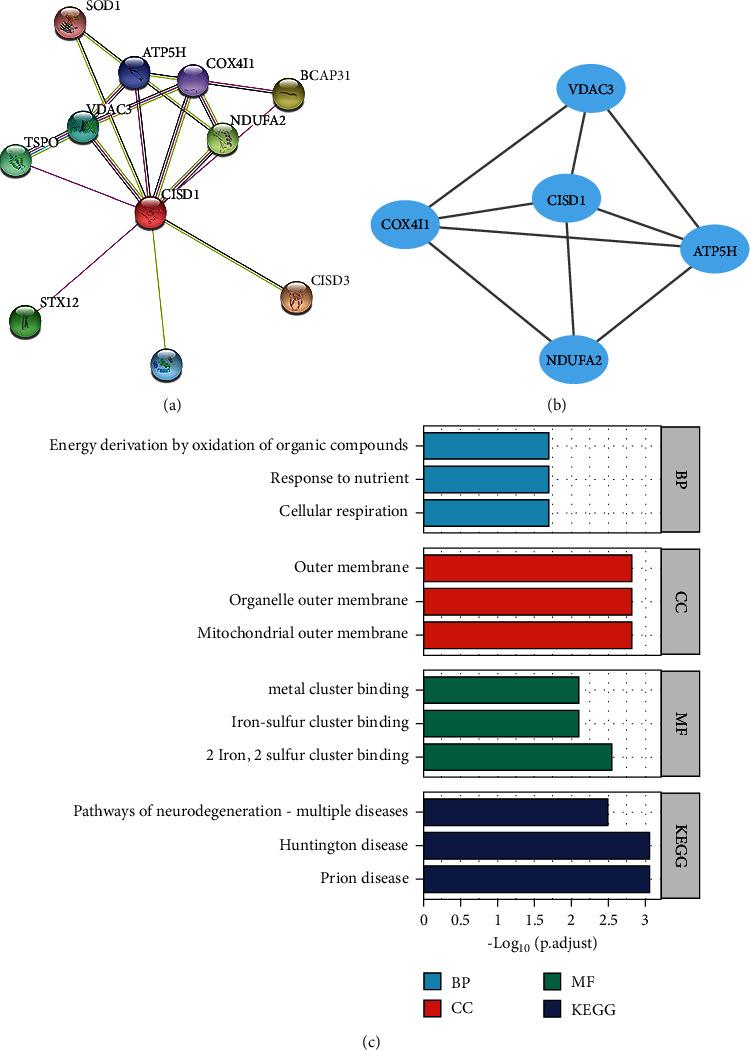
Pan-cancer analysis of TCGA data showed that CISD1 is differentially expressed in multiple tumors. Data of gene expression microarrays reveal that the mRNA expression of CISD1 is higher in HCC than that in normal tissue. The protein level of CISD1, validated by the Human Protein Atlas (HPA) database, was upregulated consistently with mRNA levels in HCC samples. High CISD1 expression was associated with better overall survival (OS), disease-free survival (DFS), disease-specific survival (DSS), and progression-free survival (PFS) in LGG, but with poorer OS, DFS, DSS, and PFS in LIHC. Protein-protein interaction (PPI) analysis and GO/KEGG analysis showed that the PPI network and GO term of CISD1 were mainly associated with energy and iron metabolism. Promoter hypomethylation correlated with overexpression of CISD1. CISD1 expression was positively correlated with infiltrating levels of CD8+ T cells, macrophages, neutrophils, and dendritic cells (DCs) in HCC.
CONCLUSIONS
These findings suggest that hypomethylation of the CISD1 promoter increases its expression in HCC. CISD1 is associated with prognosis and immune infiltrating levels of CD8+ T cells, macrophages, neutrophils, and DCs in HCC patients. These findings suggest that CISD1 can be used as a prognostic biomarker for determining prognosis in HCC.
背景
铁死亡在肝细胞癌(HCC)中起着至关重要的作用。已知CISD1对铁死亡起负调控作用。然而,CISD1与HCC预后的相关性及其潜在机制仍不清楚。
目的
研究CISD1在HCC中的表达水平及预后价值。
方法
从UCSC Xena平台下载TCGA中33种癌症类型的基因表达和临床数据。进行泛癌分析以确定CISD1在人类癌症中的表达谱和预后价值。利用GEO数据集和人类蛋白质图谱(HPA)验证mRNA和蛋白质表达水平。使用Kaplan-Meier绘图仪评估CISD1对HCC临床预后的影响。使用STRING数据库和Cytoscape构建蛋白质-蛋白质相互作用(PPI)网络。使用“clusterProfiler”R包构建GO和KEGG通路,FDR截断值为0.05。使用UALCAN和GEO数据集检测CISD1启动子处的甲基化。通过TIMER研究CISD1与HCC免疫浸润之间的相关性。
结果
对TCGA数据的泛癌分析表明,CISD1在多种肿瘤中差异表达。基因表达微阵列数据显示,HCC中CISD1的mRNA表达高于正常组织。经人类蛋白质图谱(HPA)数据库验证,HCC样本中CISD1的蛋白质水平与mRNA水平一致上调。在低级别胶质瘤(LGG)中,高CISD1表达与更好的总生存期(OS)、无病生存期(DFS)、疾病特异性生存期(DSS)和无进展生存期(PFS)相关,但在肝细胞癌(LIHC)中与较差的OS、DFS、DSS和PFS相关。蛋白质-蛋白质相互作用(PPI)分析和GO/KEGG分析表明,CISD1的PPI网络和GO术语主要与能量和铁代谢相关。启动子低甲基化与CISD1的过表达相关。CISD1表达与HCC中CD8 + T细胞、巨噬细胞、中性粒细胞和树突状细胞(DC)的浸润水平呈正相关。
结论
这些发现表明,CISD1启动子的低甲基化增加了其在HCC中的表达。CISD1与HCC患者的预后以及CD8 + T细胞、巨噬细胞、中性粒细胞和DC的免疫浸润水平相关。这些发现表明,CISD1可作为判断HCC预后的预后生物标志物。

 Zotero 插件