
呼吸道病毒大流行的始末——以西班牙流感为例。
The beginning and ending of a respiratory viral pandemic-lessons from the Spanish flu.
机构信息
Department of Biosystems, Laboratory of Gene Technology, KU Leuven, Leuven, Belgium.
出版信息
Microb Biotechnol. 2022 May;15(5):1301-1317. doi: 10.1111/1751-7915.14053. Epub 2022 Mar 22.
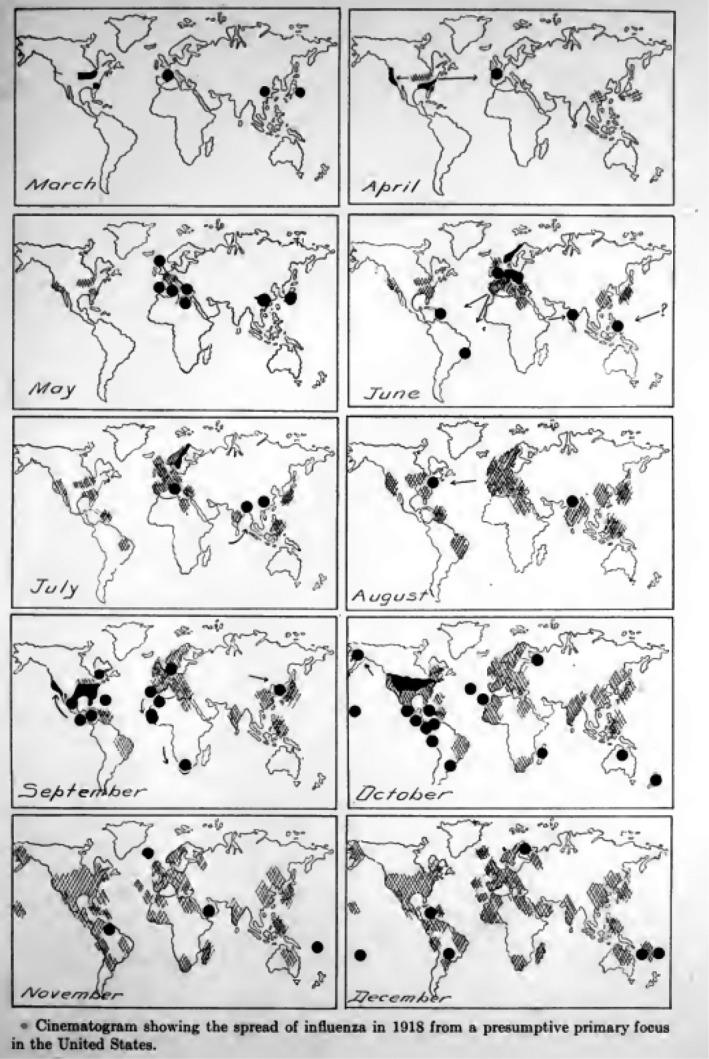
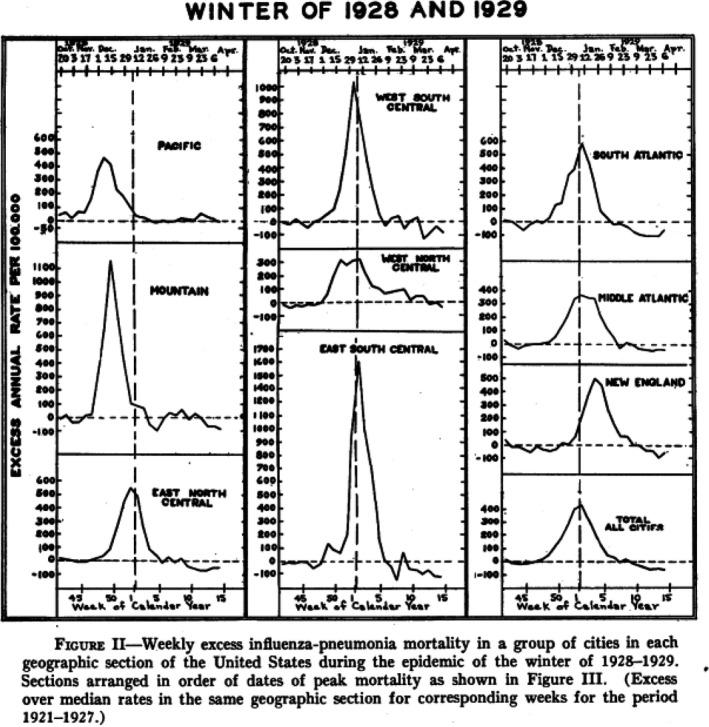
The COVID-19 pandemic goes into its third year and the world population is longing for an end to the pandemic. Computer simulations of the future development of the pandemic have wide error margins and predictions on the evolution of new viral variants of SARS-CoV-2 are uncertain. It is thus tempting to look into the development of historical viral respiratory pandemics for insight into the dynamic of pandemics. The Spanish flu pandemic of 1918 caused by the influenza virus H1N1 can here serve as a potential model case. Epidemiological observations on the shift of influenza mortality from very young and old subjects to high mortality in young adults delimitate the pandemic phase of the Spanish flu from 1918 to 1920. The identification and sequencing of the Spanish flu agent allowed following the H1N1 influenza virus after the acute pandemic phase. During the 1920s H1N1 influenza virus epidemics with substantial mortality were still observed. As late as 1951, H1N1 strains of high virulence evolved but remained geographically limited. Until 1957, the H1N1 virus evolved by accumulation of mutations ('antigenic drift') and some intratypic reassortment. H1N1 viruses were then replaced by the pandemic H2N2 influenza virus from 1957, which was in 1968 replaced by the pandemic H3N2 influenza virus; both viruses were descendants from the Spanish flu agent but showed the exchange of entire gene segments ('antigenic shift'). In 1977, H1N1 reappeared from an unknown source but caused only mild disease. However, H1N1 achieved again circulation in the human population and is now together with the H3N2 influenza virus an agent of seasonal influenza winter epidemics.
新冠疫情进入第三个年头,全球民众都渴望疫情结束。对疫情未来发展的计算机模拟存在较大误差,对 SARS-CoV-2 新病毒变体进化的预测也不确定。因此,人们倾向于研究历史上病毒性呼吸道大流行的发展,以期深入了解大流行的动态。1918 年由 H1N1 流感病毒引起的西班牙流感大流行可以作为一个潜在的典型案例。对流感死亡率从非常年轻和年老的人群向年轻人高死亡率转移的流行病学观察,将西班牙流感的大流行阶段限定在 1918 年至 1920 年。对西班牙流感病原体的鉴定和测序,使得在急性大流行阶段之后可以追踪 H1N1 流感病毒。在 20 世纪 20 年代,仍观察到了具有高死亡率的 H1N1 流感病毒流行。直到 1951 年,高毒力的 H1N1 株系仍在进化,但仍局限于特定地区。直到 1957 年,H1N1 病毒通过突变的积累(“抗原漂移”)和一些类型内重组发生进化。然后,H1N1 病毒被 1957 年的大流行 H2N2 流感病毒取代,1968 年又被大流行 H3N2 流感病毒取代;这两种病毒都是西班牙流感病原体的后代,但表现出整个基因片段的交换(“抗原转移”)。1977 年,H1N1 病毒从一个未知来源重新出现,但只引起了轻度疾病。然而,H1N1 再次在人群中传播,现在与 H3N2 流感病毒一起成为季节性流感冬季流行的病原体。



 Zotero 插件