
基于羟基咔唑的荧光传感器用于测定与神经退行性变相关的卤化物阴离子。
Fluorescence Sensors Based on Hydroxycarbazole for the Determination of Neurodegeneration-Related Halide Anions.
机构信息
Unidad de Química Analítica, Departamento de Química en Ciencias Farmacéuticas, Facultad de Farmacia, Universidad Complutense de Madrid, 28040 Madrid, Spain.
School of Pharmaceutical Sciences, Institute of Pharmaceutical Sciences of Western Switzerland, University of Geneva, Rue Michel-Servet 1, 1211 Geneva 4, Switzerland.
出版信息
Biosensors (Basel). 2022 Mar 14;12(3):175. doi: 10.3390/bios12030175.
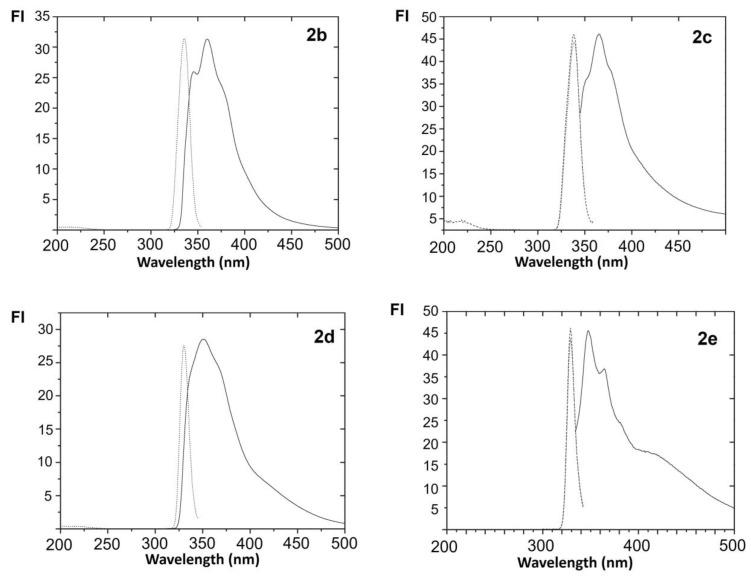
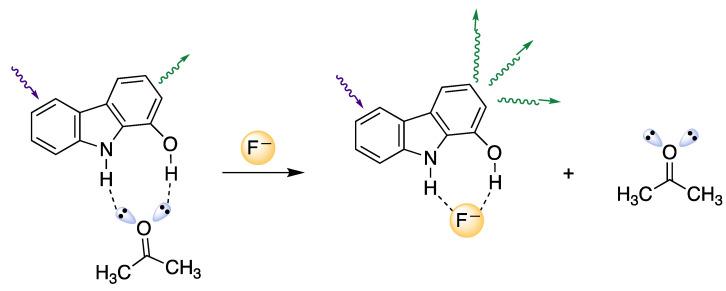
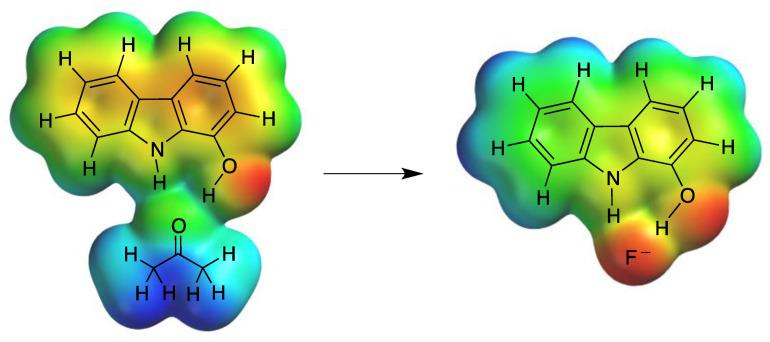
The environmental presence of anions of natural origin or anthropogenic origin is gradually increasing. As a tool to tackle this problem, carbazole derivatives are an attractive gateway to the development of luminescent chemosensors. Considering the different mechanisms proposed for anion recognition, the fluorescence properties and anion-binding response of several newly synthesised carbazole derivatives were studied. Potential anion sensors were designed so that they combined the native fluorescence of carbazole with the presence of hydrogen bonding donor groups in critical positions for anion recognition. These compounds were synthesised by a feasible and non-expensive procedure using palladium-promoted cyclodehydrogenation of suitable diarylamine under microwave irradiation. In comparison to the other carbazole derivatives studied, 1-hydroxycarbazole proved to be useful as a fluorescent sensor for anions, as it was able to sensitively recognise fluoride and chloride anions by establishing hydrogen bond interactions through the hydrogen atoms on the pyrrolic nitrogen and the hydroxy group. Solvent effects and excited-state proton transfer (ESPT) of the carbazole derivatives are described to discard the role of the anions as Brönsted bases on the observed fluorescence behaviour of the sensors. The anion-sensor interaction was confirmed by H-NMR. Molecular modelling was employed to propose a mode of recognition of the sensor in terms of complex stability and interatomic distances. 1-hydroxycarbazole was employed for the quantitation of fluoride and chloride anions in commercially available medicinal spring water and mouthwash samples.
天然或人为来源的阴离子在环境中的存在逐渐增加。作为解决这一问题的工具,咔唑衍生物是开发发光化学传感器的有吸引力的途径。考虑到提出的阴离子识别不同机制,研究了几种新合成的咔唑衍生物的荧光性质和阴离子结合响应。潜在的阴离子传感器被设计为将咔唑的固有荧光与在阴离子识别关键位置存在氢键供体基团结合起来。这些化合物是通过使用钯促进的在微波辐射下合适的二芳基胺的环脱氢反应,通过一种可行且不昂贵的程序合成的。与研究的其他咔唑衍生物相比,1-羟基咔唑被证明是一种有用的荧光传感器,可以通过在吡咯氮原子和羟基上的氢原子建立氢键相互作用来灵敏地识别氟化物和氯离子。描述了咔唑衍生物的溶剂效应和激发态质子转移(ESPT),以排除阴离子作为观察到的传感器荧光行为中 Brönsted 碱的作用。通过 H-NMR 确认了阴离子传感器的相互作用。采用分子模拟,根据复合物稳定性和原子间距离,提出了传感器识别模式。1-羟基咔唑用于定量测定市售矿泉水和漱口水中的氟化物和氯离子。





 Zotero 插件