
暴露于与心血管危险因素及结局相关的金属混合物:一项范围综述
Exposure to Metal Mixtures in Association with Cardiovascular Risk Factors and Outcomes: A Scoping Review.
作者信息
Yim Gyeyoon, Wang Yuting, Howe Caitlin G, Romano Megan E
机构信息
Department of Epidemiology, Geisel School of Medicine at Dartmouth, Lebanon, NH 03756, USA.
出版信息
Toxics. 2022 Mar 1;10(3):116. doi: 10.3390/toxics10030116.
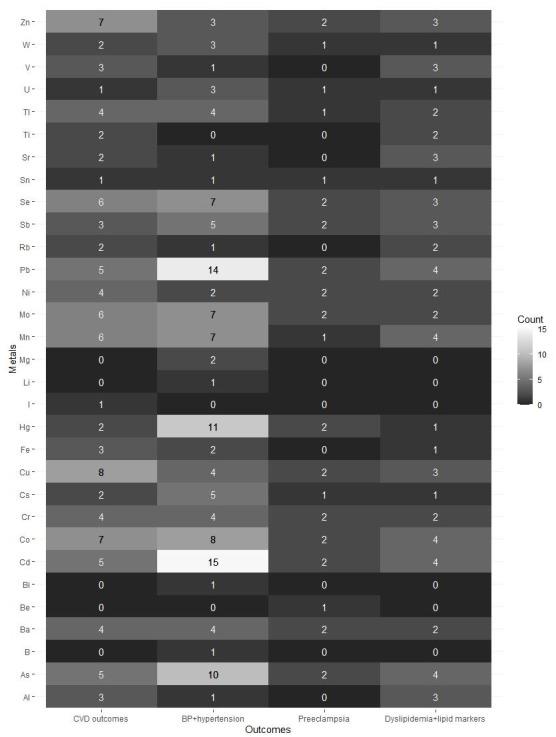
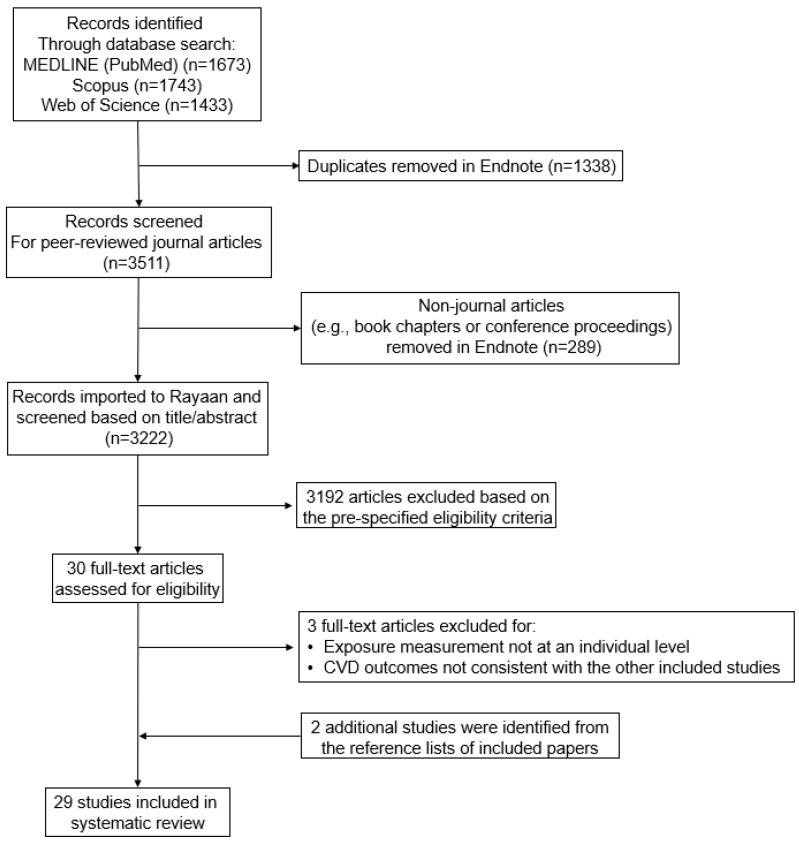
Since the National Institute of Environmental Health Sciences (NIEHS) declared conducting combined exposure research as a priority area, literature on chemical mixtures has grown dramatically. However, a systematic evaluation of the current literature investigating the impacts of metal mixtures on cardiovascular disease (CVD) risk factors and outcomes has thus far not been performed. This scoping review aims to summarize published epidemiology literature on the cardiotoxicity of exposure to multiple metals. We performed systematic searches of MEDLINE (PubMed), Scopus, and Web of Science to identify peer-reviewed studies employing statistical mixture analysis methods to evaluate the impact of metal mixtures on CVD risk factors and outcomes among nonoccupationally exposed populations. The search was limited to papers published on or after 1998, when the first dedicated funding for mixtures research was granted by NIEHS, through 1 October 2021. Twenty-nine original research studies were identified for review. A notable increase in relevant mixtures publications was observed starting in 2019. The majority of eligible studies were conducted in the United States ( = 10) and China ( = 9). Sample sizes ranged from 127 to 10,818. Many of the included studies were cross-sectional in design. Four primary focus areas included: (i) blood pressure and/or diagnosis of hypertension ( = 15), (ii) risk of preeclampsia ( = 3), (iii) dyslipidemia and/or serum lipid markers ( = 5), and (iv) CVD outcomes, including stroke incidence or coronary heart disease ( = 8). The most frequently investigated metals included cadmium, lead, arsenic, and cobalt, which were typically measured in blood ( = 15). The most commonly utilized multipollutant analysis approaches were Bayesian kernel machine regression (BKMR), weighted quantile sum regression (WQSR), and principal component analysis (PCA). To our knowledge, this is the first scoping review to assess exposure to metal mixtures in relation to CVD risk factors and outcomes. Recommendations for future studies evaluating the associations of exposure to metal mixtures with risk of CVDs and related risk factors include extending environmental mixtures epidemiologic studies to populations with wider metals exposure ranges, including other CVD risk factors or outcomes outside hypertension or dyslipidemia, using repeated measurement of metals to detect windows of susceptibility, and further examining the impacts of potential effect modifiers and confounding factors, such as fish and seafood intake.
自美国国立环境卫生科学研究所(NIEHS)宣布将开展联合暴露研究作为一个优先领域以来,关于化学混合物的文献急剧增加。然而,目前尚未对调查金属混合物对心血管疾病(CVD)风险因素和结局影响的现有文献进行系统评价。本综述旨在总结已发表的关于多种金属暴露心脏毒性的流行病学文献。我们对MEDLINE(PubMed)、Scopus和Web of Science进行了系统检索,以识别采用统计混合物分析方法评估金属混合物对非职业暴露人群中CVD风险因素和结局影响的同行评审研究。检索限于1998年(NIEHS首次为混合物研究提供专项资金的年份)至2021年10月1日期间发表的论文。共识别出29项原创性研究进行综述。从2019年开始,相关混合物出版物数量显著增加。大多数符合条件的研究在美国(n = 10)和中国(n = 9)进行。样本量从127到10818不等。许多纳入研究为横断面设计。四个主要关注领域包括:(i)血压和/或高血压诊断(n = 15),(ii)先兆子痫风险(n = 3),(iii)血脂异常和/或血清脂质标志物(n = 5),以及(iv)CVD结局,包括中风发病率或冠心病(n = 8)。最常研究的金属包括镉、铅、砷和钴,通常在血液中测量(n = 15)。最常用的多污染物分析方法是贝叶斯核机器回归(BKMR)、加权分位数和回归(WQSR)和主成分分析(PCA)。据我们所知,这是第一项评估金属混合物暴露与CVD风险因素和结局关系的综述。未来评估金属混合物暴露与CVD风险及相关风险因素关联的研究建议包括:将环境混合物流行病学研究扩展到金属暴露范围更广的人群,纳入高血压或血脂异常以外的其他CVD风险因素或结局,使用金属重复测量来检测易感性窗口,并进一步研究潜在效应修饰因素和混杂因素(如鱼类和海鲜摄入量)的影响。

 Zotero 插件