
孟加拉国梅克纳河下游及邻近地区15种常见食用鱼类中的金属生物累积及其对人类健康的相关危害
Metals Bioaccumulation in 15 Commonly Consumed Fishes from the Lower Meghna River and Adjacent Areas of Bangladesh and Associated Human Health Hazards.
作者信息
Hossain Mohammad Belal, Tanjin Fatema, Rahman M Safiur, Yu Jimmy, Akhter Shirin, Noman Md Abu, Sun Jun
机构信息
Department of Fisheries and Marine Science, Noakhali Science and Technology University, Noakhali 3814, Bangladesh.
School of Engineering and Built Environment, Griffith University, Brisbane, QLD 4111, Australia.
出版信息
Toxics. 2022 Mar 12;10(3):139. doi: 10.3390/toxics10030139.
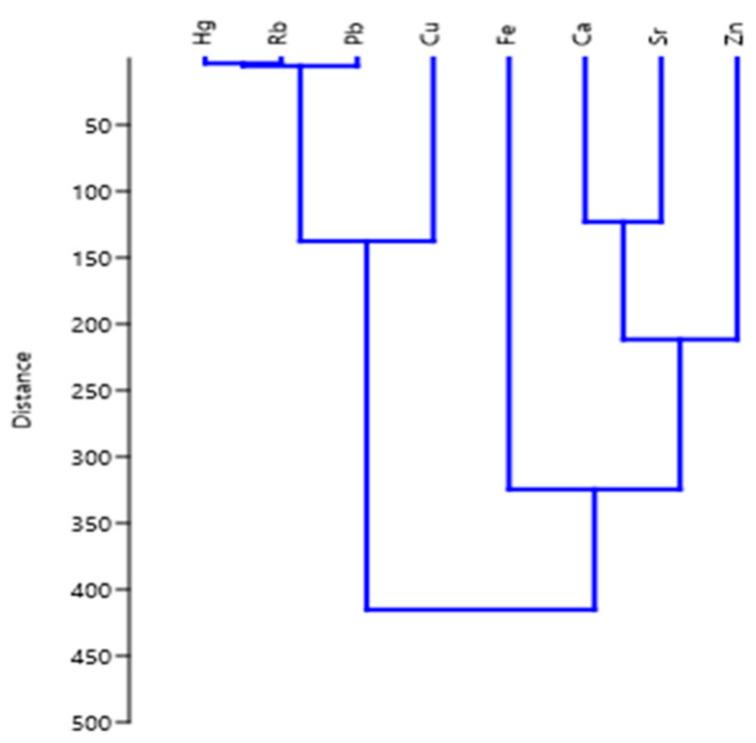
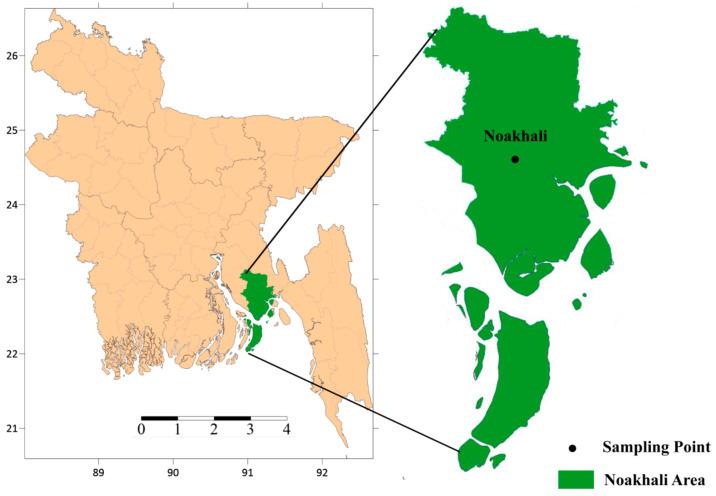
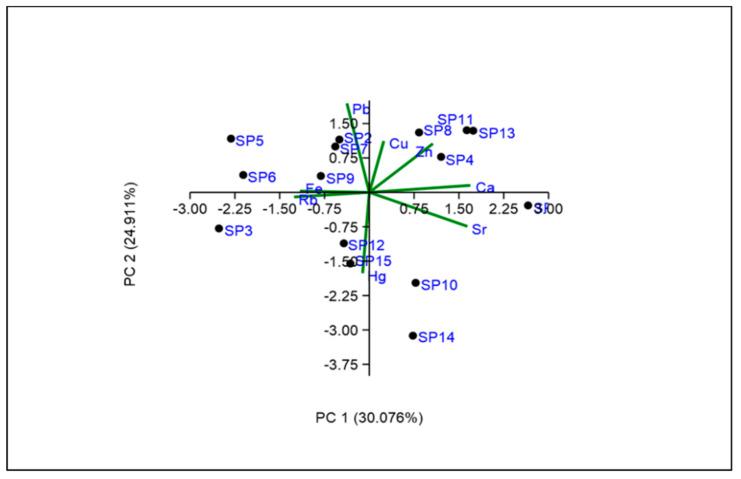
The lower Meghna River, the easternmost part of the Ganges Delta, faces severe anthropogenic perturbations as it receives a huge discharge and industrial effluents. To measure the metal concentrations and human health hazards, edible tissues of 15 commercially important fish species were collected from the local fish markets and the lower Meghna River, Bangladesh. Trace and heavy metals such as Pb, Cr, Cu, Zn, Mn, Fe, Hg, Ni, Ca, Co, Se, Rb, Sr, and As were detected using the Energy Dispersive X-ray Fluorescence (EDXRF) method. The hierarchy of mean metal concentrations obtained was: Fe (162.198 mg/kg) > Zn (113.326 mg/kg) > Ca (87.828 mg/kg) > Sr (75.139 mg/kg) > Cu (36.438 mg/kg) > Se (9.087 mg/kg) > Cr (7.336 mg/kg) > Mn (6.637 mg/kg) > Co (3.474 mg/kg) > Rb (1.912 mg/kg) > Hg (1.657 mg/kg) > Ni (1.467 mg/kg) > Pb (0.521 mg/kg) > As (BDL). Based on the metal concentration obtained, the carnivorous species contained more metals than omnivores and herbivores. Similarly, the euryhaline and benthic feeder fishes had more metals than the stenohalines and demersal fishes. The metal pollution index (MPI) suggested that the highly consumed fish species Tilapia (Oreochromis mossambicus) and Rui (Labeo rohita) accumulated higher metals than other fishes. Both the Targeted Hazard Quotient (THQ) and Hazard Index (HI) values for adult and child consumers were <1, indicating that consumers would not experience the non-carcinogenic health effects. Although children were more susceptible than adults, carcinogenic risk (CR) exposure of Cr for all the consumers was found in the acceptable range (10−6 to 10−4), but the CR exposure of Pb was negligible for all the consumers. The correlation, principal component analysis (PCA), and cluster analysis were conducted to identify the sources of metals identified from the fish tissue. The results indicated that the probable sources of the pollutants were anthropogenic, arising from agricultural activities, electroplating materials, and lubricants used near the study area. However, the present study showed a different metal concentration in the samples at different levels but within the threshold levels non-carcinogenic and carcinogenic health risks; hence, the fishes of the area, in general, are safe for human consumption.
梅克纳河下游是恒河三角洲的最东端,由于接纳大量污水和工业废水,面临着严重的人为干扰。为了测量金属浓度和对人类健康的危害,从孟加拉国当地鱼市和梅克纳河下游采集了15种具有重要商业价值的鱼类的可食用组织。使用能量色散X射线荧光光谱法(EDXRF)检测了铅、铬、铜、锌、锰、铁、汞、镍、钙、钴、硒、铷、锶和砷等痕量和重金属。所测得的平均金属浓度高低顺序为:铁(162.198毫克/千克)>锌(113.326毫克/千克)>钙(87.828毫克/千克)>锶(75.139毫克/千克)>铜(36.438毫克/千克)>硒(9.087毫克/千克)>铬(7.336毫克/千克)>锰(6.637毫克/千克)>钴(3.474毫克/千克)>铷(1.912毫克/千克)>汞(1.657毫克/千克)>镍(1.467毫克/千克)>铅(0.521毫克/千克)>砷(低于检测限)。根据所获得的金属浓度,肉食性鱼类所含金属比杂食性和草食性鱼类更多。同样,广盐性和底栖取食鱼类所含金属比狭盐性和底层鱼类更多。金属污染指数(MPI)表明,食用量很大的罗非鱼(莫桑比克罗非鱼)和魮鱼(露斯塔野鲮)比其他鱼类积累了更多的金属。成人和儿童消费者的目标危险商数(THQ)和危险指数(HI)值均<1,表明消费者不会受到非致癌健康影响。尽管儿童比成人更易受影响,但所有消费者的铬致癌风险(CR)暴露均在可接受范围内(10−6至10−4),而所有消费者的铅致癌风险暴露可忽略不计。进行了相关性分析、主成分分析(PCA)和聚类分析,以确定鱼类组织中所鉴定出的金属来源。结果表明,污染物的可能来源是人为造成的,源于农业活动、电镀材料以及研究区域附近使用的润滑剂。然而,本研究表明不同水平样本中的金属浓度有所不同,但均在非致癌和致癌健康风险的阈值范围内;因此,该地区的鱼类总体上对人类消费是安全的。
 Zotero 插件