
二甲双胍不同的代谢作用合并起来可增强体内二十碳五烯酸代谢并抑制卵巢癌
Divergent Metabolic Effects of Metformin Merge to Enhance Eicosapentaenoic Acid Metabolism and Inhibit Ovarian Cancer In Vivo.
作者信息
Udumula Mary P, Poisson Laila M, Dutta Indrani, Tiwari Nivedita, Kim Seongho, Chinna-Shankar Jasdeep, Allo Ghassan, Sakr Sharif, Hijaz Miriana, Munkarah Adnan R, Giri Shailendra, Rattan Ramandeep
机构信息
Department of Women's Health Services, Henry Ford Hospital, Henry Ford Cancer Institute, Detroit, MI 48202, USA.
Center for Bioinformatics, Department of Public Health Services, Henry Ford Cancer Institute, Detroit, MI 48202, USA.
出版信息
Cancers (Basel). 2022 Mar 15;14(6):1504. doi: 10.3390/cancers14061504.
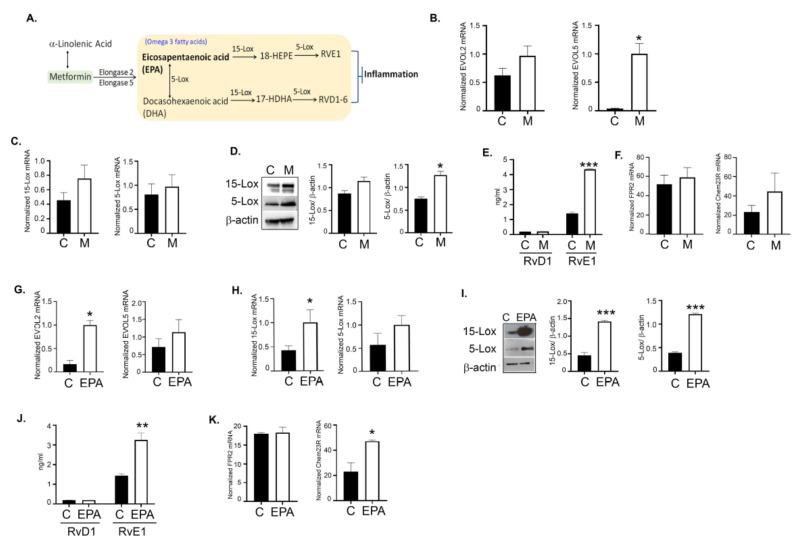
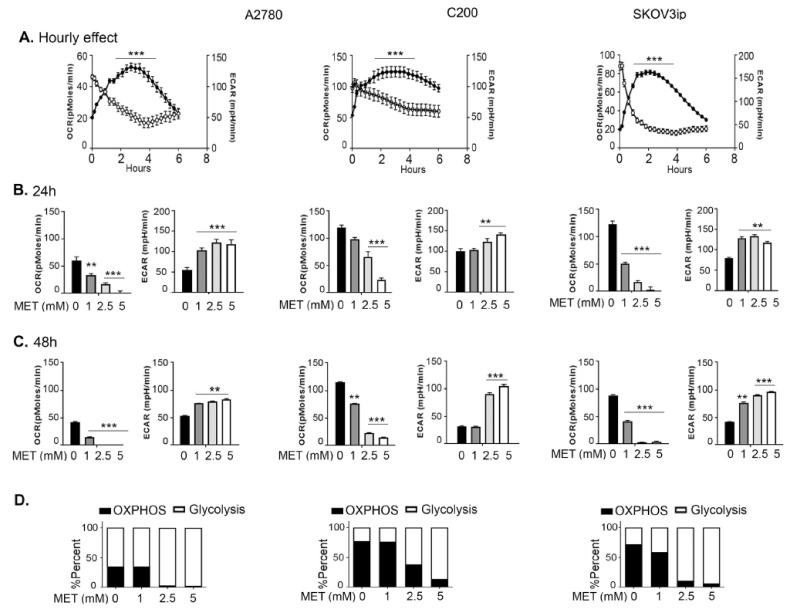
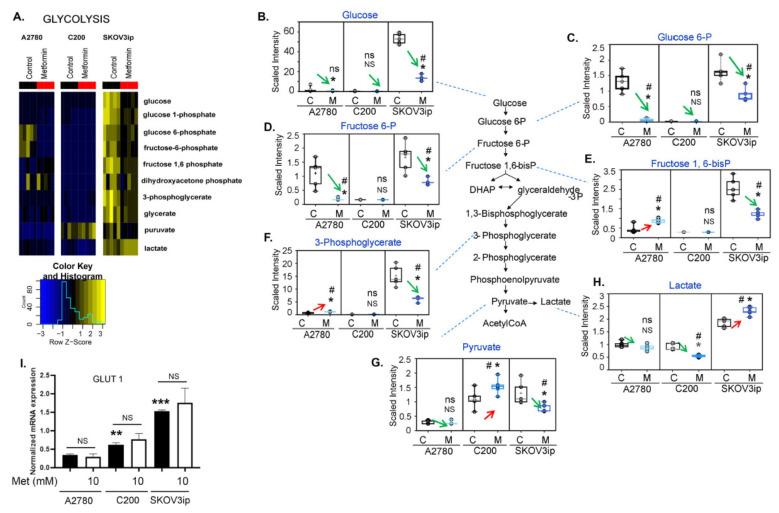
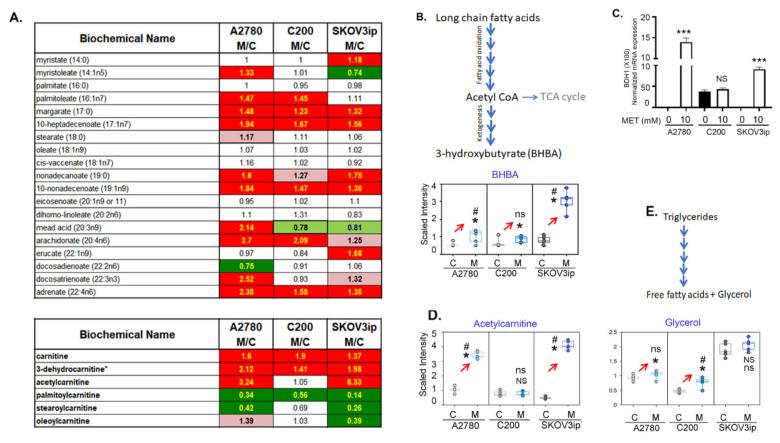
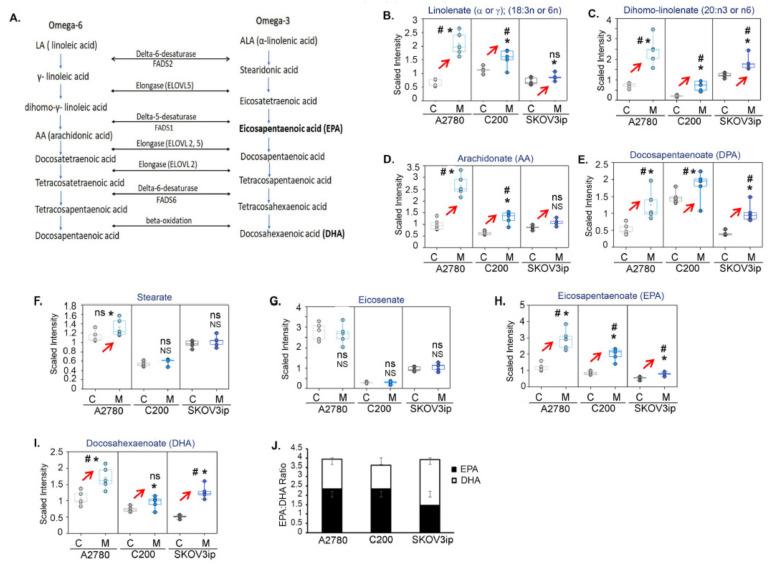
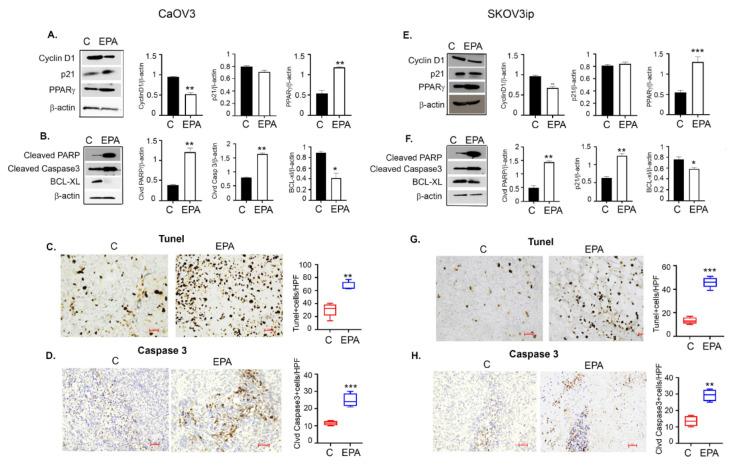
Metformin is being actively repurposed for the treatment of gynecologic malignancies including ovarian cancer. We investigated if metformin induces analogous metabolic changes across ovarian cancer cells. Functional metabolic analysis showed metformin caused an immediate and sustained decrease in oxygen consumption while increasing glycolysis across A2780, C200, and SKOV3ip cell lines. Untargeted metabolomics showed metformin to have differential effects on glycolysis and TCA cycle metabolites, while consistent increased fatty acid oxidation intermediates were observed across the three cell lines. Metabolite set enrichment analysis showed alpha-linolenic/linoleic acid metabolism as being most upregulated. Downstream mediators of the alpha-linolenic/linoleic acid metabolism, eicosapentaenoic acid (EPA) and docosahexaenoic acid (DHA), were abundant in all three cell lines. EPA was more effective in inhibiting SKOV3 and CaOV3 xenografts, which correlated with inhibition of inflammatory markers and indicated a role for EPA-derived specialized pro-resolving mediators such as Resolvin E1. Thus, modulation of the metabolism of omega-3 fatty acids and their anti-inflammatory signaling molecules appears to be one of the common mechanisms of metformin's antitumor activity. The distinct metabolic signature of the tumors may indicate metformin response and aid the preclinical and clinical interpretation of metformin therapy in ovarian and other cancers.
二甲双胍正被积极用于包括卵巢癌在内的妇科恶性肿瘤的治疗。我们研究了二甲双胍是否会在卵巢癌细胞中引发类似的代谢变化。功能代谢分析表明,二甲双胍会使A2780、C200和SKOV3ip细胞系的耗氧量立即且持续下降,同时增加糖酵解。非靶向代谢组学显示,二甲双胍对糖酵解和三羧酸循环代谢物有不同影响,而在这三种细胞系中均观察到脂肪酸氧化中间体持续增加。代谢物集富集分析表明,α-亚麻酸/亚油酸代谢上调最为明显。α-亚麻酸/亚油酸代谢的下游介质二十碳五烯酸(EPA)和二十二碳六烯酸(DHA)在所有三种细胞系中均含量丰富。EPA在抑制SKOV3和CaOV3异种移植瘤方面更有效,这与炎症标志物的抑制相关,并表明源自EPA的特殊促消退介质(如消退素E1)发挥了作用。因此,调节ω-3脂肪酸的代谢及其抗炎信号分子似乎是二甲双胍抗肿瘤活性的常见机制之一。肿瘤独特的代谢特征可能表明二甲双胍的反应情况,并有助于对二甲双胍治疗卵巢癌和其他癌症进行临床前和临床解读。




 Zotero 插件