
小型后院鸡群中物种的抗菌药物耐药性、生物膜形成及毒力基因
Antimicrobial Resistance, Biofilm Formation, and Virulence Genes in Species from Small Backyard Chicken Flocks.
作者信息
Alzahrani Othman M, Fayez Mahmoud, Alswat Amal S, Alkafafy Mohamed, Mahmoud Samy F, Al-Marri Theeb, Almuslem Ahmed, Ashfaq Hassan, Yusuf Shaymaa
机构信息
Department of Biology, College of Science, Taif University, P.O. Box 11099, Taif 21944, Saudi Arabia.
Al-Ahsa Veterinary Diagnostic Lab, Ministry of Environment, Water and Agriculture, Al-Ahsa 31982, Saudi Arabia.
出版信息
Antibiotics (Basel). 2022 Mar 13;11(3):380. doi: 10.3390/antibiotics11030380.
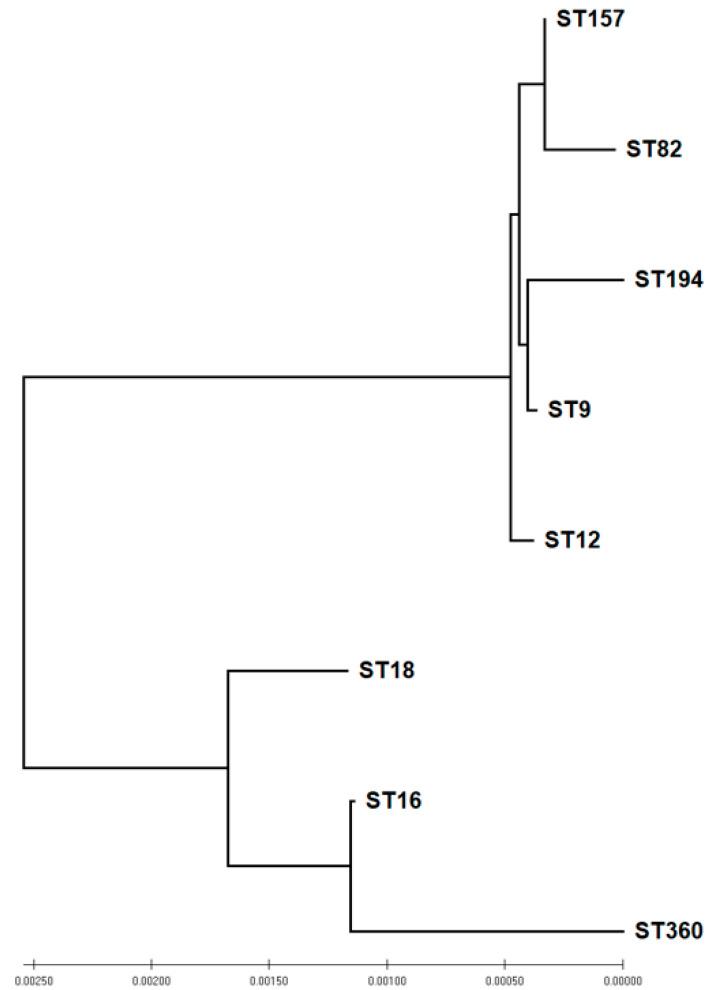
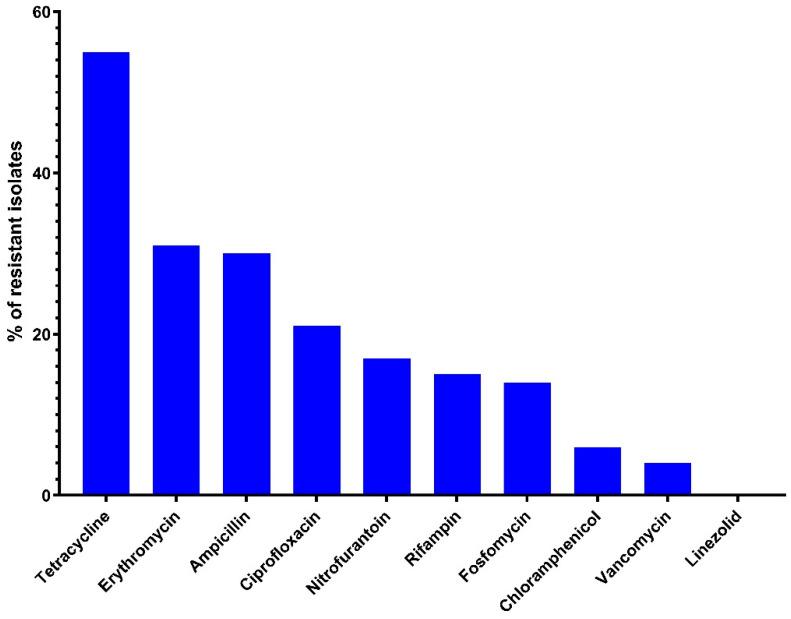
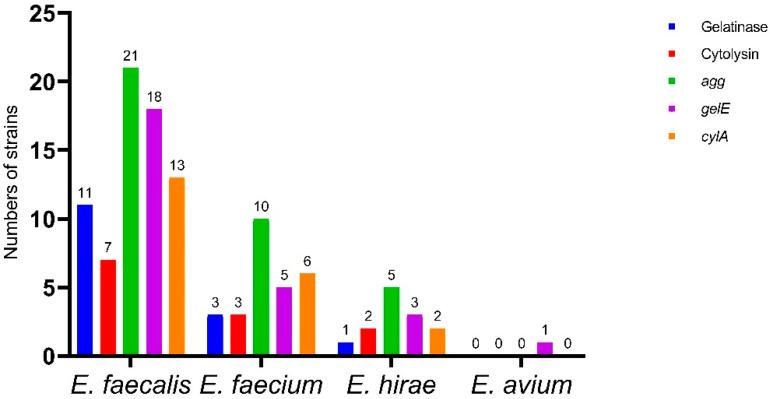
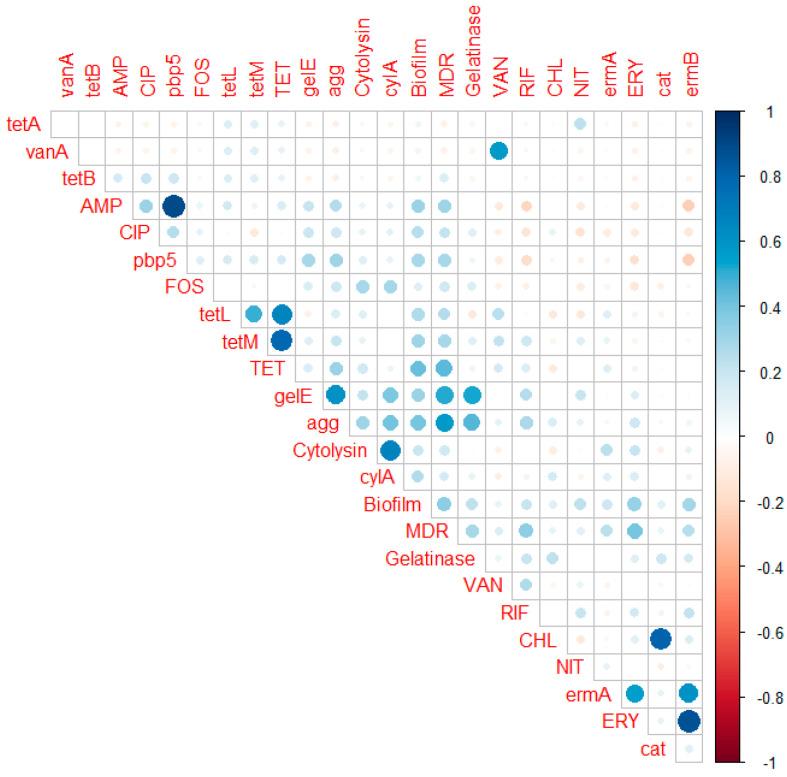
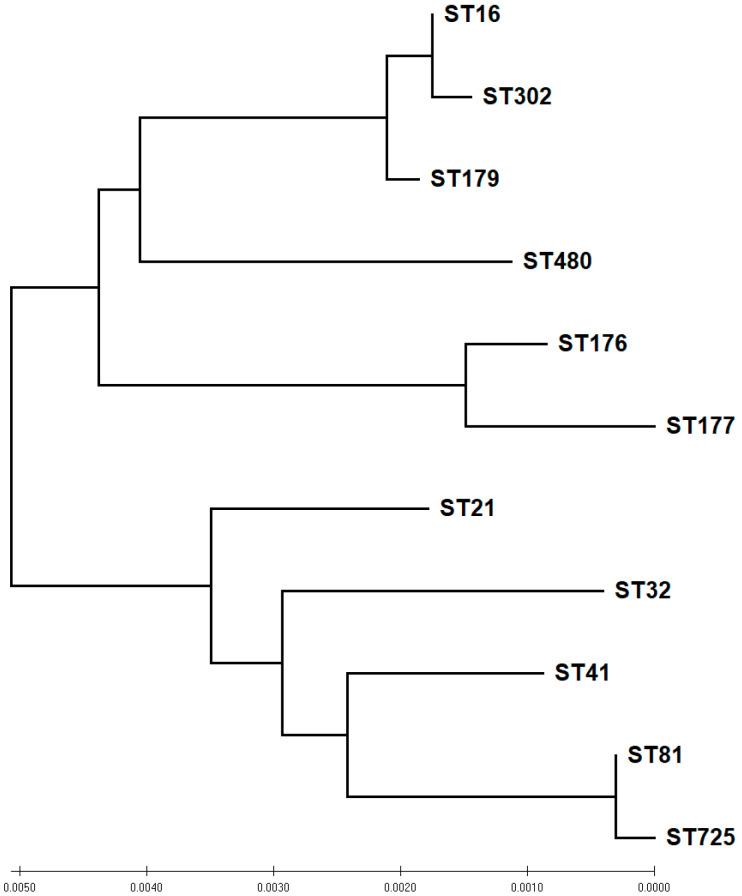
Backyard birds are small flocks that are more common in developing countries. They are used for poultry meat and egg production. However, they are also implicated in the maintenance and transmission of several zoonotic diseases, including multidrug-resistant bacteria. Enterococci are one of the most common zoonotic bacteria. They colonize numerous body sites and cause a wide range of serious nosocomial infections in humans. Therefore, the objective of the present study was to investigate the diversity in spp. in healthy birds and to determine the occurrence of multidrug resistance (MDR), multi-locus sequence types, and virulence genes and biofilm formation. From March 2019 to December 2020, cloacal swabs were collected from 15 healthy backyard broiler flocks. A total of 90 enterococci strains were recovered and classified according to the 16S sequence into (50%); (33.33%), (13.33%), and (3.33%). The isolates exhibited high resistance to tetracycline (55.6%), erythromycin (31.1%), and ampicillin (30%). However, all of the isolates were susceptible to linezolid. Multidrug resistance (MDR) was identified in 30 (33.3%) isolates. The enterococci AMR-associated genes , , , , , and were identified in 24 (26.6%), 11 (12.2%), 39 (43.3%), 34 (37.7%), 1 (1.1%), 4 (4.4%), and 23 (25.5%) isolates, respectively. Of the 90 enterococci, 21 (23.3%), 27 (30%), and 36 (40%) isolates showed the presence of , and virulence-associated genes, respectively. Seventy-three (81.1%) isolates exhibited biofilm formation. A statistically significant correlation was obtained for biofilm formation versus the MAR index and MDR. Multi-locus sequence typing (MLST) identified eleven and eight different STs for and , respectively. Seven different rep-family plasmid genes (rep1-2, rep3, rep5-6, rep9, and rep11) were detected in the MDR enterococci. Two-thirds (20/30; 66.6%) of the enterococci were positive for one or two rep-families. In conclusion, the results show that healthy backyard chickens could act as a reservoir for MDR and virulent spp. Thus, an effective antimicrobial stewardship program and further studies using a One Health approach are required to investigate the role of backyard chickens as vectors for AMR transmission to humans.
后院家禽是小型鸡群,在发展中国家更为常见。它们用于生产禽肉和禽蛋。然而,它们也与多种人畜共患病的维持和传播有关,包括多重耐药细菌。肠球菌是最常见的人畜共患病细菌之一。它们定殖于众多身体部位,并在人类中引起广泛的严重医院感染。因此,本研究的目的是调查健康家禽中肠球菌的多样性,并确定多重耐药性(MDR)、多位点序列类型、毒力基因和生物膜形成的发生率。2019年3月至2020年12月,从15个健康的后院肉鸡群中采集泄殖腔拭子。共分离出90株肠球菌菌株,并根据16S序列分类为粪肠球菌(50%)、屎肠球菌(33.33%)、鸟肠球菌(13.33%)和鹑鸡肠球菌(3.33%)。分离株对四环素(55.6%)、红霉素(31.1%)和氨苄青霉素(30%)表现出高度耐药性。然而,所有分离株对利奈唑胺敏感。在30株(33.3%)分离株中鉴定出多重耐药性。在24株(26.6%)、11株(12.2%)、39株(43.3%)、34株(37.7%)、1株(1.1%)、4株(4.4%)和23株(25.5%)分离株中分别鉴定出与肠球菌AMR相关的基因ermB、ermC、tetM、tetL、aac(6’)-aph(2”)、vanA和vanB。在90株肠球菌中,分别有21株(23.3%)、27株(30%)和36株(40%)分离株显示存在esp、gelE和hyl毒力相关基因。73株(81.1%)分离株表现出生物膜形成。生物膜形成与MAR指数和MDR之间存在统计学显著相关性。多位点序列分型(MLST)分别鉴定出粪肠球菌和屎肠球菌的11种和8种不同的STs。在多重耐药肠球菌中检测到7种不同的rep家族质粒基因(rep1 - 2、rep3、rep5 - 6、rep9和rep11)。三分之二(20/30;66.6%)的肠球菌对一种或两种rep家族呈阳性。总之,结果表明健康的后院鸡可能是多重耐药和有毒力的肠球菌的储存宿主。因此,需要一个有效的抗菌管理计划,并采用“同一健康”方法进行进一步研究,以调查后院鸡作为AMR传播给人类的载体的作用。

 Zotero 插件