
鼻压波动作为新发急性呼吸衰竭自主呼吸患者吸气努力的衡量指标。
Nasal pressure swings as the measure of inspiratory effort in spontaneously breathing patients with de novo acute respiratory failure.
机构信息
Respiratory Diseases Unit, Department of Medical and Surgical Sciences, University Hospital of Modena, University of Modena Reggio Emilia, Modena, Italy.
Clinical and Experimental Medicine PhD Program, University of Modena Reggio Emilia, Modena, Italy.
出版信息
Crit Care. 2022 Mar 24;26(1):70. doi: 10.1186/s13054-022-03938-w.
BACKGROUND
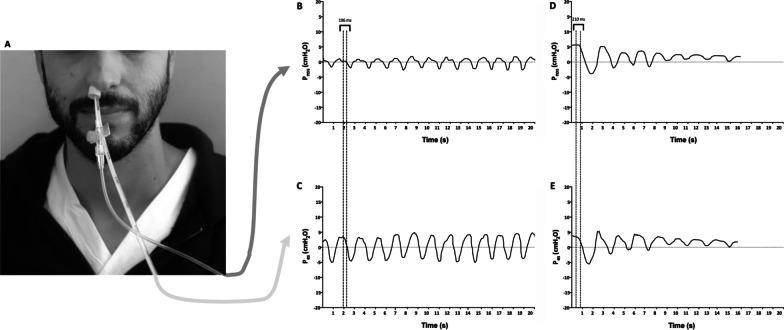
Excessive inspiratory effort could translate into self-inflicted lung injury, thus worsening clinical outcomes of spontaneously breathing patients with acute respiratory failure (ARF). Although esophageal manometry is a reliable method to estimate the magnitude of inspiratory effort, procedural issues significantly limit its use in daily clinical practice. The aim of this study is to describe the correlation between esophageal pressure swings (ΔP) and nasal (ΔP) as a potential measure of inspiratory effort in spontaneously breathing patients with de novo ARF.
METHODS
From January 1, 2021, to September 1, 2021, 61 consecutive patients with ARF (83.6% related to COVID-19) admitted to the Respiratory Intensive Care Unit (RICU) of the University Hospital of Modena (Italy) and candidate to escalation of non-invasive respiratory support (NRS) were enrolled. Clinical features and tidal changes in esophageal and nasal pressure were recorded on admission and 24 h after starting NRS. Correlation between ΔP and ΔP served as primary outcome. The effect of ΔP measurements on respiratory rate and ΔP was also assessed.
RESULTS
ΔP and ΔP were strongly correlated at admission (R = 0.88, p < 0.001) and 24 h apart (R = 0.94, p < 0.001). The nasal plug insertion and the mouth closure required for ΔP measurement did not result in significant change of respiratory rate and ΔP. The correlation between measures at 24 h remained significant even after splitting the study population according to the type of NRS (high-flow nasal cannulas [R = 0.79, p < 0.001] or non-invasive ventilation [R = 0.95, p < 0.001]).
CONCLUSIONS
In a cohort of patients with ARF, nasal pressure swings did not alter respiratory mechanics in the short term and were highly correlated with esophageal pressure swings during spontaneous tidal breathing. ΔP might warrant further investigation as a measure of inspiratory effort in patients with ARF.
TRIAL REGISTRATION
NCT03826797 . Registered October 2016.
背景
过度的吸气努力可能导致自伤性肺损伤,从而使患有急性呼吸衰竭(ARF)的自主呼吸患者的临床预后恶化。尽管食管测压是一种可靠的方法来估计吸气努力的程度,但程序问题严重限制了其在日常临床实践中的应用。本研究的目的是描述新发生 ARF 的自主呼吸患者中食管压力波动(ΔP)与鼻压波动(ΔP)之间的相关性,作为吸气努力的潜在测量指标。
方法
2021 年 1 月 1 日至 2021 年 9 月 1 日,意大利摩德纳大学医院呼吸重症监护病房(RICU)收治的 61 例新发生 ARF 患者(83.6%与 COVID-19 相关)入组,并符合非侵入性呼吸支持(NRS)升级的条件。入院时和开始 NRS 后 24 小时记录临床特征和食管及鼻压的潮气量变化。ΔP 和 ΔP 的相关性为主要结局。还评估了 ΔP 测量对呼吸频率和 ΔP 的影响。
结果
入院时(R=0.88,p<0.001)和 24 小时后(R=0.94,p<0.001)ΔP 和 ΔP 均呈强相关性。插入鼻插管和关闭口腔进行 ΔP 测量并未导致呼吸频率和 ΔP 发生显著变化。即使根据 NRS 类型(高流量鼻导管[R=0.79,p<0.001]或无创通气[R=0.95,p<0.001])对研究人群进行分组后,24 小时测量值之间的相关性仍然显著。
结论
在 ARF 患者队列中,鼻压波动在短期内并未改变呼吸力学,并且与自主呼吸时的食管压力波动高度相关。ΔP 可能需要进一步研究,作为 ARF 患者吸气努力的测量指标。
临床试验注册
NCT03826797。于 2016 年 10 月注册。


 Zotero 插件