
维生素 A 代谢的反馈调节机制。
Mechanisms of Feedback Regulation of Vitamin A Metabolism.
机构信息
MD Program, Northern Ontario School of Medicine, 317-MSE Bldg., 935 Ramsey Lake Rd., Sudbury, ON P3E 2C6, Canada.
Biology and Biomolecular Sciences Ph.D. Program, Northern Ontario School of Medicine, Laurentian University, Sudbury, ON P3E 2C6, Canada.
出版信息
Nutrients. 2022 Mar 21;14(6):1312. doi: 10.3390/nu14061312.
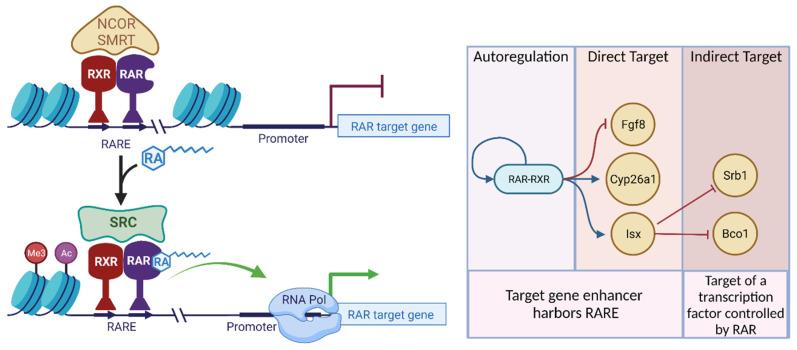
Vitamin A is an essential nutrient required throughout life. Through its various metabolites, vitamin A sustains fetal development, immunity, vision, and the maintenance, regulation, and repair of adult tissues. Abnormal tissue levels of the vitamin A metabolite, retinoic acid, can result in detrimental effects which can include congenital defects, immune deficiencies, proliferative defects, and toxicity. For this reason, intricate feedback mechanisms have evolved to allow tissues to generate appropriate levels of active retinoid metabolites despite variations in the level and format, or in the absorption and conversion efficiency of dietary vitamin A precursors. Here, we review basic mechanisms that govern vitamin A signaling and metabolism, and we focus on retinoic acid-controlled feedback mechanisms that contribute to vitamin A homeostasis. Several approaches to investigate mechanistic details of the vitamin A homeostatic regulation using genomic, gene editing, and chromatin capture technologies are also discussed.
维生素 A 是一种贯穿生命全程所必需的营养物质。通过其各种代谢物,维生素 A 维持着胎儿发育、免疫、视力,以及成人组织的维护、调节和修复。维生素 A 代谢产物视黄酸在组织中的水平异常,可能会产生有害影响,包括先天缺陷、免疫缺陷、增殖缺陷和毒性。出于这个原因,已经进化出复杂的反馈机制,使组织能够在饮食中维生素 A 前体的水平和形式、吸收和转化效率发生变化的情况下,生成适当水平的活性类视黄醇代谢物。在这里,我们回顾了调控维生素 A 信号转导和代谢的基本机制,并重点介绍了有助于维生素 A 体内平衡的视黄酸控制的反馈机制。还讨论了几种利用基因组、基因编辑和染色质捕获技术研究维生素 A 体内平衡调节的机制细节的方法。


 Zotero 插件