
开发针对 COVID-19 的有效基于肽的疫苗:在小鼠模型中的初步研究。
Developing an Effective Peptide-Based Vaccine for COVID-19: Preliminary Studies in Mice Models.
机构信息
Department of Pharmaceutical Sciences, Taneja College of Pharmacy, University of South Florida, Tampa, FL 33612, USA.
Department of Kinesiology, Wiess School of Natural Sciences, Rice University, Houston, TX 77005, USA.
出版信息
Viruses. 2022 Feb 22;14(3):449. doi: 10.3390/v14030449.
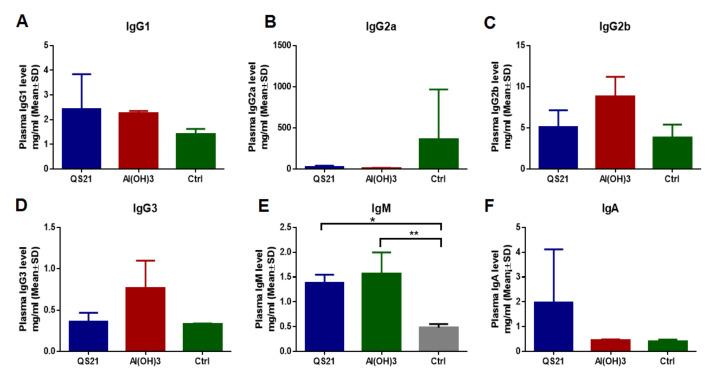
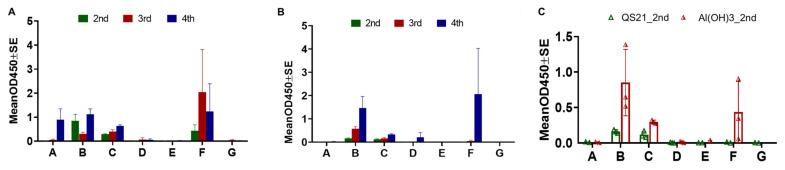
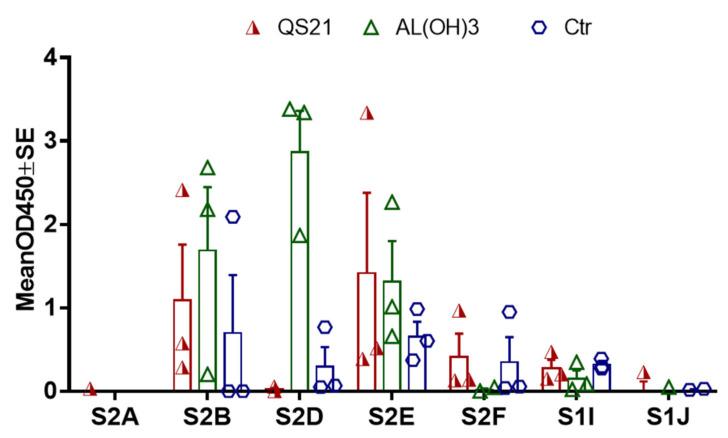
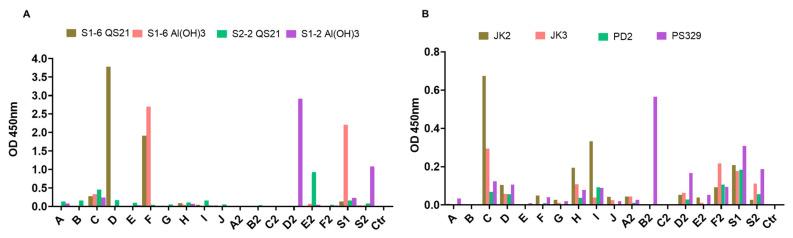
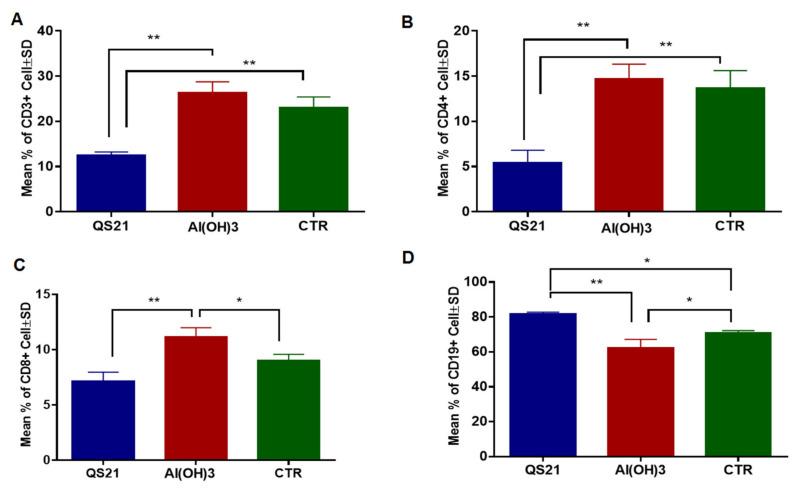
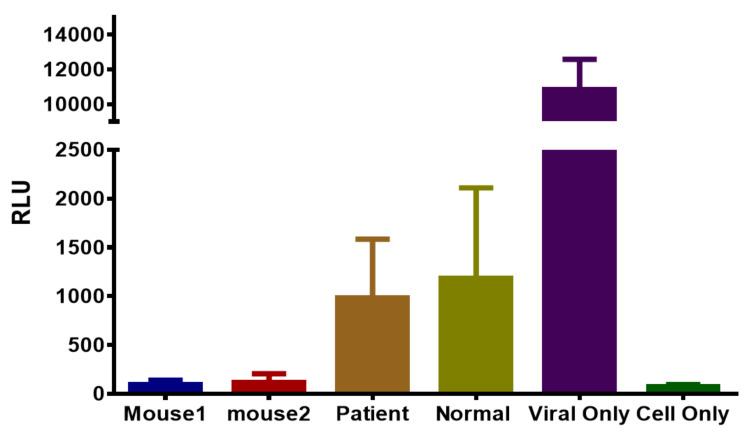
Coronavirus disease 2019 (COVID-19) has caused massive health and economic disasters worldwide. Although several vaccines have effectively slowed the spread of the virus, their long-term protection and effectiveness against viral variants are still uncertain. To address these potential shortcomings, this study proposes a peptide-based vaccine to prevent COVID-19. A total of 15 B cell epitopes of the wild-type severe acute respiratory coronavirus 2 (SARS-CoV-2) spike (S) protein were selected, and their HLA affinities predicted in silico. Peptides were divided into two groups and tested in C57BL/6 mice with either QS21 or Al(OH) as the adjuvant. Our results demonstrated that the peptide-based vaccine stimulated high and durable antibody responses in mice, with the T and B cell responses differing based on the type of adjuvant employed. Using epitope mapping, we showed that our peptide-based vaccine produced antibody patterns similar to those in COVID-19 convalescent individuals. Moreover, plasma from vaccinated mice and recovered COVID-19 humans had the same neutralizing activity when tested with a pseudo particle assay. Our data indicate that this adjuvant peptide-based vaccine can generate sustainable and effective B and T cell responses. Thus, we believe that our peptide-based vaccine can be a safe and effective vaccine against COVID-19, particularly because of the flexibility of including new peptides to prevent emerging SARS-CoV-2 variants and avoiding unwanted autoimmune responses.
新型冠状病毒病(COVID-19)在全球范围内造成了巨大的健康和经济灾难。尽管有几种疫苗有效地减缓了病毒的传播,但它们对病毒变异体的长期保护和有效性仍不确定。为了解决这些潜在的缺点,本研究提出了一种基于肽的 COVID-19 疫苗。从野生型严重急性呼吸冠状病毒 2(SARS-CoV-2)刺突(S)蛋白中选择了总共 15 个 B 细胞表位,并通过计算机预测其 HLA 亲和力。肽被分为两组,并用 QS21 或 Al(OH)3 作为佐剂在 C57BL/6 小鼠中进行测试。我们的结果表明,基于肽的疫苗在小鼠中刺激了高且持久的抗体反应,T 和 B 细胞反应因所使用的佐剂类型而异。通过表位作图,我们表明我们的基于肽的疫苗产生的抗体模式与 COVID-19 康复个体的抗体模式相似。此外,用假病毒测定法检测时,来自接种疫苗的小鼠和康复的 COVID-19 人类的血浆具有相同的中和活性。我们的数据表明,这种佐剂肽疫苗可以产生可持续和有效的 B 和 T 细胞反应。因此,我们认为我们的基于肽的疫苗可以成为一种安全有效的 COVID-19 疫苗,特别是因为它具有灵活性,可以包括新的肽来预防新出现的 SARS-CoV-2 变体,并避免不必要的自身免疫反应。


 Zotero 插件