
埃塞俄比亚家畜的硬蜱种类及其传播病原体的地理分布:系统综述。
Geographical distribution of ixodid ticks and tick-borne pathogens of domestic animals in Ethiopia: a systematic review.
机构信息
Department of Veterinary and Animal Science, College of Agricultural Science, Arba Minch University, Arba Minch, Ethiopia.
出版信息
Parasit Vectors. 2022 Mar 28;15(1):108. doi: 10.1186/s13071-022-05221-x.
BACKGROUND
In Ethiopia, ixodid ticks and associated tick-borne pathogens (TBPs) are of great importance from both a veterinary and public health point of view. This review aimed at compiling available published data on the distribution of ixodid tick species and TBPs in the country.
METHODS
A standard review approach was employed using the Preferred Reporting Items for Systematic Reviews and Meta-Analyses (PRISMA) guideline. Published peer-reviewed articles and theses/dissertations reporting on ixodid ticks and TBPs in Ethiopia were searched using different keywords in many electronic databases including PubMed, Scopus, Web of Science, Google Scholar, African Journals OnLine, and institutional repositories. Articles were screened based on inclusion and exclusion criteria using the PRISMA flowchart. Data were retrieved from eligible articles and recorded in a preformed data record sheet. Descriptive statistics were employed to present data using graphs. QGIS (Quantum GIS) software version 3.4.5 was used to show the distribution of ixodid tick species and TBPs.
RESULTS
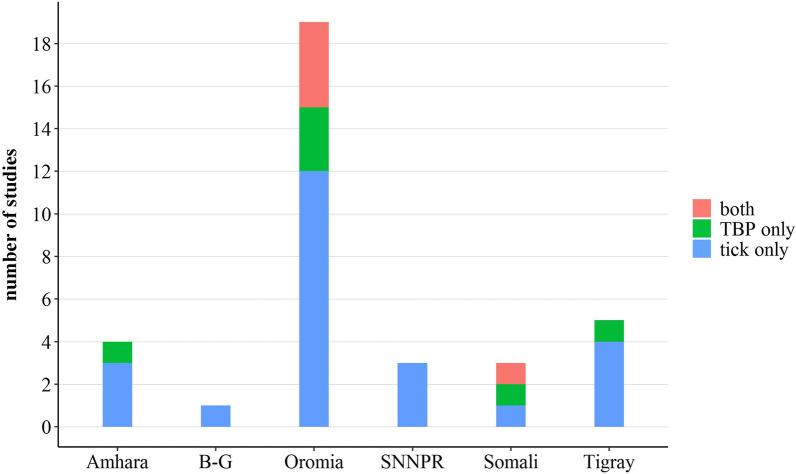
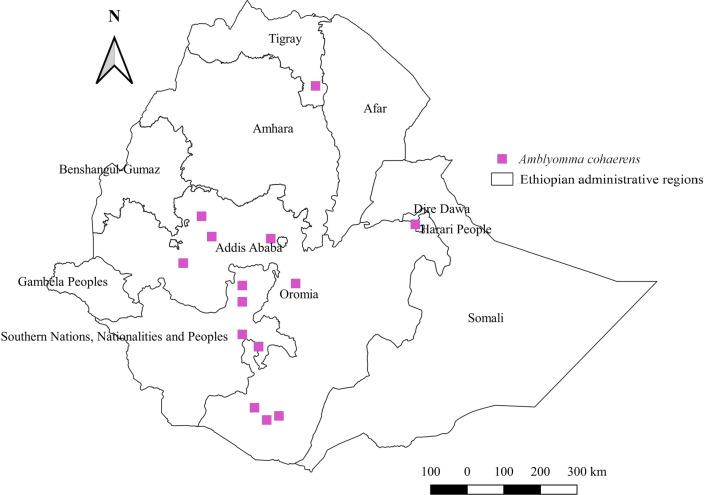
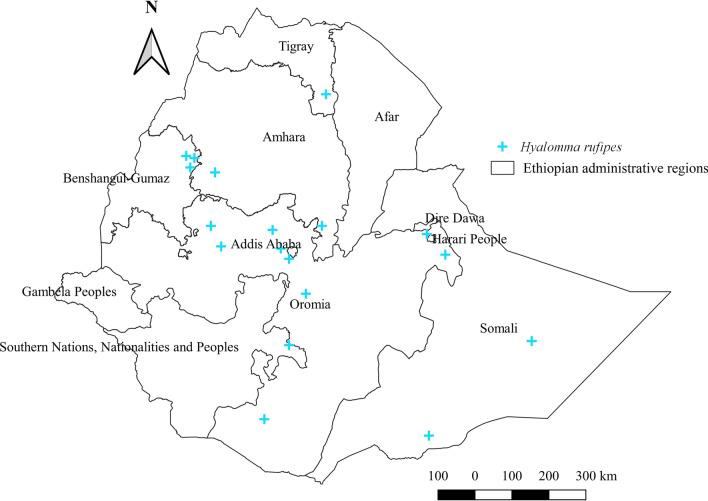
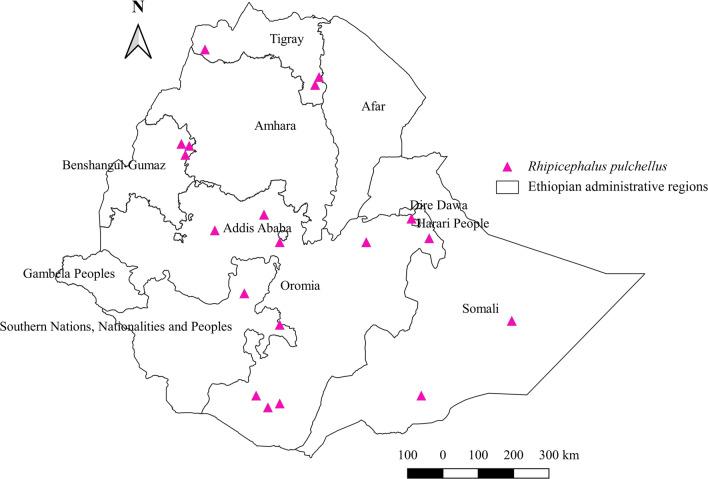
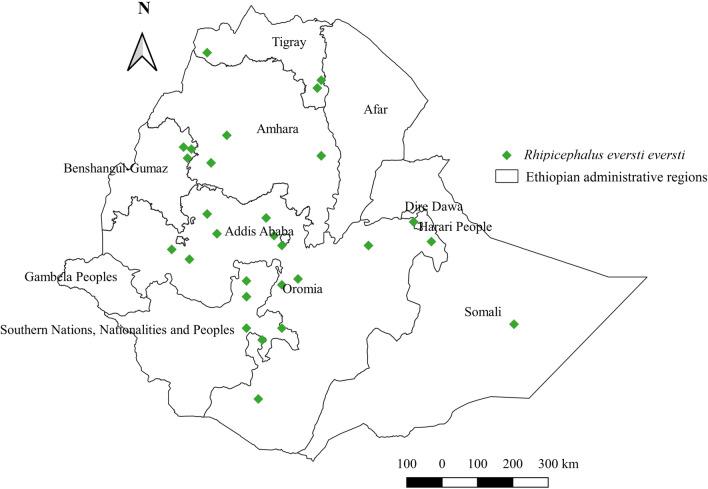
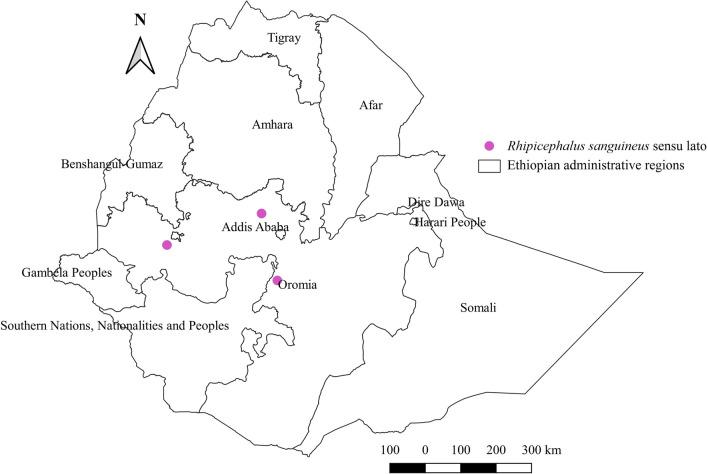
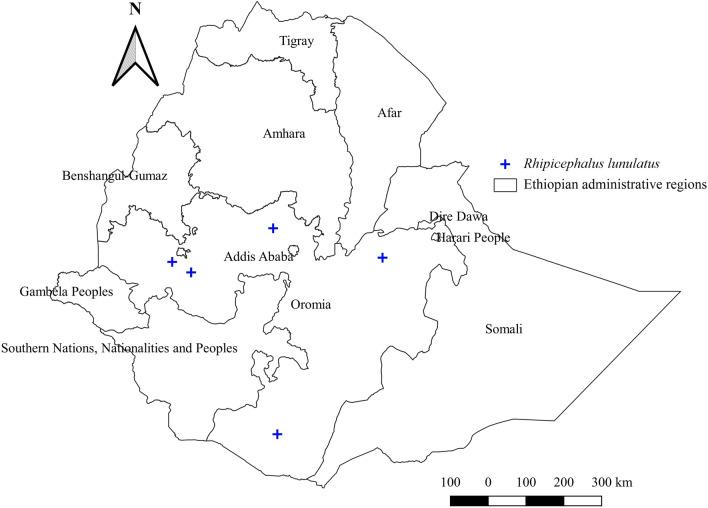
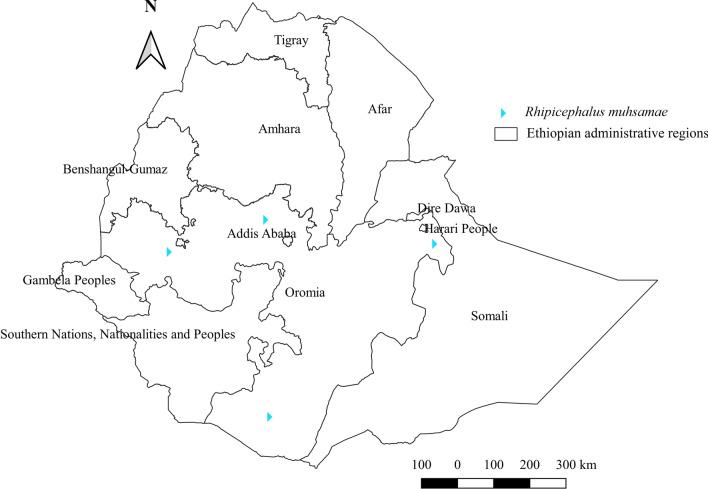
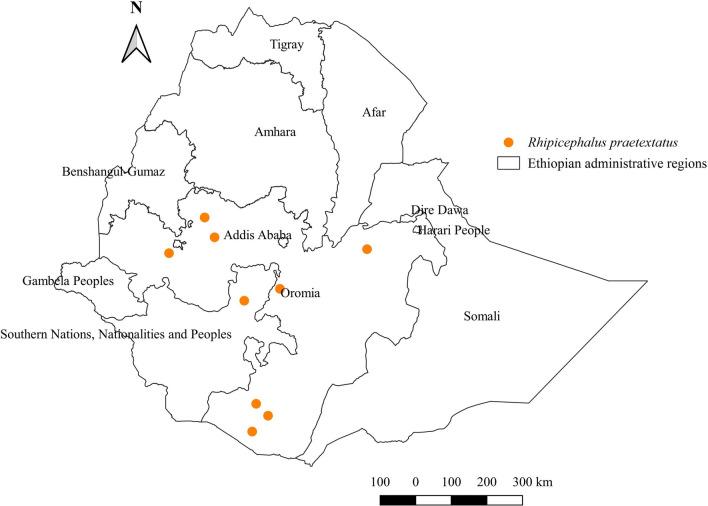
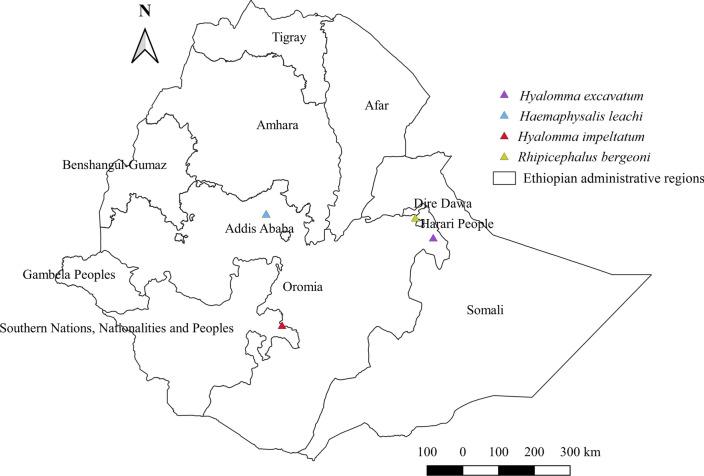
Overall, 35 articles that met the inclusion criteria were included in this review. Of these, 24 articles report only on ixodid ticks of domestic animals, six articles report only on TBPs in livestock or ticks, and five articles report on both ticks and TBPs in either animals or ticks. Of these studies, 54% were in the Oromia region, while only 3% of studies were in the Benishangul-Gumuz region. The Gambela region lacked studies on ticks and TBPs. At least 19 ixodid tick species have been recorded from different domestic animals including cattle, small ruminants, donkeys, horses, camels, dogs, and cats. Morphological characterization appears to be the sole method of tick species identification in the country. The distribution and abundance of specific tick species depend on geographical locations and agroecological factors. Sixteen molecularly confirmed TBPs have been identified in animal and tick tissue using molecular methods from only four administrative regions, despite the wide distribution of ticks. Among TBPs, five Anaplasma, two Ehrlichia, two Rickettsia, five Theileria, two Babesia, and one Coxiella species are the major pathogens in both livestock and humans.
CONCLUSIONS
Many ixodid ticks circulate in a wide geographical zone of Ethiopia. However, the limited reports on TBPs at the country level in general, and the absence of either tick or TBP reports around the border region with neighboring countries in particular, highlights the need for further study.
背景
在埃塞俄比亚,从兽医和公共卫生的角度来看,硬蜱和相关的蜱传病原体(TBPs)非常重要。本综述旨在汇编该国有关硬蜱物种分布和 TBPs 的现有已发表数据。
方法
采用系统评价和荟萃分析(PRISMA)首选报告项目的标准综述方法。使用不同的关键词在多个电子数据库中搜索了关于埃塞俄比亚硬蜱和 TBPs 的同行评审文章和论文/论文,包括 PubMed、Scopus、Web of Science、Google Scholar、African Journals OnLine 和机构知识库。根据 PRISMA 流程图使用纳入和排除标准筛选文章。从合格文章中检索数据并记录在预形成的数据记录表中。使用图形呈现数据采用描述性统计。使用 Quantum GIS(QGIS)软件版本 3.4.5 显示硬蜱物种和 TBPs 的分布。
结果
总体而言,有 35 篇符合纳入标准的文章被纳入本综述。其中,24 篇文章仅报道了家畜的硬蜱,6 篇文章仅报道了牲畜或蜱中的 TBPs,5 篇文章报道了动物或蜱中的蜱和 TBPs。这些研究中,54%来自奥罗米亚地区,而只有 3%的研究来自本尚古勒-古马兹地区。贝尼山古尔-古姆兹地区缺乏关于蜱和 TBPs 的研究。至少有 19 种硬蜱已从不同的家畜中记录下来,包括牛、小反刍动物、驴、马、骆驼、狗和猫。形态特征似乎是该国蜱种鉴定的唯一方法。特定蜱种的分布和丰度取决于地理位置和农业生态因素。尽管蜱的分布广泛,但仅从四个行政区使用分子方法从动物和蜱组织中鉴定出了 16 种分子确认的 TBPs。在 TBPs 中,五种 Anaplasma、两种 Ehrlichia、两种 Rickettsia、五种 Theileria、两种 Babesia 和一种 Coxiella 物种是牲畜和人类的主要病原体。
结论
许多硬蜱在埃塞俄比亚的一个广泛地理区域内传播。然而,一般来说,该国关于 TBPs 的报告有限,特别是在与邻国接壤的边境地区既没有蜱也没有 TBP 的报告,这突出表明需要进一步研究。








 Zotero 插件