
人类巨噬细胞感染治疗失败的临床分离株的转录组分析。
Transcriptomic Analysis in Human Macrophages Infected with Therapeutic Failure Clinical Isolates of .
机构信息
Instituto de Parasitología y Biomedicina "López-Neyra", IPBLN-CSIC, Parque Tecnológico de Ciencias de la Salud, Avda del Conocimiento 17, 18016 Armilla, Granada, Spain.
出版信息
ACS Infect Dis. 2022 Apr 8;8(4):800-810. doi: 10.1021/acsinfecdis.1c00513. Epub 2022 Mar 30.
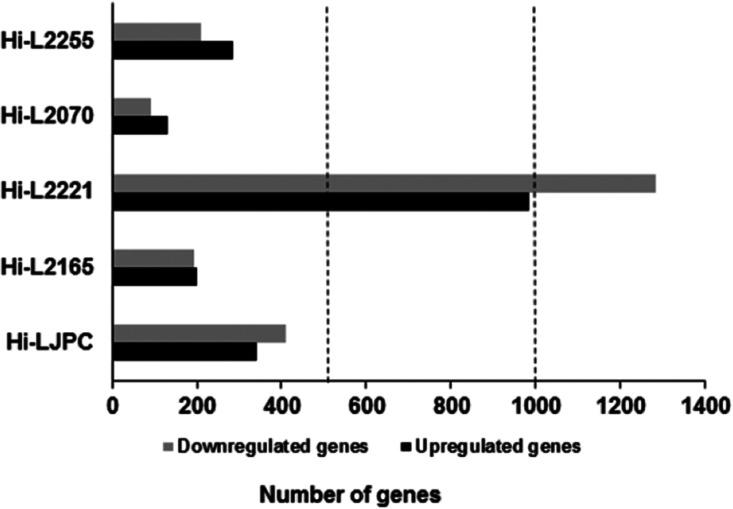
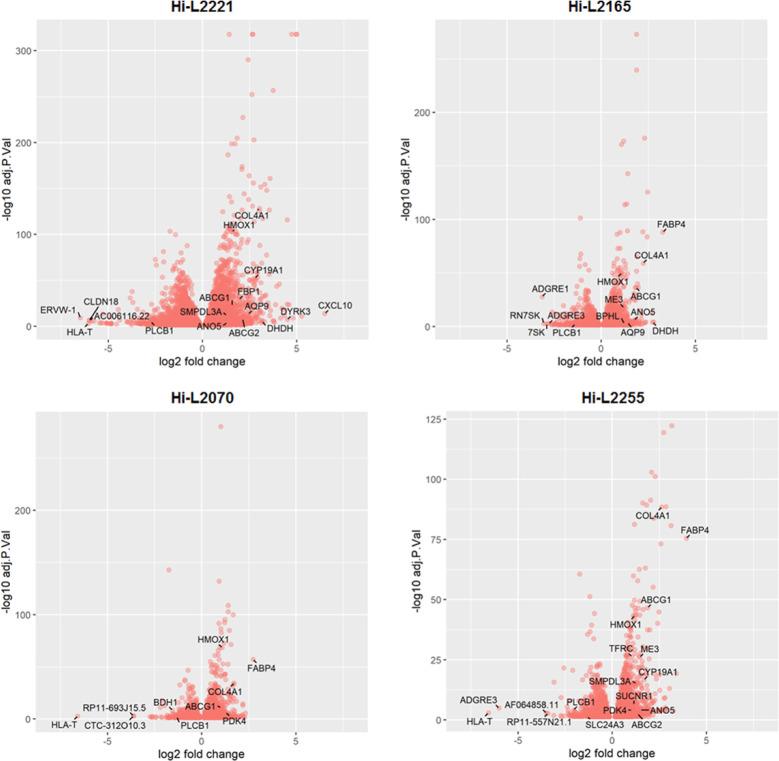
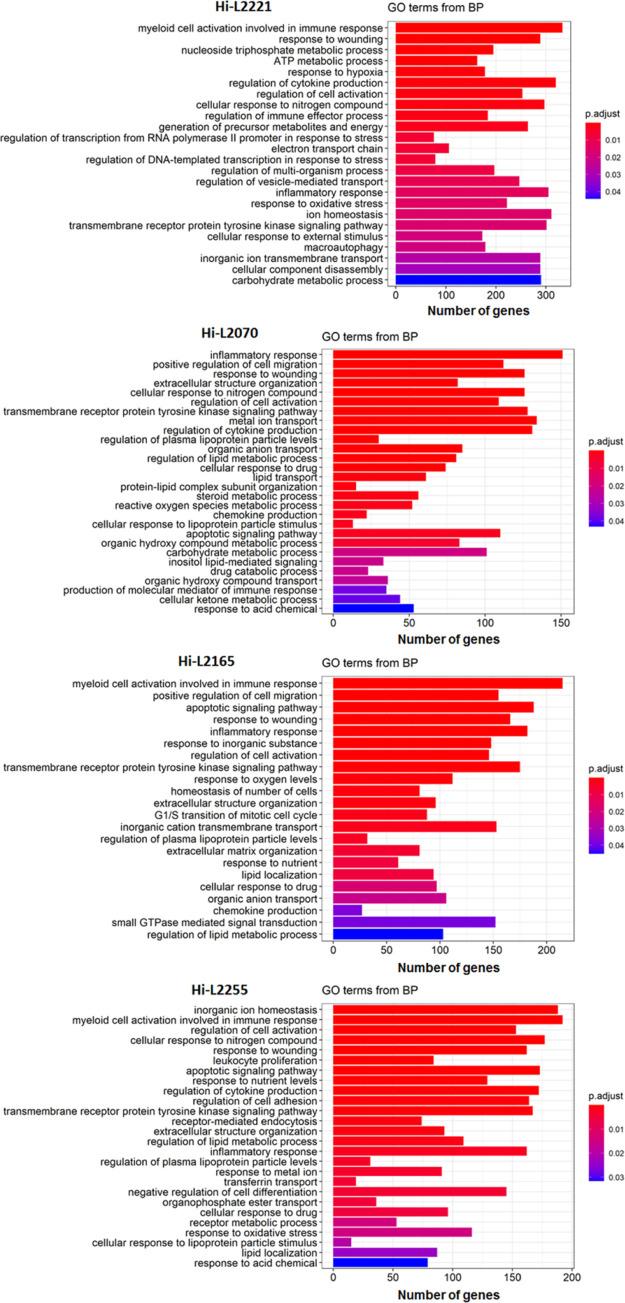
Leishmaniasis is one of the neglected tropical diseases with a worldwide distribution, affecting humans and animals. In the absence of an effective vaccine, current treatment is through the use of chemotherapy; however, existing treatments have frequent appearance of drug resistance and therapeutic failure (TF). The identification of factors that contribute to TF in leishmaniasis will provide the basis for a future therapeutic strategy more efficient for the control of this disease. In this article, we have evaluated the transcriptomic changes in the host cells THP-1 after infection with clinical isolates from leishmaniasis patients with TF. Our results show that distinct isolates differentially modulate host cell response, inducing phenotypic changes that probably may account for parasite survival and TF of patients. Analysis of differential expression genes (DEGs), with a statistical significance threshold of a fold change ≥ 2 and a false discovery rate value ≤ 0.05, revealed a different number of DEGs according to the line. Globally, there was a similar number of genes up- and downregulated in all the infected host THP-1 cells, with exception of Hi-L2221, which showed a higher number of downregulated DEGs. We observed a total of 58 DEGs commonly modulated in all infected host cells, including upregulated (logFC ≥ 1) and downregulated (logFC ≤ -1) genes. Based on the results obtained from the analysis of RNA-seq, volcano plot, and GO enrichment analysis, we identified the most significant transcripts of relevance for their possible contribution to the TF observed in patients with leishmaniasis.
利什曼病是一种具有全球分布的被忽视的热带病,影响人类和动物。在没有有效疫苗的情况下,目前的治疗方法是化疗;然而,现有的治疗方法经常出现耐药性和治疗失败 (TF)。确定导致利什曼病 TF 的因素将为未来更有效地控制这种疾病的治疗策略提供基础。在本文中,我们评估了感染 TF 患者的临床分离株后 THP-1 宿主细胞的转录组变化。我们的结果表明,不同的分离株差异调节宿主细胞反应,诱导表型变化,这可能是寄生虫存活和患者 TF 的原因。差异表达基因 (DEG) 的分析,统计意义阈值为倍数变化≥2 和错误发现率值≤0.05,根据系显示出不同数量的 DEG。总体而言,所有感染宿主 THP-1 细胞中都有相似数量的上调和下调基因,除了 Hi-L2221,它显示出更多的下调 DEG。我们观察到所有感染宿主细胞中共同调节的总共 58 个 DEG,包括上调 (logFC≥1) 和下调 (logFC≤-1) 基因。基于 RNA-seq、火山图和 GO 富集分析的结果,我们确定了最显著的相关转录本,因为它们可能有助于解释利什曼病患者观察到的 TF。


 Zotero 插件