
载脂蛋白 E ε4、阿尔茨海默病神经病理学与睡眠障碍,在痴呆与非痴呆个体中。
APOE ε4, Alzheimer's disease neuropathology and sleep disturbance, in individuals with and without dementia.
机构信息
North Bristol NHS Trust, Bristol, UK.
Learning and Research, University of Bristol, Southmead, Bristol, BS10 5NB, UK.
出版信息
Alzheimers Res Ther. 2022 Mar 30;14(1):47. doi: 10.1186/s13195-022-00992-y.
BACKGROUND
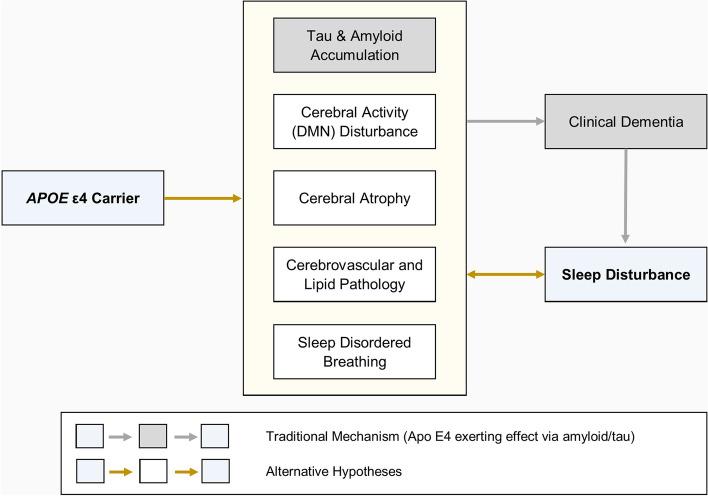
Apolipoprotein E epsilon 4 (APOE-ε4) carrier status is an established risk factor for Alzheimer's disease (AD) dementia. It has also been linked with sleep disturbance in healthy older adults and increased insomnia risk. This association may be driven by the effect of APOE-ε4 on AD pathological change, itself associated with sleep abnormalities. To assess this relationship, we have evaluated post-mortem neuropathological findings in patients with and without cognitive impairment and AD pathology, who had extensive clinical assessment within 12 months of death.
METHODS
This retrospective cohort study used UK Brain Banks Network data. Eligible subjects were aged over 50, with pre-mortem neuropsychiatry inventory scores of sleep disturbance (NPI-K), neurocognitive testing and functional cognitive status assessment (Clinical Dementia Rating scale). Neuropathological data included Thal phase, Braak stage and CERAD scores (measures of Aβ plaque distribution, tangle distribution and neuritic plaque density, respectively) combined to form the National Institute on Aging Alzheimer's Association (NIA-AA) ABC score reflecting AD neuropathology. Participants with other significant intracerebral pathology or pathological features of non-AD dementia were excluded. Multivariate linear regression was performed with NPIK Global Score (NPIK frequency score multiplied by severity score) as the dependent variable and APOE-ε4 heterozygosity or homozygosity as independent variables. Covariates included age, gender, APOE-ε2 status and ABC NPI measures reflecting depression and anxiety. Further models stratified by ABC score and functional cognitive status were also produced.
RESULTS
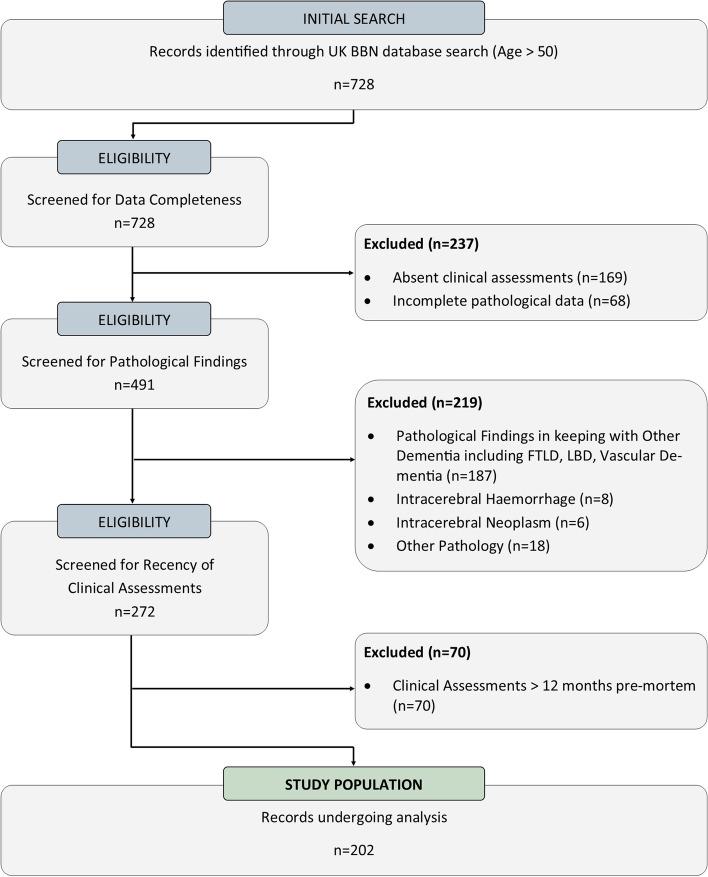
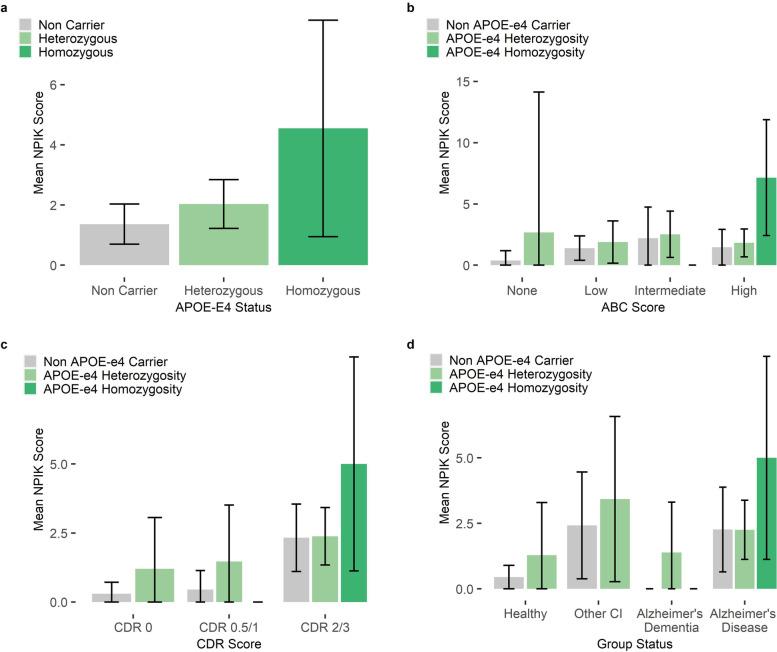
Seven hundred twenty-eight records were identified. Two hundred two participants were included in the final analysis: mean (SD) age 84.0 (9.2) and MMSE 14.0 (11.8). Mean sleep disturbance scores were highest in ε4 homozygosity (n=11), 4.55 (5.4); intermediate in ε4 heterozygosity (n=95), 2.03 (4.0); and lowest in non-ε4 carriers (n=96), 1.36 (3.3). Within the full sample, controlling for pathological status, age, gender, depression, anxiety and CDR-SOB status, APOE-ε4 homozygosity was associated with sleep disturbance (β 2.53, p=0.034). APOE-ε4 heterozygosity was similarly associated in individuals without dementia (β 1.21, p=0.048).
CONCLUSION
These findings lend weight to the hypothesis that APOE-ε4 affects sleep by mechanisms independent of AD pathological change. Evaluation of those mechanisms would enhance understanding of sleep disturbance pathways and potentially provide treatment targets.
背景
载脂蛋白 E ɛ4(APOE-ɛ4)等位基因状态是阿尔茨海默病(AD)痴呆的既定危险因素。它也与健康老年人的睡眠障碍有关,并增加了失眠的风险。这种关联可能是由 APOE-ɛ4 对 AD 病理变化的影响驱动的,AD 病理变化本身与睡眠异常有关。为了评估这种关系,我们评估了在认知障碍和 AD 病理患者中,具有和不具有认知障碍和 AD 病理的患者的死后神经病理学发现,这些患者在死亡前 12 个月内接受了广泛的临床评估。
方法
本回顾性队列研究使用了英国脑库网络数据。合格的受试者年龄在 50 岁以上,具有生前神经精神病学评估的睡眠障碍(NPI-K)评分、神经认知测试和功能认知状态评估(临床痴呆评定量表)。神经病理学数据包括 Thal 阶段、Braak 阶段和 CERAD 评分(分别衡量 Aβ 斑块分布、缠结分布和神经原纤维缠结密度),结合形成国家老龄化研究所阿尔茨海默病协会(NIA-AA)ABC 评分,反映 AD 神经病理学。排除了具有其他重要脑内病理学或非 AD 痴呆的病理性特征的患者。以 NPIK 全球评分(NPIK 频率评分乘以严重程度评分)为因变量,APOE-ɛ4 杂合子或纯合子为自变量,进行多变量线性回归。协变量包括年龄、性别、APOE-ɛ2 状态和 ABC 中反映抑郁和焦虑的 NPI 测量值。还制作了按 ABC 评分和功能认知状态分层的进一步模型。
结果
确定了 728 份记录。202 名参与者被纳入最终分析:平均(标准差)年龄 84.0(9.2)岁,MMSE 为 14.0(11.8)。ε4 纯合子(n=11)的平均睡眠障碍评分最高,为 4.55(5.4);ε4 杂合子(n=95)的平均睡眠障碍评分为 2.03(4.0);而非 ε4 携带者(n=96)的平均睡眠障碍评分为 1.36(3.3)。在全样本中,控制病理状态、年龄、性别、抑郁、焦虑和 CDR-SOB 状态后,APOE-ɛ4 纯合子与睡眠障碍相关(β 2.53,p=0.034)。在没有痴呆的个体中,APOE-ɛ4 杂合子也存在类似的相关性(β 1.21,p=0.048)。
结论
这些发现支持了 APOE-ɛ4 通过独立于 AD 病理变化的机制影响睡眠的假设。对这些机制的评估将增强对睡眠障碍途径的理解,并可能为治疗提供目标。
 Zotero 插件