
铁诱导呼吸促进放线菌细菌的抗生素耐药性。
Iron-Induced Respiration Promotes Antibiotic Resistance in Actinomycete Bacteria.
机构信息
Laboratory of Molecular Microbiology, School of Biological Sciences, College of Natural Sciences and Institute of Microbiology, Seoul National Universitygrid.31501.36, Seoul, South Korea.
Laboratory of Microbial Physiology, School of Biological Sciences, College of Natural Sciences and Institute of Microbiology, Seoul National Universitygrid.31501.36, Seoul, South Korea.
出版信息
mBio. 2022 Apr 26;13(2):e0042522. doi: 10.1128/mbio.00425-22. Epub 2022 Mar 31.
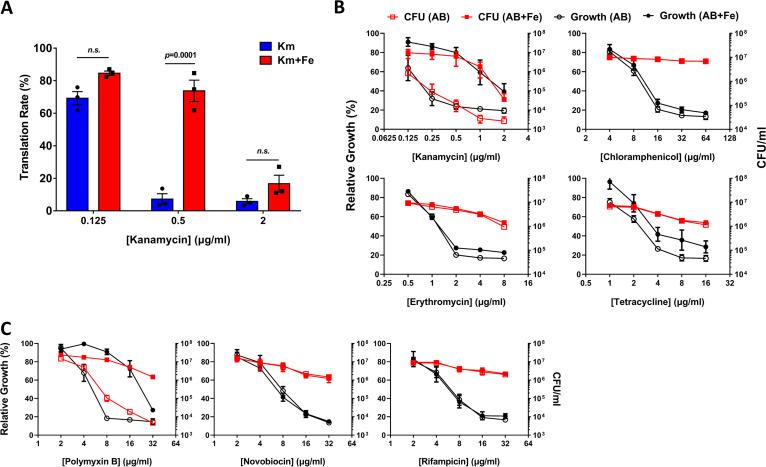
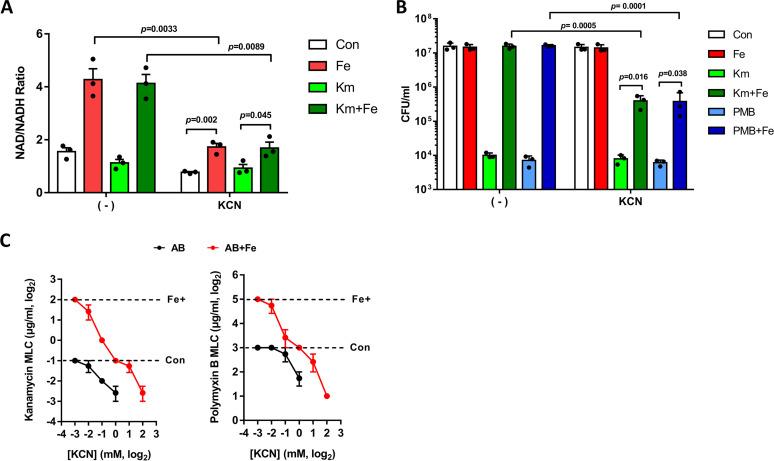
The bacterial response to antibiotics eliciting resistance is one of the key challenges in global health. Despite many attempts to understand intrinsic antibiotic resistance, many of the underlying mechanisms still remain elusive. In this study, we found that iron supplementation promoted antibiotic resistance in Streptomyces coelicolor. Iron-promoted resistance occurred specifically against bactericidal antibiotics, irrespective of the primary target of antibiotics. Transcriptome profiling revealed that some genes in the central metabolism and respiration were upregulated under iron-replete conditions. Iron supported the growth of S. coelicolor even under anaerobic conditions. In the presence of potassium cyanide, which reduces aerobic respiration of cells, iron still promoted respiration and antibiotic resistance. This suggests the involvement of a KCN-insensitive type of respiration in the iron effect. This phenomenon was also observed in another actinobacterium, Mycobacterium smegmatis. Taken together, these findings provide insight into a bacterial resistance strategy that mitigates the activity of bactericidal antibiotics whose efficacy accompanies oxidative damage by switching the respiration mode. A widely investigated mode of antibiotic resistance occurs via mutations and/or by horizontal acquisition of resistance genes. In addition to this acquired resistance, most bacteria exhibit intrinsic resistance as an inducible and adaptive response to different classes of antibiotics. Increasing attention has been paid recently to intrinsic resistance mechanisms because this may provide novel therapeutic targets that help rejuvenate the efficacy of the current antibiotic regimen. In this study, we demonstrate that iron promotes the intrinsic resistance of aerobic actinomycetes Streptomyces coelicolor and Mycobacterium smegmatis against bactericidal antibiotics. A surprising role of iron to increase respiration, especially in a mode of using less oxygen, appears a fitting strategy to cope with bactericidal antibiotics known to kill bacteria through oxidative damage. This provides new insights into developing antimicrobial treatments based on the availability of iron and oxygen.
抗生素诱导产生耐药性是全球健康面临的主要挑战之一。尽管人们做了很多努力来理解固有抗生素耐药性,但许多潜在的机制仍然难以捉摸。在这项研究中,我们发现铁补充剂促进了变铅青链霉菌对抗生素的耐药性。铁促进的耐药性仅针对杀菌抗生素发生,而与抗生素的主要靶标无关。转录组分析显示,在铁充足的条件下,中心代谢和呼吸的一些基因上调。即使在厌氧条件下,铁也能支持变铅青链霉菌的生长。在氰化钾存在的情况下,细胞的需氧呼吸会减少,而铁仍然促进呼吸和抗生素耐药性。这表明铁的作用涉及一种对氰化物不敏感的呼吸类型。这种现象也在另一种放线菌分枝杆菌中观察到。总之,这些发现为一种细菌耐药策略提供了深入了解,该策略通过切换呼吸模式来减轻杀菌抗生素的活性,而杀菌抗生素的疗效伴随着氧化损伤。
抗生素耐药性的一个广泛研究的模式是通过突变和/或水平获得耐药基因。除了这种获得性耐药性外,大多数细菌还表现出固有耐药性,这是一种对不同类别的抗生素的诱导和适应性反应。最近,人们越来越关注固有耐药机制,因为这可能为提供新的治疗靶点提供帮助,从而恢复当前抗生素方案的疗效。在这项研究中,我们证明铁促进了需氧放线菌变铅青链霉菌和分枝杆菌对杀菌抗生素的固有耐药性。铁增加呼吸的惊人作用,尤其是在使用较少氧气的模式下,似乎是一种应对已知通过氧化损伤杀死细菌的杀菌抗生素的合适策略。这为基于铁和氧气的可用性开发抗菌治疗方法提供了新的见解。




 Zotero 插件