
帕金森病L444P GBA突变成纤维细胞中的鞘脂变化促进α-突触核蛋白聚集。
Sphingolipid changes in Parkinson L444P GBA mutation fibroblasts promote α-synuclein aggregation.
作者信息
Galvagnion Céline, Marlet Frederik Ravnkilde, Cerri Silvia, Schapira Anthony H V, Blandini Fabio, Di Monte Donato A
机构信息
German Center for Neurodegenerative Diseases (DZNE), 53127 Bonn, Germany.
Department of Drug Design and Pharmacology, Faculty of Health and Medical Sciences, University of Copenhagen, 2100 Copenhagen Ø, Denmark.
出版信息
Brain. 2022 Apr 29;145(3):1038-1051. doi: 10.1093/brain/awab371.
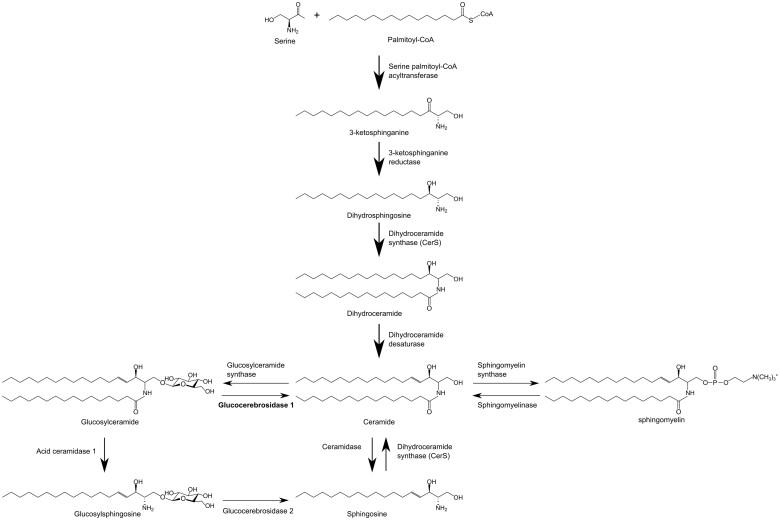
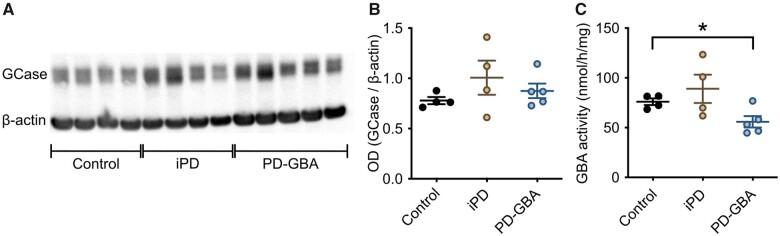
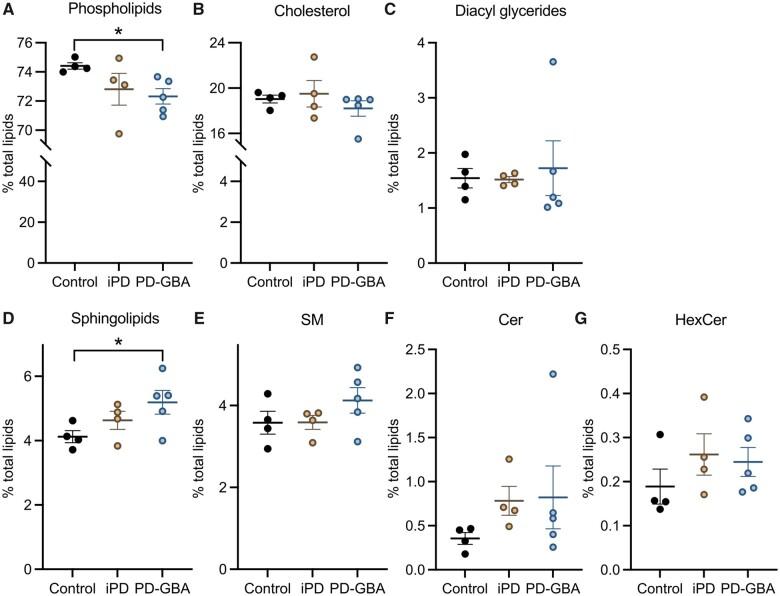
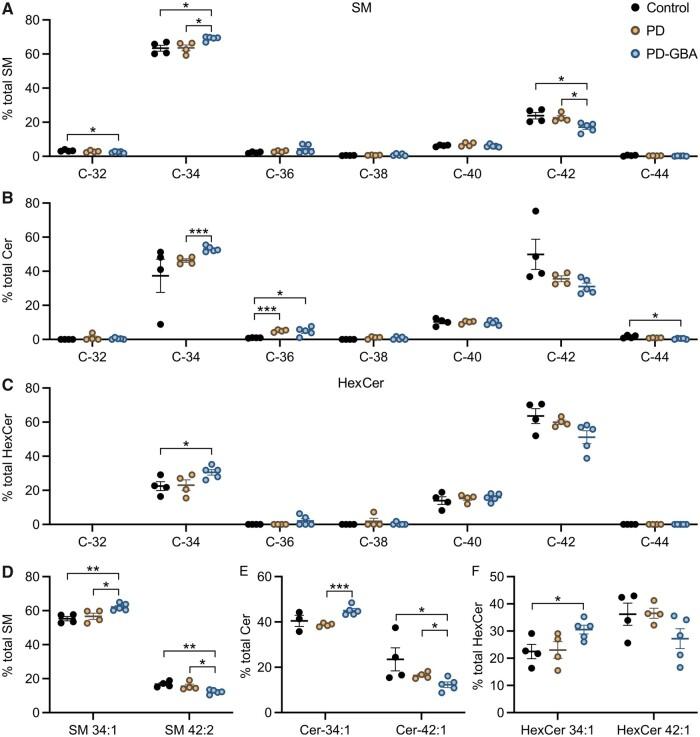
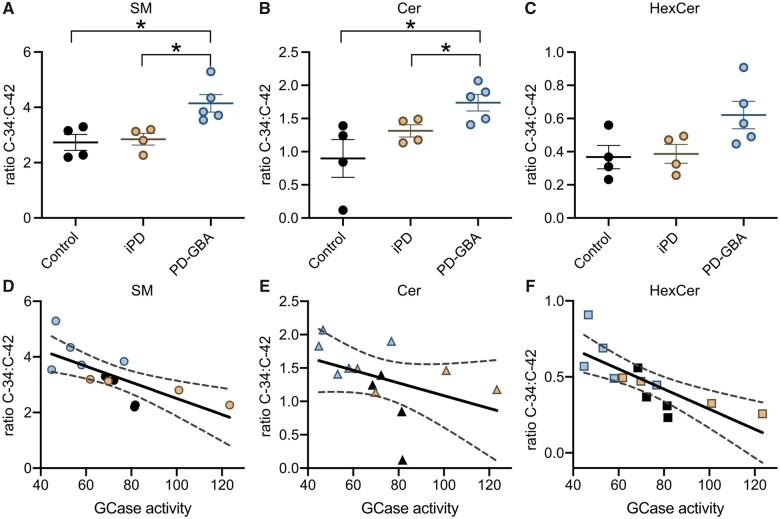
Intraneuronal accumulation of aggregated α-synuclein is a pathological hallmark of Parkinson's disease. Therefore, mechanisms capable of promoting α-synuclein deposition bear important pathogenetic implications. Mutations of the glucocerebrosidase 1 (GBA) gene represent a prevalent Parkinson's disease risk factor. They are associated with loss of activity of a key enzyme involved in lipid metabolism, glucocerebrosidase, supporting a mechanistic relationship between abnormal α-synuclein-lipid interactions and the development of Parkinson pathology. In this study, the lipid membrane composition of fibroblasts isolated from control subjects, patients with idiopathic Parkinson's disease and Parkinson's disease patients carrying the L444P GBA mutation (PD-GBA) was assayed using shotgun lipidomics. The lipid profile of PD-GBA fibroblasts differed significantly from that of control and idiopathic Parkinson's disease cells. It was characterized by an overall increase in sphingolipid levels. It also featured a significant increase in the proportion of ceramide, sphingomyelin and hexosylceramide molecules with shorter chain length and a decrease in the percentage of longer-chain sphingolipids. The extent of this shift was correlated to the degree of reduction of fibroblast glucocerebrosidase activity. Lipid extracts from control and PD-GBA fibroblasts were added to recombinant α-synuclein solutions. The kinetics of α-synuclein aggregation were significantly accelerated after addition of PD-GBA extracts as compared to control samples. Amyloid fibrils collected at the end of these incubations contained lipids, indicating α-synuclein-lipid co-assembly. Lipids extracted from α-synuclein fibrils were also analysed by shotgun lipidomics. Data revealed that the lipid content of these fibrils was significantly enriched by shorter-chain sphingolipids. In a final set of experiments, control and PD-GBA fibroblasts were incubated in the presence of the small molecule chaperone ambroxol. This treatment restored glucocerebrosidase activity and sphingolipid levels and composition of PD-GBA cells. It also reversed the pro-aggregation effect that lipid extracts from PD-GBA fibroblasts had on α-synuclein. Taken together, the findings of this study indicate that the L444P GBA mutation and consequent enzymatic loss are associated with a distinctly altered membrane lipid profile that provides a biological fingerprint of this mutation in Parkinson fibroblasts. This altered lipid profile could also be an indicator of increased risk for α-synuclein aggregate pathology.
聚集的α-突触核蛋白在神经元内的积累是帕金森病的一个病理标志。因此,能够促进α-突触核蛋白沉积的机制具有重要的致病意义。葡萄糖脑苷脂酶1(GBA)基因突变是一种常见的帕金森病风险因素。它们与参与脂质代谢的关键酶——葡萄糖脑苷脂酶的活性丧失有关,这支持了异常的α-突触核蛋白-脂质相互作用与帕金森病病理发展之间的机制关系。在本研究中,使用鸟枪法脂质组学分析了从对照受试者、特发性帕金森病患者以及携带L444P GBA突变的帕金森病患者(PD-GBA)分离的成纤维细胞的脂质膜组成。PD-GBA成纤维细胞的脂质谱与对照和成纤维细胞的脂质谱有显著差异。其特征是鞘脂水平总体升高。它还表现为链长较短的神经酰胺、鞘磷脂和己糖神经酰胺分子的比例显著增加,而长链鞘脂的百分比降低。这种变化的程度与成纤维细胞葡萄糖脑苷脂酶活性的降低程度相关。将对照和PD-GBA成纤维细胞的脂质提取物添加到重组α-突触核蛋白溶液中。与对照样品相比,添加PD-GBA提取物后,α-突触核蛋白聚集的动力学显著加快。在这些孵育结束时收集的淀粉样纤维含有脂质,表明α-突触核蛋白-脂质共组装。还通过鸟枪法脂质组学分析了从α-突触核蛋白纤维中提取的脂质。数据显示,这些纤维的脂质含量被链长较短的鞘脂显著富集。在最后一组实验中,对照和PD-GBA成纤维细胞在小分子伴侣氨溴索存在的情况下孵育。这种处理恢复了PD-GBA细胞的葡萄糖脑苷脂酶活性以及鞘脂水平和组成。它还逆转了PD-GBA成纤维细胞的脂质提取物对α-突触核蛋白的促聚集作用。综上所述,本研究结果表明,L444P GBA突变及随之而来的酶活性丧失与明显改变的膜脂质谱有关,该脂质谱为帕金森病成纤维细胞中这种突变提供了生物学特征。这种改变的脂质谱也可能是α-突触核蛋白聚集病理风险增加的一个指标。



 Zotero 插件