
鼻腔和鼻窦上皮细胞中的Toll样受体信号
TLR Signals in Epithelial Cells in the Nasal Cavity and Paranasal Sinuses.
作者信息
Suzuki Masanobu, Cooksley Clare, Suzuki Takayoshi, Ramezanpour Mahnaz, Nakazono Akira, Nakamaru Yuji, Homma Akihiro, Vreugde Sarah
机构信息
Department of Otolaryngology-Head and Neck Surgery, Faculty of Medicine and Graduate School of Medicine, Hokkaido University, Sapporo, Japan.
Department of Surgery-Otorhinolaryngology Head and Neck Surgery, Central Adelaide Local Health Network and the University of Adelaide, Adelaide, SA, Australia.
出版信息
Front Allergy. 2021 Nov 22;2:780425. doi: 10.3389/falgy.2021.780425. eCollection 2021.
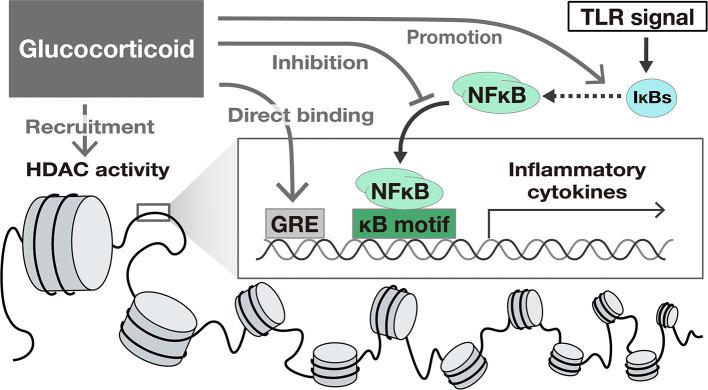
The respiratory tract is constantly at risk of invasion by microorganisms such as bacteria, viruses, and fungi. In particular, the mucosal epithelium of the nasal cavity and paranasal sinuses is at the very forefront of the battles between the host and the invading pathogens. Recent studies have revealed that the epithelium not only constitutes a physical barrier but also takes an essential role in the activation of the immune system. One of the mechanisms equipped in the epithelium to fight against microorganisms is the Toll-like receptor (TLR) response. TLRs recognize common structural components of microorganisms and activate the innate immune system, resulting in the production of a plethora of cytokines and chemokines in the response against microbes. As the epithelia-derived cytokines are deeply involved in the pathogenesis of inflammatory conditions in the nasal cavity and paranasal sinuses, such as chronic rhinosinusitis (CRS) and allergic rhinitis (AR), the molecules involved in the TLR response may be utilized as therapeutic targets for these diseases. There are several differences in the TLR response between nasal and bronchial epithelial cells, and knowledge of the TLR signals in the upper airway is sparse compared to that in the lower airway. In this review, we provide recent evidence on TLR signaling in the upper airway, focusing on the expression, regulation, and responsiveness of TLRs in human nasal epithelial cells (HNECs). We also discuss how TLRs in the epithelium are involved in the pathogenesis of, and possible therapeutic targeting, for CRS and AR.
呼吸道一直面临着被细菌、病毒和真菌等微生物侵袭的风险。特别是鼻腔和鼻窦的黏膜上皮,处于宿主与入侵病原体战斗的最前沿。最近的研究表明,上皮不仅构成物理屏障,而且在免疫系统激活中发挥重要作用。上皮对抗微生物的机制之一是Toll样受体(TLR)反应。TLR识别微生物的共同结构成分并激活先天免疫系统,从而在对抗微生物的反应中产生大量细胞因子和趋化因子。由于上皮来源的细胞因子深度参与鼻腔和鼻窦炎症性疾病的发病机制,如慢性鼻窦炎(CRS)和变应性鼻炎(AR),TLR反应中涉及的分子可能被用作这些疾病的治疗靶点。鼻和支气管上皮细胞的TLR反应存在一些差异,与下呼吸道相比,上呼吸道中TLR信号的相关知识较为匮乏。在本综述中,我们提供了上呼吸道TLR信号传导的最新证据,重点关注人鼻上皮细胞(HNECs)中TLR的表达、调节和反应性。我们还讨论了上皮中的TLR如何参与CRS和AR的发病机制以及可能的治疗靶点。

 Zotero 插件