
中国 COVID-19 疫情应对的最佳时机和效果:建模研究。
Optimal timing and effectiveness of COVID-19 outbreak responses in China: a modelling study.
机构信息
Department of Industrial and Systems Engineering, University of Minnesota, 100 Union St SE, Minneapolis, 55455, USA.
Division of Health Policy and Management, University of Minnesota School of Public Health, 420 Delaware St SE, MMC 729 Mayo, Minneapolis, 55455, USA.
出版信息
BMC Public Health. 2022 Apr 7;22(1):679. doi: 10.1186/s12889-022-12659-2.
BACKGROUND
In January 2020, an outbreak of atypical pneumonia caused by a novel coronavirus, SARS-CoV-2, was reported in Wuhan, China. On Jan 23, 2020, the Chinese government instituted mitigation strategies to control spread. Most modeling studies have focused on projecting epidemiological outcomes throughout the pandemic. However, the impact and optimal timing of different mitigation approaches have not been well-studied.
METHODS
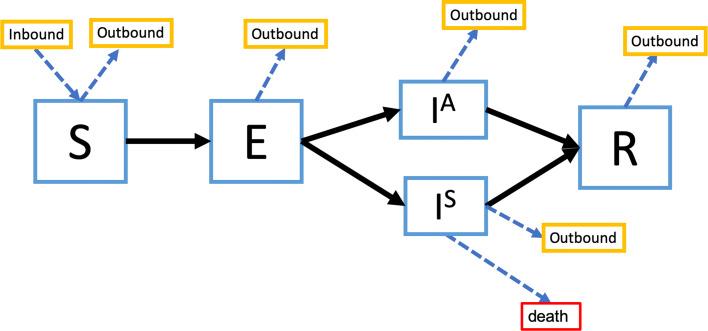
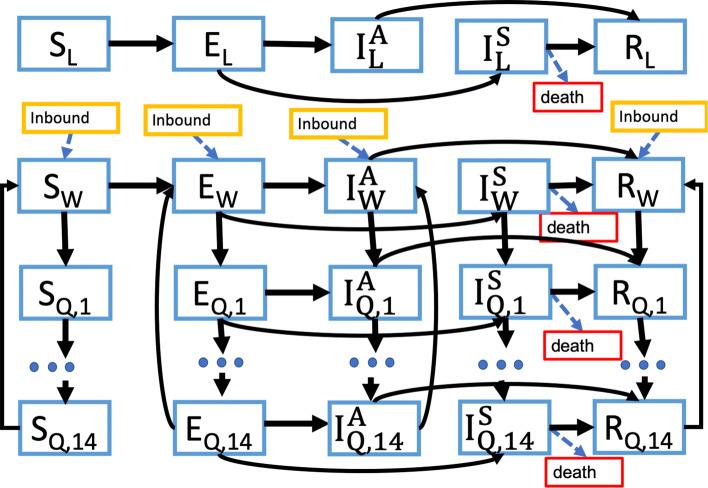
We developed a mathematical model reflecting SARS-CoV-2 transmission dynamics in an age-stratified population. The model simulates health and economic outcomes from Dec 1, 2019 through Mar 31, 2020 for cities including Wuhan, Chongqing, Beijing, and Shanghai in China. We considered differences in timing and duration of three mitigation strategies in the early phase of the epidemic: city-wide quarantine on Wuhan, travel history screening and isolation of travelers from Wuhan to other Chinese cities, and general social distancing.
RESULTS
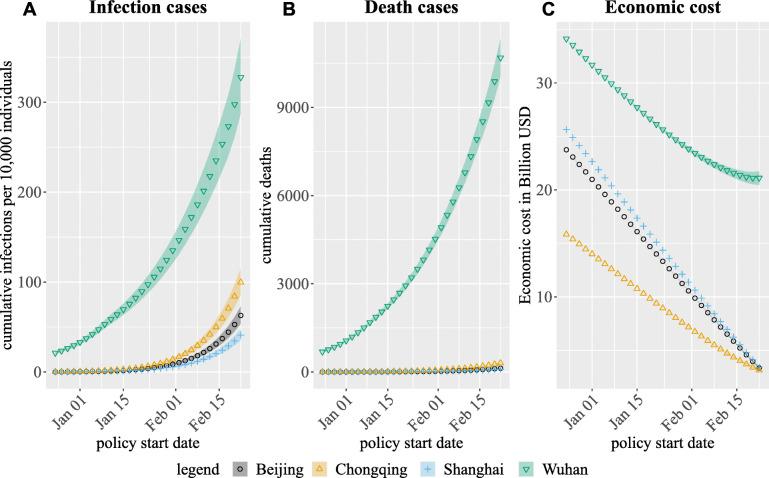
Our model estimated that implementing all three mitigation strategies one week earlier would have averted 35% of deaths in Wuhan (50% in other cities) with a 7% increase in economic impacts (16-18% in other cities). One week's delay in mitigation strategy initiation was estimated to decrease economic cost by the same amount, but with 35% more deaths in Wuhan and more than 80% more deaths in the other cities. Of the three mitigation approaches, infections and deaths increased most rapidly if initiation of social distancing was delayed. Furthermore, social distancing of working-age adults was most critical to reducing COVID-19 outcomes versus social distancing among children and/or the elderly.
CONCLUSIONS
Optimizing the timing of epidemic mitigation strategies is paramount and involves weighing trade-offs between preventing infections and deaths and incurring immense economic impacts. City-wide quarantine was not as effective as city-wide social distancing due to its much higher daily cost than social distancing. Under typical economic evaluation standards, the optimal timing for the full set of control measures would have been much later than Jan 23, 2020 (status quo).
背景
2020 年 1 月,中国武汉报告了一种由新型冠状病毒 SARS-CoV-2 引起的非典型肺炎爆发。2020 年 1 月 23 日,中国政府采取了缓解策略来控制传播。大多数建模研究都集中在预测整个大流行期间的流行病学结果。然而,不同缓解方法的影响和最佳时机尚未得到很好的研究。
方法
我们开发了一个反映 SARS-CoV-2 在年龄分层人群中传播动力学的数学模型。该模型模拟了 2019 年 12 月 1 日至 2020 年 3 月 31 日期间包括中国武汉、重庆、北京和上海在内的城市的健康和经济结果。我们考虑了在疫情早期实施三种缓解策略的时间和持续时间的差异:对武汉进行全市隔离、对武汉来的旅客进行旅行史筛查和隔离,以及一般的社会隔离。
结果
我们的模型估计,如果三种缓解策略都提前一周实施,武汉的死亡人数将减少 35%(其他城市为 50%),经济影响增加 7%(其他城市为 16-18%)。缓解策略启动延迟一周估计会使经济成本减少相同的数额,但武汉的死亡人数将增加 35%,其他城市的死亡人数将增加 80%以上。在三种缓解方法中,如果延迟社会隔离的开始,感染和死亡的增加速度最快。此外,与儿童和/或老年人的社会隔离相比,工作年龄成年人的社会隔离对于降低 COVID-19 的结果最为关键。
结论
优化疫情缓解策略的时机至关重要,需要权衡预防感染和死亡与承受巨大经济影响之间的权衡。由于全市隔离的日常成本远高于社会隔离,因此其效果不如全市社会隔离。根据典型的经济评估标准,全套控制措施的最佳时机将远迟于 2020 年 1 月 23 日(现状)。

 Zotero 插件