
GATTO 研究的安全性和初步活性结果,这是一项 Ib 期研究,将抗-TA-MUC1 抗体 gatipotuzumab 与抗-EGFR tomuzotuximab 联合用于治疗难治性实体瘤患者。
Safety and preliminary activity results of the GATTO study, a phase Ib study combining the anti-TA-MUC1 antibody gatipotuzumab with the anti-EGFR tomuzotuximab in patients with refractory solid tumors.
机构信息
Charité Comprehensive Cancer Center, Berlin, Germany; Charité, Department of Hematology, Oncology and Tumor Immunology, Berlin, Germany; German Cancer Consortium (DKTK), Berlin, Germany.
University Medical Center Hamburg-Eppendorf, Hubertus-Wald University Cancer Center, Hamburg, Germany.
出版信息
ESMO Open. 2022 Apr;7(2):100447. doi: 10.1016/j.esmoop.2022.100447. Epub 2022 Apr 6.
BACKGROUND
The phase I GATTO study (NCT03360734) explored the feasibility, tolerability and preliminary activity of combining gatipotuzumab, a novel humanized monoclonal antibody binding to the tumor-associated epitope of mucin 1 (TA-MUC1) and an anti-epidermal growth factor receptor (anti-EGFR) antibody in refractory solid tumors.
PATIENTS AND METHODS
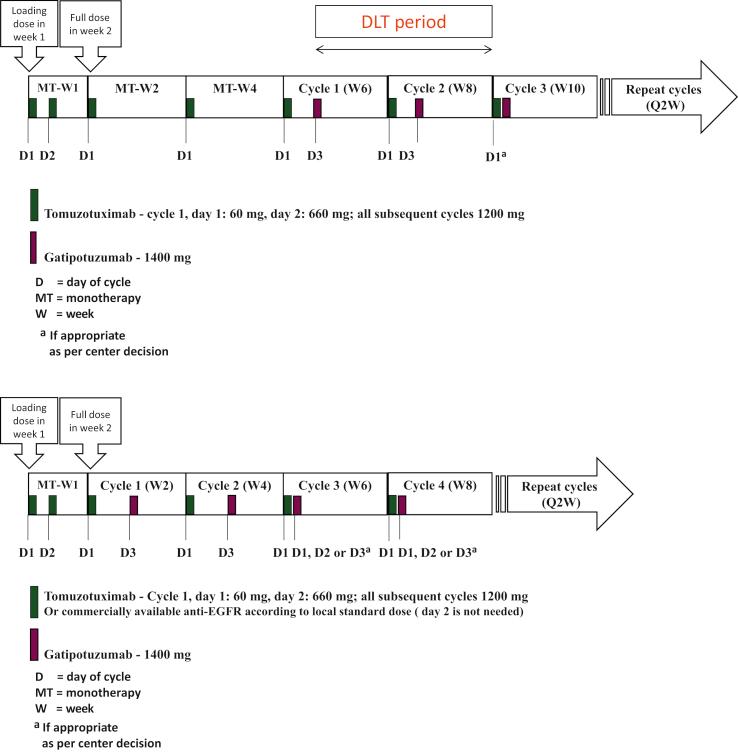
Initially the study enrolled primary phase (PP) patients with EGFR-positive metastatic solid tumors, for whom no standard treatment was available. Patients received gatipotuzumab administered at 1400 mg every 2 weeks, 6 weeks after the start of the glyco-optimized anti-EGFR antibody tomuzotuximab at 1200 mg every 2 weeks. As this regimen was proven safe, enrollment continued in an expansion phase (EP) of patients with refractory metastatic colorectal cancer, non-small-cell lung cancer, head and neck cancer and breast cancer. Tomuzotuximab and gatipotuzumab were given at the same doses and gatipotuzumab treatment started 1 week after the first dose of the anti-EGFR antibody. Additionally, investigators could use a commercial anti-EGFR antibody in place of tomuzotuximab.
RESULTS
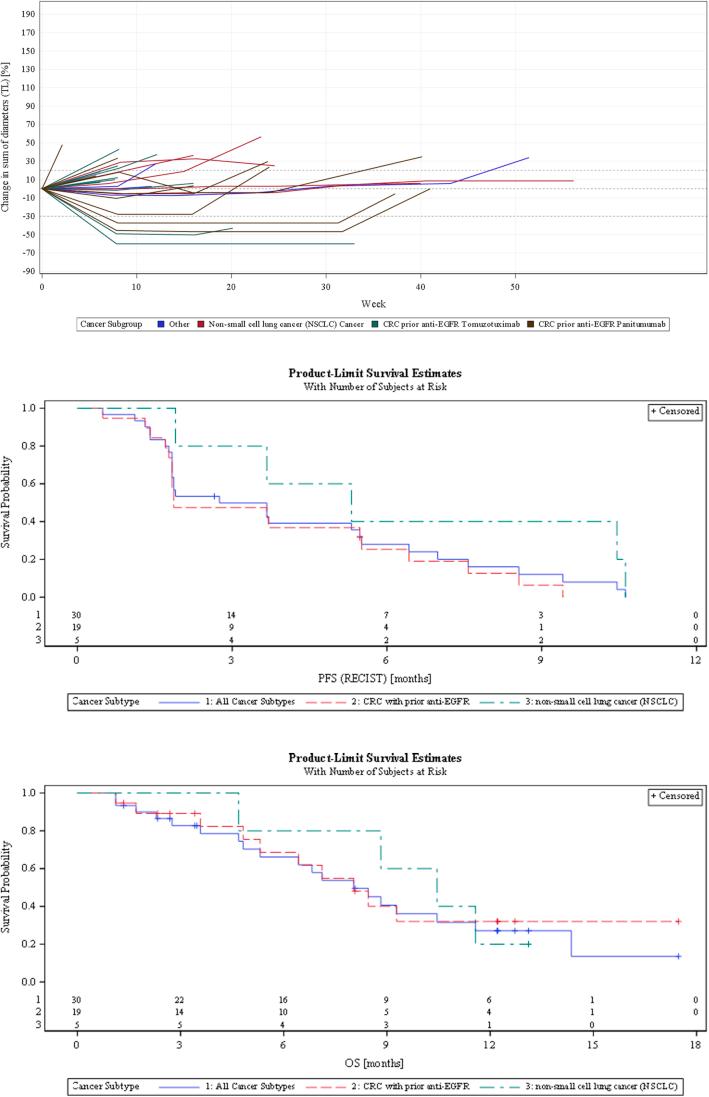
A total of 52 patients were enrolled, 20 in the PP and 32 in the EP. The combined treatment was well tolerated and no dose-limiting toxicity was observed in the whole study, nor related serious adverse event or death. Preliminary activity of the combination was observed, with one and four RECIST partial responses in the PP and EP, all in colorectal cancer patients. The trial was accompanied by a comprehensive translational research program for identification of biomarkers, including soluble TA-MUC1 (sTA-MUC1) in serum. In the EP, patients with baseline sTA-MUC1 levels above the median appeared to have improved progression-free survival and overall survival.
CONCLUSIONS
Combination of a TA-MUC1-targeting antibody and an EGFR-targeting antibody is safe and feasible. Interesting antitumor activity was observed in heavily pretreated patients. Future studies should test this combination together with chemotherapy and explore the potential of sTA-MUC1 as a companion biomarker for further development of the combination.
背景
I 期 GATTO 研究(NCT03360734)探讨了结合新型人源化单克隆抗体 gatipotuzumab(靶向黏蛋白 1 肿瘤相关表位的 TA-MUC1 和抗表皮生长因子受体 [anti-EGFR] 抗体)在难治性实体瘤中的可行性、耐受性和初步疗效。
患者和方法
最初,该研究招募了 EGFR 阳性转移性实体瘤的原发性阶段(PP)患者,这些患者没有标准治疗方法。患者在开始每 2 周给予 1200 mg 糖基优化的抗 EGFR 抗体 tomuzotuximab 6 周后,接受 1400 mg 的 gatipotuzumab治疗。由于该方案被证明是安全的,因此继续在难治性转移性结直肠癌、非小细胞肺癌、头颈部癌和乳腺癌患者的扩展阶段(EP)入组。tomuzotuximab 和 gatipotuzumab 的剂量相同,并且在第一次给予抗 EGFR 抗体后 1 周开始给予 gatipotuzumab。此外,研究人员可以使用商业抗 EGFR 抗体代替 tomuzotuximab。
结果
共入组 52 例患者,PP 组 20 例,EP 组 32 例。联合治疗耐受性良好,整个研究中未观察到剂量限制毒性,也未观察到相关严重不良事件或死亡。联合治疗观察到初步疗效,PP 和 EP 各有 1 例和 4 例 RECIST 部分缓解,均为结直肠癌患者。该试验伴随着一个全面的转化研究计划,用于识别生物标志物,包括血清中的可溶性 TA-MUC1(sTA-MUC1)。在 EP 中,基线时 sTA-MUC1 水平高于中位数的患者似乎具有改善的无进展生存期和总生存期。
结论
TA-MUC1 靶向抗体和 EGFR 靶向抗体的联合使用是安全可行的。在既往治疗过的患者中观察到了有趣的抗肿瘤活性。未来的研究应测试这种联合治疗与化疗的联合,并探索 sTA-MUC1 作为进一步开发该联合治疗的潜在伴随生物标志物的潜力。
 Zotero 插件