
替莫唑胺联合核因子κB抑制剂可显著破坏多形性胶质母细胞瘤球体的形成。
Temozolomide in Combination With NF-κB Inhibitor Significantly Disrupts the Glioblastoma Multiforme Spheroid Formation.
作者信息
Xia Hui, Avci Naze G, Akay Yasemin, Esquenazi Yoshua, Schmitt Lisa H, Tandon Nitin, Zhu Jay-Jiguang, Akay Metin
机构信息
1 Biomedical Engineering DepartmentUniversity of Houston Houston TX 77204 USA.
2 Mischer Neuroscience Associates and the Vivian L. Smith Department of NeurosurgeryUniversity of Texas Health Science Center in Houston, UTHealth and Memorial Hermann Houston TX 77030 USA.
出版信息
IEEE Open J Eng Med Biol. 2020 Feb 17;1:9-16. doi: 10.1109/OJEMB.2019.2962801. eCollection 2020.
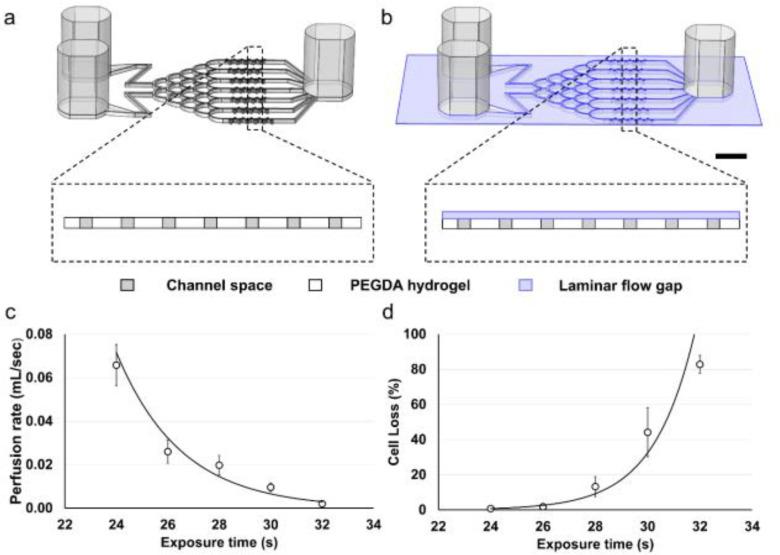
Glioblastoma multiforme (GBM) is the most common malignant primary brain tumor, accounting for 50% of all cases. GBM patients have a five-year survival rate of merely 5.6% and a median overall survival of 14.6 months with the "Stupp" regimen, 20.9 months with tumor treatment fields (TTF, OptuneR) in patients who participated in clinical trials, and 11 months for all GBM patients prior to TTF use. Our group recently developed a brain cancer chip which generates tumor spheroids, and provides large-scale assessments on the response of tumor cells to various concentrations and combinations of drugs. This platform could optimize the use of tumor samples derived from GBM patients to provide valuable insight on the tumor growth and responses to drug therapies. To minimize any sample loss , we improved our brain cancer chip system by adding an additional laminar flow distribution layer, which reduces sample loss during cell seeding and prevents spheroids from escaping from the microwells. In this study, we cultured 3D spheroids from GBM cell lines and patient-derived GBM cells , and investigated the effect of the combination of Temozolomide and nuclear factor-κB inhibitor on tumor growth. Our study revealed that these drugs have synergistic effects in inhibiting spheroid formation when used in combination. These results suggest that the brain cancer chip enables large-scale, inexpensive and sample-effective drug screening to 3D cancer tumors , and could be applied to related tissue engineering drug screening studies.
多形性胶质母细胞瘤(GBM)是最常见的原发性恶性脑肿瘤,占所有病例的50%。GBM患者采用“Stupp”方案时的五年生存率仅为5.6%,总体中位生存期为14.6个月;参与临床试验的患者使用肿瘤治疗电场(TTF,OptuneR)时为20.9个月;在TTF应用之前,所有GBM患者的总体中位生存期为11个月。我们团队最近开发了一种脑癌芯片,该芯片可生成肿瘤球体,并能对肿瘤细胞对各种浓度和药物组合的反应进行大规模评估。该平台可以优化源自GBM患者的肿瘤样本的使用,从而为肿瘤生长和对药物治疗的反应提供有价值的见解。为了尽量减少任何样本损失,我们通过增加一个额外的层流分布层来改进我们的脑癌芯片系统,这减少了细胞接种过程中的样本损失,并防止球体从微孔中逸出。在本研究中,我们从GBM细胞系和患者来源的GBM细胞中培养了三维球体,并研究了替莫唑胺和核因子-κB抑制剂联合使用对肿瘤生长的影响。我们的研究表明,这些药物联合使用时在抑制球体形成方面具有协同作用。这些结果表明,脑癌芯片能够对三维癌症肿瘤进行大规模、低成本且节省样本的药物筛选,并可应用于相关组织工程药物筛选研究。



 Zotero 插件