
新型光敏感材料(油菜花粉处理物)在海洋环境下抗生物膜过程中的微生物机制。
The Microbial Mechanisms of a Novel Photosensitive Material (Treated Rape Pollen) in Anti-Biofilm Process under Marine Environment.
机构信息
Shenzhen Public Platform for Screening and Application of Marine Microbial Resources, Institute for Ocean Engineering, Shenzhen International Graduate School, Tsinghua University, Shenzhen 518055, China.
CAS Key Laboratory of Quantitative Engineering Biology, Shenzhen Institute of Synthetic Biology, Shenzhen Institutes of Advanced Technology, Chinese Academy of Sciences, Shenzhen 518055, China.
出版信息
Int J Mol Sci. 2022 Mar 30;23(7):3837. doi: 10.3390/ijms23073837.
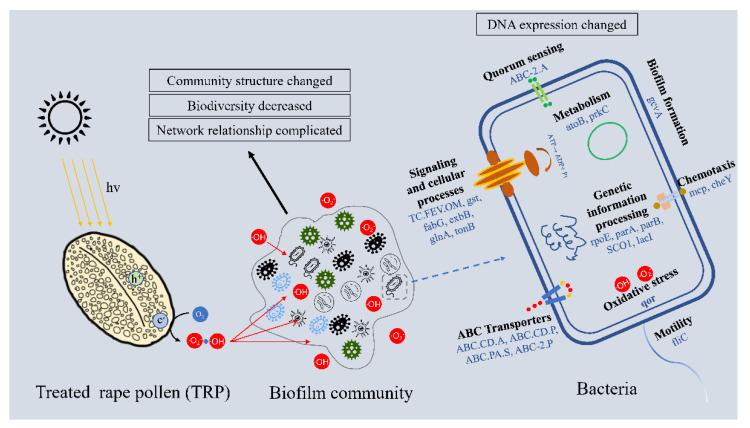
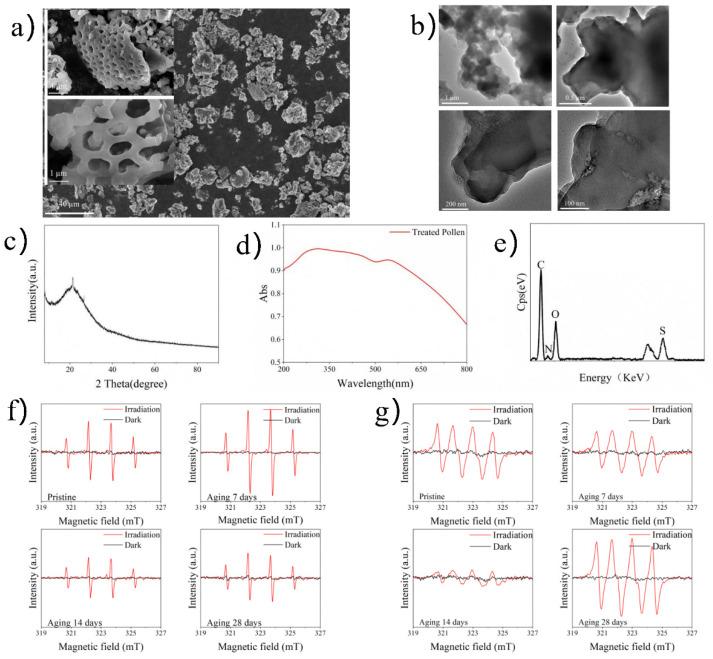
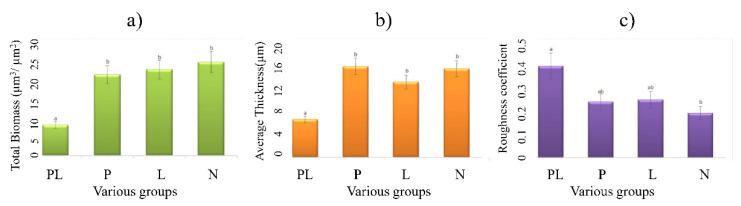
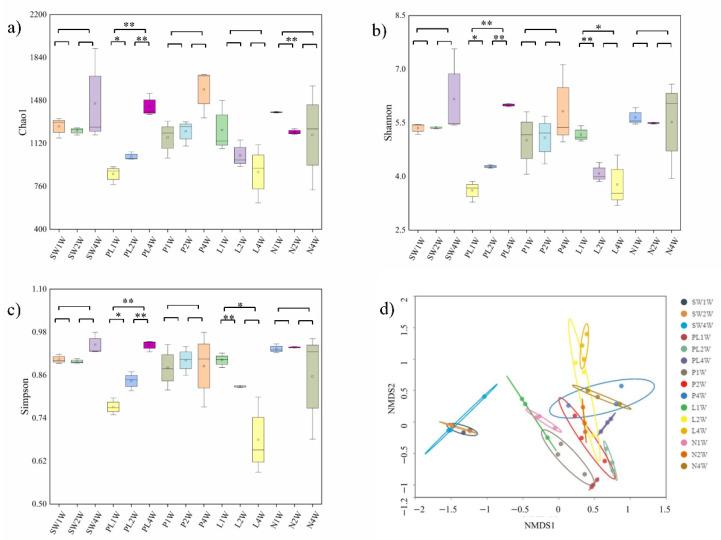
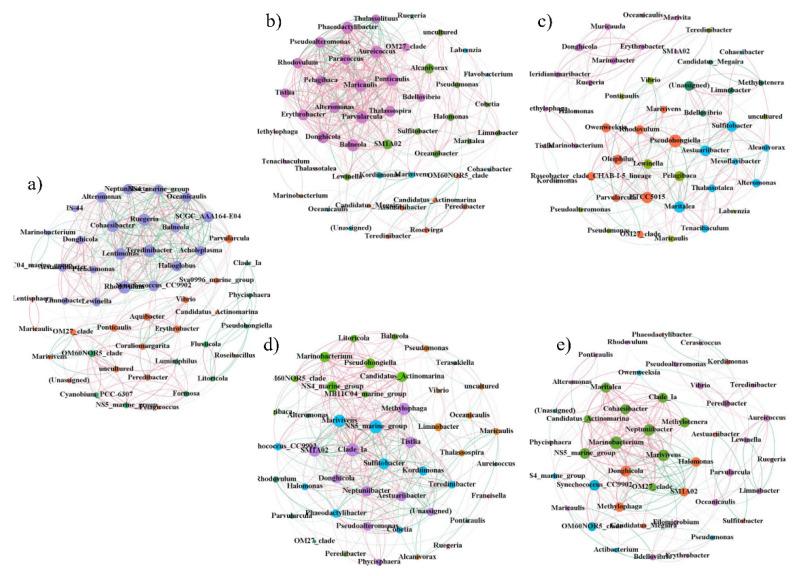
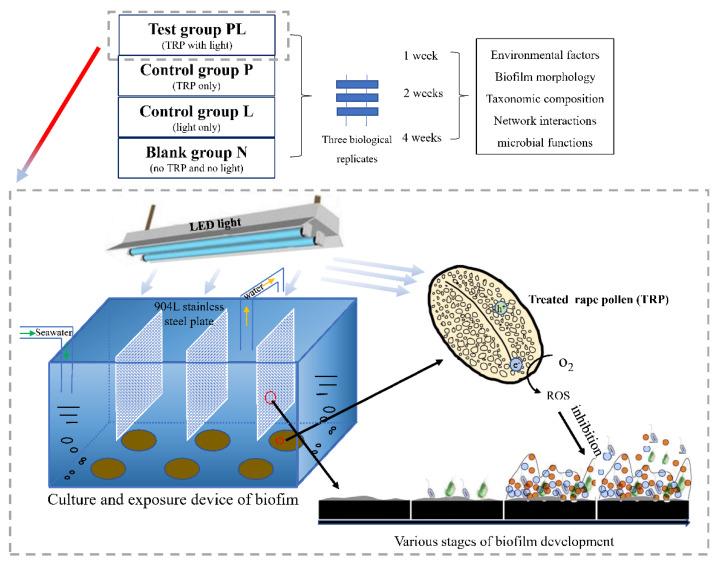
Marine biofouling is a worldwide problem in coastal areas and affects the maritime industry primarily by attachment of fouling organisms to solid immersed surfaces. Biofilm formation by microbes is the main cause of biofouling. Currently, application of antibacterial materials is an important strategy for preventing bacterial colonization and biofilm formation. A natural three-dimensional carbon skeleton material, TRP (treated rape pollen), attracted our attention owing to its visible-light-driven photocatalytic disinfection property. Based on this, we hypothesized that TRP, which is eco-friendly, would show antifouling performance and could be used for marine antifouling. We then assessed its physiochemical characteristics, oxidant potential, and antifouling ability. The results showed that TRP had excellent photosensitivity and oxidant ability, as well as strong anti-bacterial colonization capability under light-driven conditions. Confocal laser scanning microscopy showed that TRP could disperse pre-established biofilms on stainless steel surfaces in natural seawater. The biodiversity and taxonomic composition of biofilms were significantly altered by TRP (p < 0.05). Moreover, metagenomics analysis showed that functional classes involved in the antioxidant system, environmental stress, glucose−lipid metabolism, and membrane-associated functions were changed after TRP exposure. Co-occurrence model analysis further revealed that TRP markedly increased the complexity of the biofilm microbial network under light irradiation. Taken together, these results demonstrate that TRP with light irradiation can inhibit bacterial colonization and prevent initial biofilm formation. Thus, TRP is a potential nature-based green material for marine antifouling.
海洋生物附着是沿海地区的一个全球性问题,主要通过附着在固体浸没表面的污损生物来影响海洋工业。微生物形成生物膜是生物附着的主要原因。目前,应用抗菌材料是防止细菌定植和生物膜形成的重要策略。天然三维碳骨架材料 TRP(经过处理的油菜花粉)因其可见光驱动的光催化消毒性能引起了我们的注意。基于此,我们假设 TRP 是环保的,将表现出防污性能,并可用于海洋防污。然后,我们评估了它的物理化学特性、氧化剂潜力和防污能力。结果表明,TRP 具有优异的光敏性和氧化剂能力,并且在光驱动条件下具有很强的抗细菌定植能力。共聚焦激光扫描显微镜显示,TRP 可以在天然海水中分散不锈钢表面上预先建立的生物膜。TRP(p < 0.05)显著改变了生物膜的生物多样性和分类组成。此外,宏基因组学分析表明,抗氧化系统、环境应激、葡萄糖-脂质代谢和膜相关功能相关的功能类在 TRP 暴露后发生了变化。共现模型分析进一步表明,TRP 显著增加了光照下生物膜微生物网络的复杂性。总之,这些结果表明,TRP 与光照一起可以抑制细菌定植并防止初始生物膜形成。因此,TRP 是一种有潜力的基于自然的绿色海洋防污材料。




 Zotero 插件