
《意大利老年人用新型四价佐剂流感疫苗:卫生技术评估》。
The New Quadrivalent Adjuvanted Influenza Vaccine for the Italian Elderly: A Health Technology Assessment.
机构信息
Section of Hygiene, University Department of Life Sciences and Public Health, Università Cattolica del Sacro Cuore, 00168 Rome, Italy.
VIHTALI (Value in Health Technology and Academy for Leadership & Innovation), Spin Off of Università Cattolica del Sacro Cuore, 00168 Rome, Italy.
出版信息
Int J Environ Res Public Health. 2022 Mar 31;19(7):4166. doi: 10.3390/ijerph19074166.
BACKGROUND
The elderly, commonly defined as subjects aged ≥65 years, are among the at-risk subjects recommended for annual influenza vaccination in European countries. Currently, two new vaccines are available for this population: the MF59-adjuvanted quadrivalent influenza vaccine (aQIV) and the high-dose quadrivalent influenza vaccine (hdQIV). Their multidimensional assessment might maximize the results in terms of achievable health benefits. Therefore, we carried out a Health Technology Assessment (HTA) of the aQIV by adopting a multidisciplinary policy-oriented approach to evaluate clinical, economic, organizational, and ethical implications for the Italian elderly.
METHODS
A HTA was conducted in 2020 to analyze influenza burden; characteristics, efficacy, and safety of aQIV and other available vaccines for the elderly; cost-effectiveness of aQIV; and related organizational and ethical implications. Comprehensive literature reviews/analyses were performed, and a transmission model was developed in order to address the above issues.
RESULTS
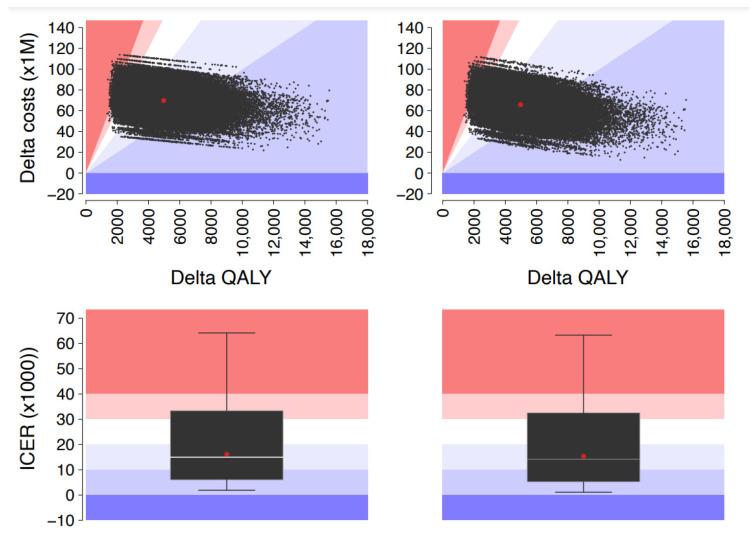
In Italy, the influenza burden on the elderly is high and from 77.7% to 96.1% of influenza-related deaths occur in the elderly. All available vaccines are effective and safe; however, aQIV, such as the adjuvanted trivalent influenza vaccine (aTIV), has proved more immunogenic and effective in the elderly. From the third payer's perspective, but also from the societal one, the use of aQIV in comparison with egg-based standard QIV (eQIV) in the elderly population is cost-effective. The appropriateness of the use of available vaccines as well as citizens' knowledge and attitudes remain a challenge for a successful vaccination campaign.
CONCLUSIONS
The results of this project provide decision-makers with important evidence on the aQIV and support with scientific evidence on the appropriate use of vaccines in the elderly.
背景
老年人通常被定义为年龄≥65 岁的人群,属于欧洲国家推荐进行年度流感疫苗接种的高危人群。目前,针对这一人群有两种新疫苗可用:含佐剂的四价流感疫苗(aQIV)和高剂量四价流感疫苗(hdQIV)。对它们进行多维评估可能会最大限度地提高在可实现的健康效益方面的效果。因此,我们采用多学科政策导向方法对 aQIV 进行了健康技术评估,以评估其对意大利老年人的临床、经济、组织和伦理影响。
方法
2020 年进行了一项 HTA,以分析流感负担;aQIV 和其他可用疫苗对老年人的特征、疗效和安全性;aQIV 的成本效益;以及相关的组织和伦理问题。进行了全面的文献回顾/分析,并开发了一个传播模型来解决上述问题。
结果
在意大利,老年人的流感负担很高,77.7%至 96.1%的流感相关死亡发生在老年人中。所有可用的疫苗都是有效且安全的;然而,aQIV,如含佐剂的三价流感疫苗(aTIV),已被证明在老年人中更具免疫原性和有效性。从第三方支付者的角度来看,也是从整个社会的角度来看,与基于鸡蛋的标准四价流感疫苗(eQIV)相比,aQIV 在老年人中具有成本效益。可用疫苗的使用适当性以及公民的知识和态度仍然是成功疫苗接种运动的挑战。
结论
该项目的结果为决策者提供了关于 aQIV 的重要证据,并为老年人中适当使用疫苗提供了科学依据。
 Zotero 插件