
基孔肯雅病毒感染期间吲哚胺2,3-双加氧酶1(IDO-1)活性增加与炎症反应
Increased Indoleamine 2,3-Dioxygenase 1 (IDO-1) Activity and Inflammatory Responses during Chikungunya Virus Infection.
作者信息
Alves de Souza Thiara Manuele, Fernandes-Santos Caroline, Araújo da Paixão de Oliveira Jéssica, Tomé Larissa Cristina Teixeira, Fiestas-Solórzano Victor Edgar, Nunes Priscila Conrado Guerra, Guimaraes Gabriel Macedo Costa, Sánchez-Arcila Juan Camilo, Paiva Iury Amâncio, de Souza Luís Jose, Damasco Paulo Vieira, da Silva Frutuoso Válber, Heringer Manoela, de Oliveira-Pinto Luzia Maria, Pinheiro Roberta Olmo, Dos Santos Flavia Barreto, Leal de Azeredo Elzinandes
机构信息
Viral Immunology Laboratory, Oswaldo Cruz Institute, Oswaldo Cruz Foundation (Fiocruz), Rio de Janeiro 21040-360, Brazil.
Leprosy Laboratory, Oswaldo Cruz Institute, Oswaldo Cruz Foundation (Fiocruz), Rio de Janeiro 21040-360, Brazil.
出版信息
Pathogens. 2022 Apr 7;11(4):444. doi: 10.3390/pathogens11040444.
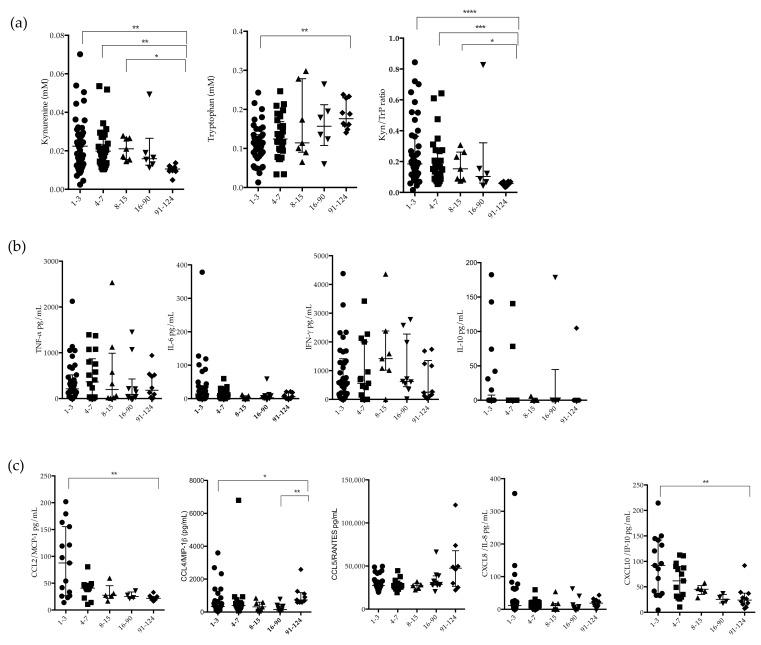
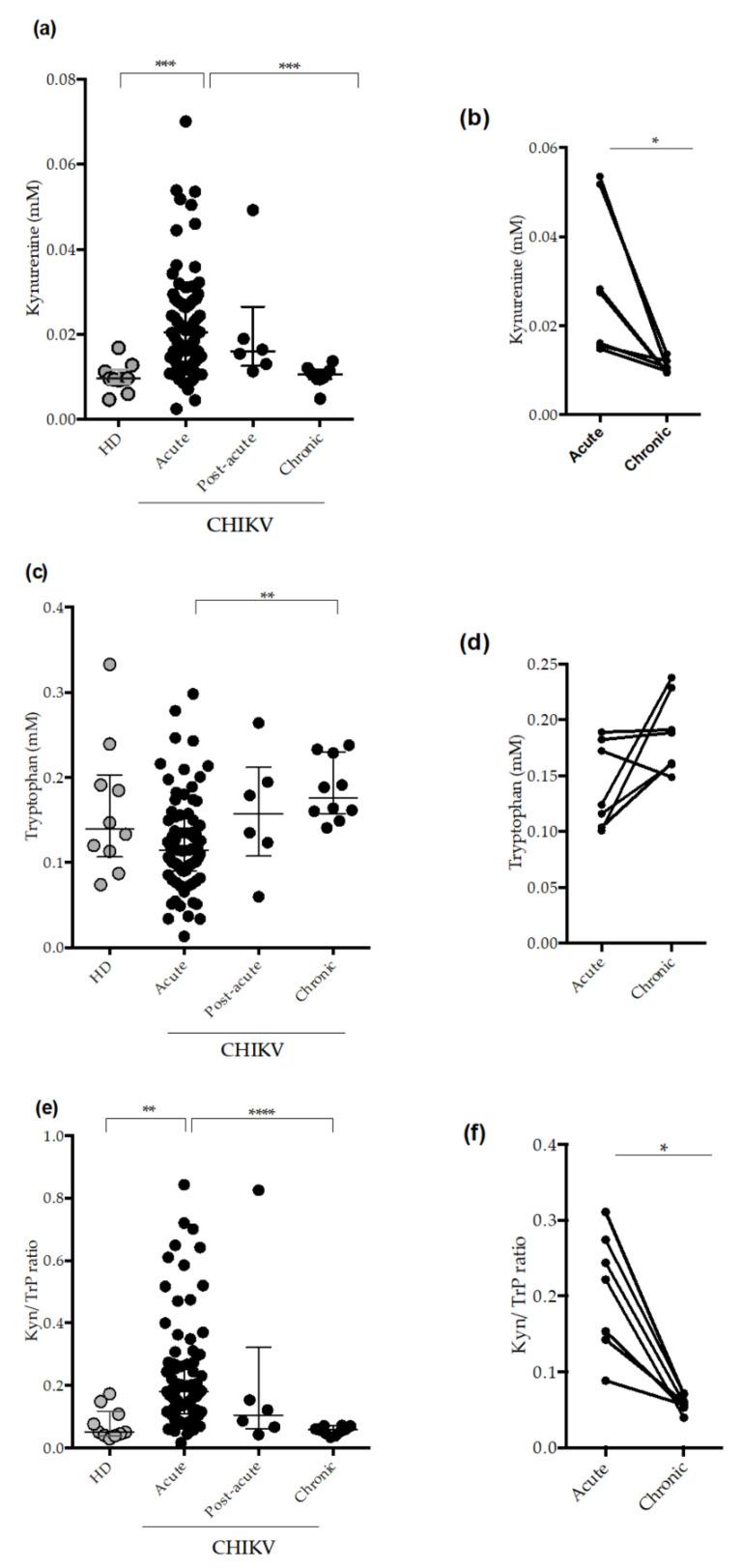
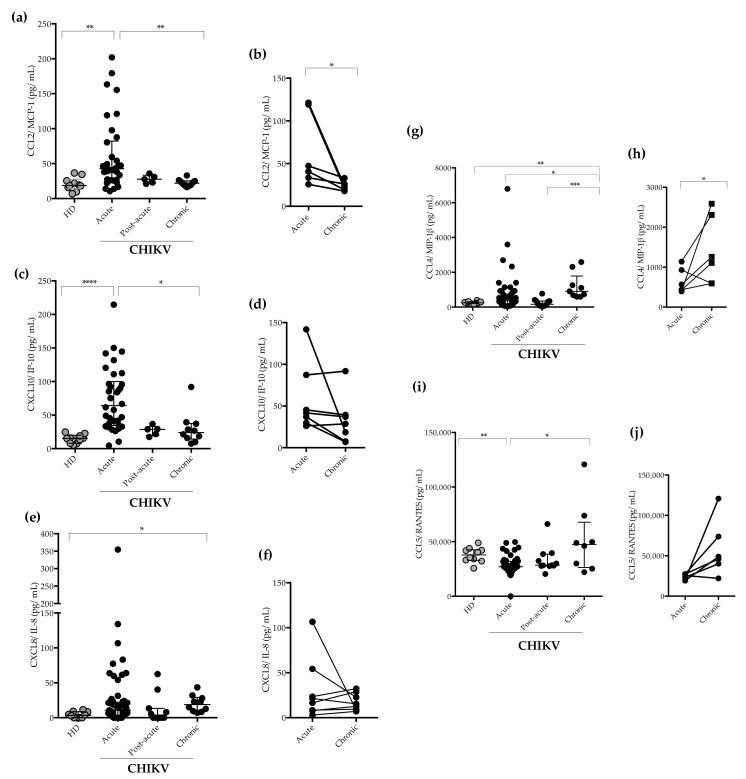
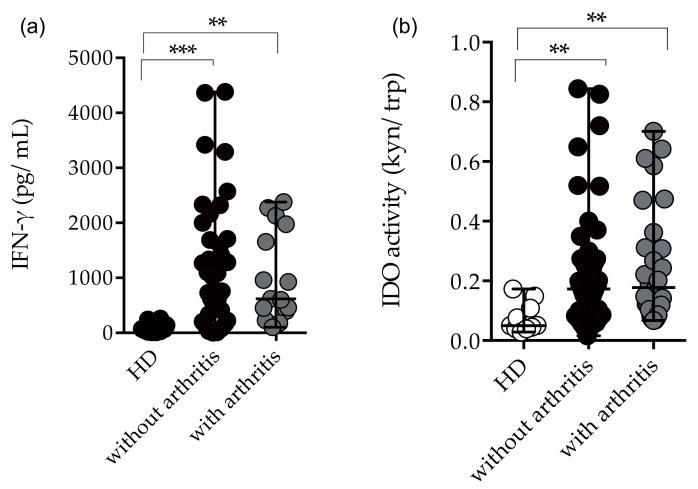
Chikungunya virus (CHIKV) infection causes intense cytokine/chemokine inflammatory responses and debilitating joint pain. Indoleamine2,3-dioxygenase 1 (IDO-1) is an enzyme that initiates the tryptophan degradation that is important in initial host innate immune defense against infectious pathogens. Besides that, IDO-1 activation acts as a regulatory mechanism to prevent overactive host immune responses. In this study, we evaluated IDO-1 activity and cytokine/chemokine patterns in CHIKV patients. Higher IDO-1 (Kyn/Trp ratio) activation was observed during the early acute phase of CHIKV infection and declined in the chronic phase. Importantly, increased concentrations of Tumor Necrosis Factor-α (TNF-α), Interleukin-6 (IL-6), Interferon γ (IFN-γ), C-C motif chemokine ligand 2/Monocyte Chemoattractant Protein-1 (CCL2/MCP-1) and C-X-C motif chemokine ligand 10/Interferon Protein-10 (CXCL10/IP-10) were found in the acute phase of infection, while C-C motif chemokine ligand 4/Macrophage Inflammatory Protein 1 β (CCL4/MIP-1β) was found at increased concentrations in the chronic phase. Likewise, CHIKV patients with arthritis had significantly higher concentrations of CCL4/MIP-1β compared to patients without arthritis. Taken together, these data demonstrated increased IDO-1 activity, possibly exerting both antiviral effects and regulating exacerbated inflammatory responses. CCL4/MIP-1β may have an important role in the persistent inflammation and arthritic symptoms following chikungunya infection.
基孔肯雅病毒(CHIKV)感染会引发强烈的细胞因子/趋化因子炎症反应以及使人虚弱的关节疼痛。吲哚胺2,3-双加氧酶1(IDO-1)是一种启动色氨酸降解的酶,这在宿主针对传染性病原体的初始固有免疫防御中很重要。除此之外,IDO-1的激活作为一种调节机制,可防止宿主免疫反应过度活跃。在本研究中,我们评估了CHIKV患者的IDO-1活性和细胞因子/趋化因子模式。在CHIKV感染的早期急性期观察到IDO-1(犬尿氨酸/色氨酸比值)激活程度较高,而在慢性期则下降。重要的是,在感染急性期发现肿瘤坏死因子-α(TNF-α)、白细胞介素-6(IL-6)、干扰素γ(IFN-γ)、C-C基序趋化因子配体2/单核细胞趋化蛋白-1(CCL2/MCP-1)和C-X-C基序趋化因子配体10/干扰素蛋白-10(CXCL10/IP-10)的浓度增加,而在慢性期发现C-C基序趋化因子配体4/巨噬细胞炎性蛋白1β(CCL4/MIP-1β)的浓度增加。同样,患有关节炎的CHIKV患者的CCL4/MIP-1β浓度明显高于未患关节炎的患者。综上所述,这些数据表明IDO-1活性增加,可能发挥抗病毒作用并调节加剧的炎症反应。CCL4/MIP-1β可能在基孔肯雅热感染后的持续炎症和关节炎症状中起重要作用。



 Zotero 插件