
基于网络药理学和分子对接技术分析 Fruit 治疗鼻咽癌的分子机制
Analysis of the Molecular Mechanism of Fruit in the Treatment of Nasopharyngeal Carcinoma Using Network Pharmacology and Molecular Docking.
机构信息
Hunan University of Chinese Medicine, Hanpu Science and Education Park, Changsha, China.
First Affiliated Hospital, Hunan University of Chinese Medicine, Changsha, China.
出版信息
J Healthc Eng. 2022 Apr 13;2022:6277139. doi: 10.1155/2022/6277139. eCollection 2022.
BACKGROUND
Nasopharyngeal carcinoma (NPC), a neoplasm of the head and neck, has high incidence and mortality rates in East and Southeast Asia. is a tree native to Korea and China, and its fruit (hereafter referred to as Evodia) exhibits remarkable antitumour properties. However, little is known about its mechanism of action in NPC. In this study, we employed network pharmacology to identify targets of active Evodia compounds in nasopharyngeal carcinoma and generate an interaction network.
METHODS
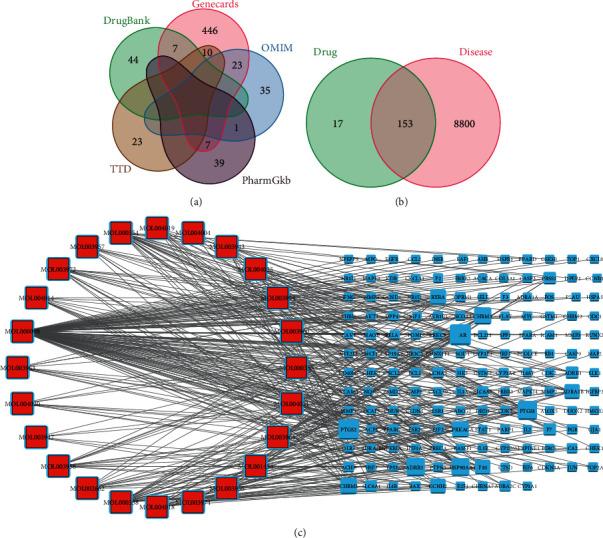
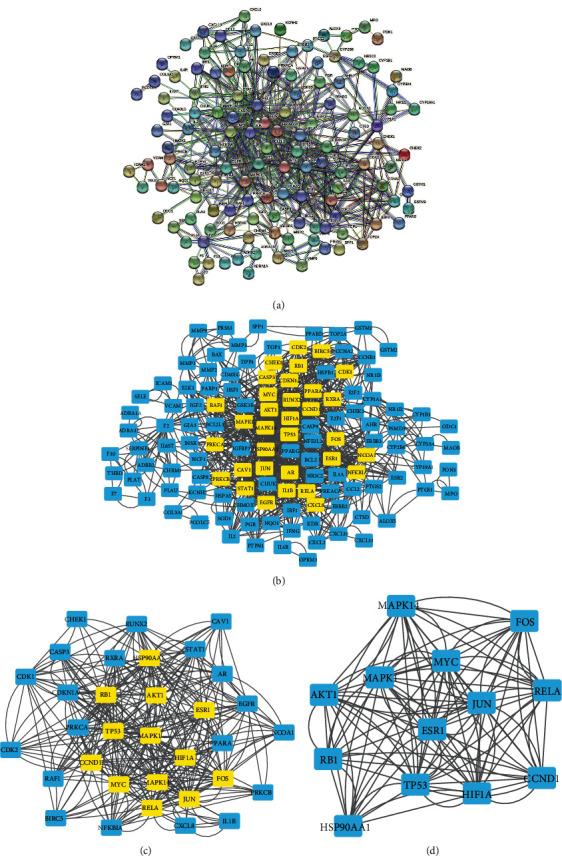
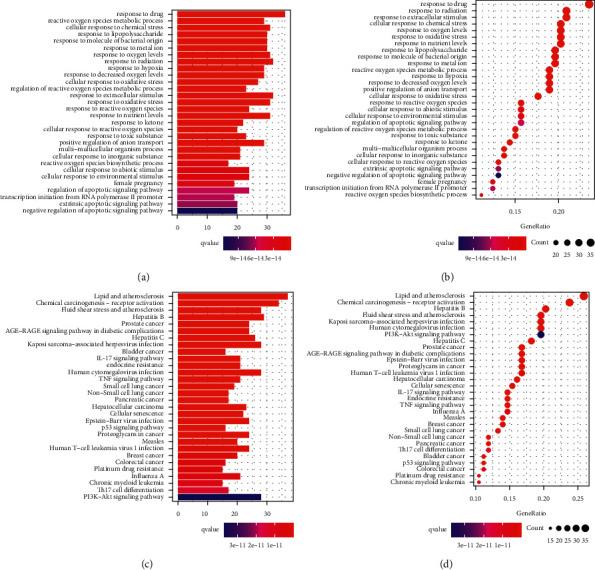
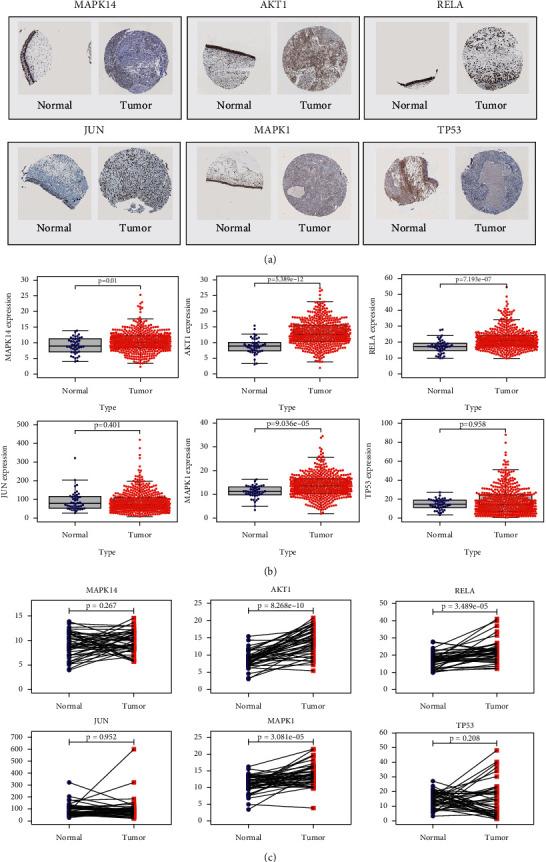
The active ingredients of Evodia and targets in NPC were obtained from multiple databases, and an interaction network was constructed via the Cytoscape and STRING databases. The key biological processes and signalling pathways were predicted using Gene Ontology and Kyoto Encyclopaedia of Genes and Genomes pathway enrichment analyses. Molecular docking technology was used to identify the affinity and activity of target genes, and The Cancer Genome Atlas and Human Protein Atlas databases were used to analyse differential expression. Cell Counting Kit-8 (CCK-8) and Annexin V-fluorescein isothiocyanate (FITC)/propidium iodide (PI) dual-fluorescence staining were used for experimental verification.
RESULTS
Active Evodia compounds included quercetin, isorhamnetin, and evodiamine, and important NPC targets included MAPK14, AKT1, RELA, MAPK1, JUN, and p53, which were enriched in lipid and atherosclerosis signalling pathways. Additionally, we verified the high affinity and activity of the active compounds through molecular docking, and the target proteins were verified using immunohistochemistry and differential expression analyses. Furthermore, CCK-8 assays and Annexin V-FITC/PI dual-fluorescence staining showed that isorhamnetin inhibited the proliferation of NPC cells and induced apoptosis.
CONCLUSION
Our results identified the molecular mechanisms of Evodia and demonstrated its ability to alter the proliferation and apoptosis of NPC cells through multiple targets and pathways, thereby providing evidence for the clinical application of Evodia.
背景
鼻咽癌(NPC)是一种头颈部肿瘤,在东亚和东南亚地区发病率和死亡率较高。吴茱萸是一种原产于韩国和中国的树,其果实(以下简称吴茱萸)具有显著的抗肿瘤特性。然而,其在 NPC 中的作用机制知之甚少。在这项研究中,我们采用网络药理学方法鉴定吴茱萸中活性化合物在鼻咽癌中的靶点,并构建相互作用网络。
方法
从多个数据库中获取吴茱萸的活性成分和 NPC 靶点,并通过 Cytoscape 和 STRING 数据库构建相互作用网络。使用基因本体论和京都基因与基因组百科全书通路富集分析预测关键的生物学过程和信号通路。采用分子对接技术鉴定靶基因的亲和力和活性,并利用癌症基因组图谱和人类蛋白质图谱数据库分析差异表达。使用细胞计数试剂盒-8(CCK-8)和 Annexin V-荧光素异硫氰酸酯(FITC)/碘化丙啶(PI)双重荧光染色进行实验验证。
结果
吴茱萸的活性化合物包括槲皮素、异鼠李素和吴茱萸碱,重要的 NPC 靶点包括 MAPK14、AKT1、RELA、MAPK1、JUN 和 p53,这些靶点富集在脂质和动脉粥样硬化信号通路中。此外,我们通过分子对接验证了活性化合物的高亲和力和活性,并通过免疫组织化学和差异表达分析验证了靶蛋白。此外,CCK-8 检测和 Annexin V-FITC/PI 双重荧光染色表明,异鼠李素抑制 NPC 细胞的增殖并诱导细胞凋亡。
结论
我们的研究结果确定了吴茱萸的分子机制,并证明了其通过多个靶点和通路改变 NPC 细胞增殖和凋亡的能力,为吴茱萸的临床应用提供了证据。




 Zotero 插件