
基于移动感知信任的中介作用:移动技术视角下金融科技创新的采纳意愿与采纳行为——系统文献综述
Mobile perceived trust mediation on the intention and adoption of FinTech innovations using mobile technology: A systematic literature review.
机构信息
UCSI Graduate Business School, Faculty of Business & Management, UCSI University, Kuala Lumpur, KL, Malaysia.
出版信息
F1000Res. 2021 Dec 7;10:1252. doi: 10.12688/f1000research.74656.2. eCollection 2021.
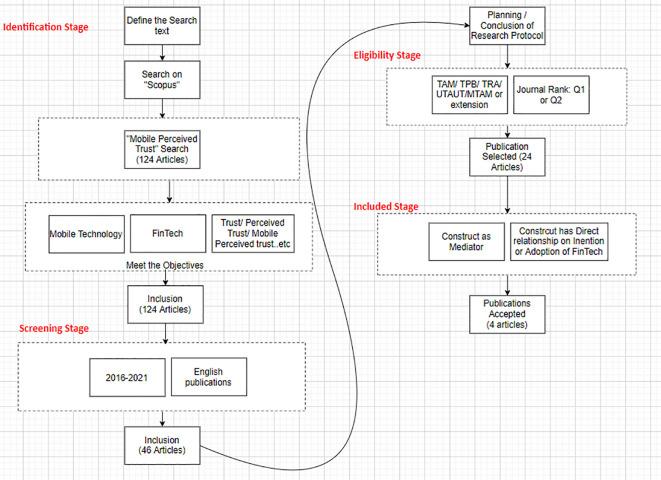
The banking and financial sectors have witnessed a significant development recently due to financial technology (FinTech), and it has become an essential part of the financial system. Many factors helped the development of this sector, including the pandemics such as Covid-19, the considerable increasing market value of the FinTech sector worldwide, and new technologies such as blockchain, artificial intelligence, big data, cloud computing and mobile technology. Moreover, changes in consumer's preferences, especially the Z-generation (digital generation). FinTech shifted the traditional business models to mobile platforms characterized by ease of access and swift transactions. Mobile technology became the main backbone for FinTech innovations and acts as a channel to deliver FinTech services that overcome all geographical and timing barriers, thus enhancing financial inclusion. Mobile perceived Trust (MPT), or the trust in using financial business models via mobile technology, is a crucial factor in the FinTech context that has mediation effects on the intention and adoption of different FinTech business models. Unfortunately, few studies have explored MPT mediations on consumers' intention to adopt FinTech innovations using mobile technology. Typically, many studies examined trust/MPT as an independent and unidirectional variable and investigated its effects on behaviour intention without predicting its mediation effects. This study aimed to develop a systematic literature review on MPT mediation in FinTech, focusing on the period from 2016 and 2021, in journals ranked Q1 and Q2, and known-based theories such as the technology acceptance model, the unified theory of acceptance and use of technology, and the mobile technology acceptance model. This study found that only four articles were published in Q1 and Q2 journals. In these articles, the MPT was used as a mediator, and its effects were measured on the intention and adoption of the behaviour.
由于金融科技(FinTech)的发展,银行和金融领域最近取得了重大进展,并且已经成为金融体系的重要组成部分。许多因素促成了该领域的发展,包括新冠疫情等大流行病、全球金融科技部门市值的大幅增长,以及区块链、人工智能、大数据、云计算和移动技术等新技术。此外,消费者偏好的变化,尤其是 Z 世代(数字世代),也推动了金融科技的发展。金融科技将传统商业模式转变为以易于访问和快速交易为特点的移动平台。移动技术成为金融科技创新的主要支柱,并作为提供克服所有地理和时间障碍的金融科技服务的渠道,从而提高金融包容性。移动感知信任(MPT),即在移动技术上使用金融商业模式的信任,是金融科技领域的一个关键因素,它对不同金融科技商业模式的意图和采用具有中介效应。不幸的是,很少有研究探讨过 MPT 对消费者采用移动技术的金融科技创新的意图的中介效应。通常,许多研究将信任/MPT 视为独立的单向变量,并在不预测其中介效应的情况下研究其对行为意图的影响。本研究旨在对金融科技中的 MPT 中介作用进行系统的文献综述,重点关注 2016 年至 2021 年期间在 Q1 和 Q2 期刊上发表的研究,以及基于知识的理论,如技术接受模型、统一技术接受和使用理论以及移动技术接受模型。本研究发现,只有四篇文章发表在 Q1 和 Q2 期刊上。在这些文章中,MPT 被用作中介变量,并且其对意图和行为的采用进行了测量。

 Zotero 插件