
一种用于研究慢性伤口中细菌合作与生物膜的相关伤口样培养基。
A Relevant Wound-Like Media to Study Bacterial Cooperation and Biofilm in Chronic Wounds.
作者信息
Pouget Cassandra, Dunyach-Remy Catherine, Bernardi Thierry, Provot Christian, Tasse Jason, Sotto Albert, Lavigne Jean-Philippe
机构信息
Virulence Bactérienne et Infections Chroniques, INSERM U1047, Université de Montpellier, Nîmes, France.
Biofilm Pharma SAS, Saint-Beauzire, France.
出版信息
Front Microbiol. 2022 Apr 6;13:705479. doi: 10.3389/fmicb.2022.705479. eCollection 2022.
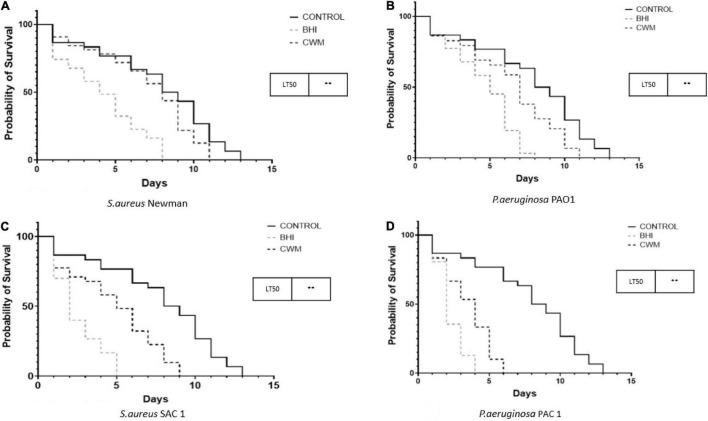
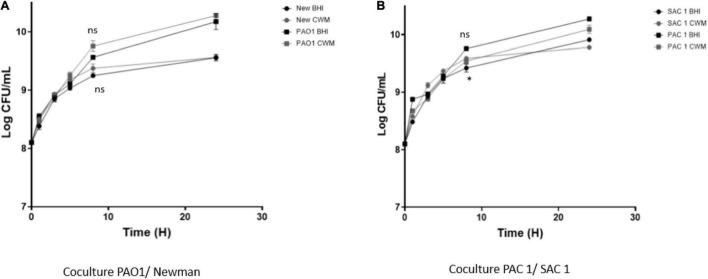
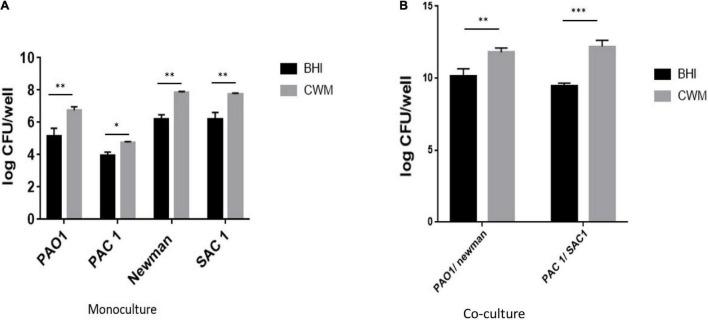
Biofilm on the skin surface of chronic wounds is an important factor in the pathology, inhibiting wound healing. The polymicrobial nature of these infected wounds and bacterial interactions inside this pathogenic biofilm are the keys for understanding chronic infection. The aim of our work was to develop an innovative medium that closely mimics the chronic wound emphasizing the microbiological, cellular, and inflammatory environment of chronic wounds but also focusing on the pH found at the wound level. This new medium, called chronic wound medium (CWM), will thus facilitate the study of pathogenic biofilm organization. Clinical and strains coisolated from diabetic foot infection were collected and cultivated in this new medium for 24 h in monoculture and coculture. Bacterial growth (growth curves), presence of small colony variant (SCV), biofilm formation (BioFilm Ring Test assay, biofilm biomass quantification), and virulence (survival curve in a model) were evaluated. After 24 h in the conditions, we observed that growth was not affected, compared with a control bacterial medium, whereas for , the stationary phase was reduced by two logs. Interestingly, growth increased when cocultured with in CWM. In coculture with , SCV forms of were detected. Biofilm studies showed that bacteria, alone and in combination, formed biofilm faster (as soon as 3 h) than the bacteria exposed in a control medium (as soon as 5 h). The virulence of all strains decreased in the nematode model when cultivated in our new medium. Taken together, our data confirmed the impact of the chronic wound environment on biofilm formation and bacteria virulence. They indicated that and cooperated in coinfected wounds. Therefore, this model provides a new tool for bacterial cooperation investigation and polymicrobial biofilm formation.
慢性伤口皮肤表面的生物膜是病理学中的一个重要因素,会抑制伤口愈合。这些感染伤口的微生物多样性以及这种致病性生物膜内的细菌相互作用是理解慢性感染的关键。我们工作的目的是开发一种创新培养基,该培养基能紧密模拟慢性伤口,强调慢性伤口的微生物学、细胞和炎症环境,同时关注伤口处的pH值。这种名为慢性伤口培养基(CWM)的新培养基将有助于研究致病性生物膜的组织。收集从糖尿病足感染中共同分离出的临床菌株,并在这种新培养基中进行单培养和共培养24小时。评估细菌生长(生长曲线)、小菌落变体(SCV)的存在、生物膜形成(生物膜环试验测定、生物膜生物量定量)和毒力(在模型中的存活曲线)。在该条件下培养24小时后,我们观察到,与对照细菌培养基相比,其生长未受影响,而对于,稳定期减少了两个对数。有趣的是,在CWM中与共培养时,的生长增加。在与共培养时,检测到了的SCV形式。生物膜研究表明,单独和组合的细菌形成生物膜的速度比暴露在对照培养基中的细菌更快(3小时即可形成)(5小时才形成)。在我们的新培养基中培养时,所有菌株在秀丽隐杆线虫模型中的毒力均下降。综上所述,我们的数据证实了慢性伤口环境对生物膜形成和细菌毒力的影响。它们表明,在合并感染的伤口中,和相互协作。因此,这个模型为细菌协作研究和多微生物生物膜形成提供了一种新工具。


 Zotero 插件