
构建与基因组不稳定性相关的新型长链非编码 RNA 标志物,预测肝细胞癌患者的预后和免疫活性。
Construction of a Novel LncRNA Signature Related to Genomic Instability to Predict the Prognosis and Immune Activity of Patients With Hepatocellular Carcinoma.
机构信息
Department of General Surgery, The Second Affiliated Hospital of Nanchang University, Nanchang, China.
Jiangxi Province Key Laboratory of Molecular Medicine, The Second Affiliated Hospital of Nanchang University, Nanchang, China.
出版信息
Front Immunol. 2022 Apr 8;13:856186. doi: 10.3389/fimmu.2022.856186. eCollection 2022.
BACKGROUND
Genomic instability (GI) plays a crucial role in the development of various cancers including hepatocellular carcinoma. Hence, it is meaningful for us to use long non-coding RNAs related to genomic instability to construct a prognostic signature for patients with HCC.
METHODS
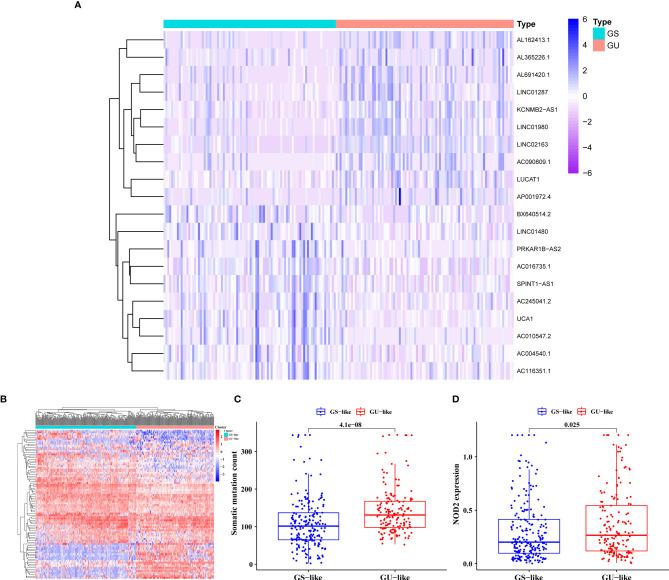
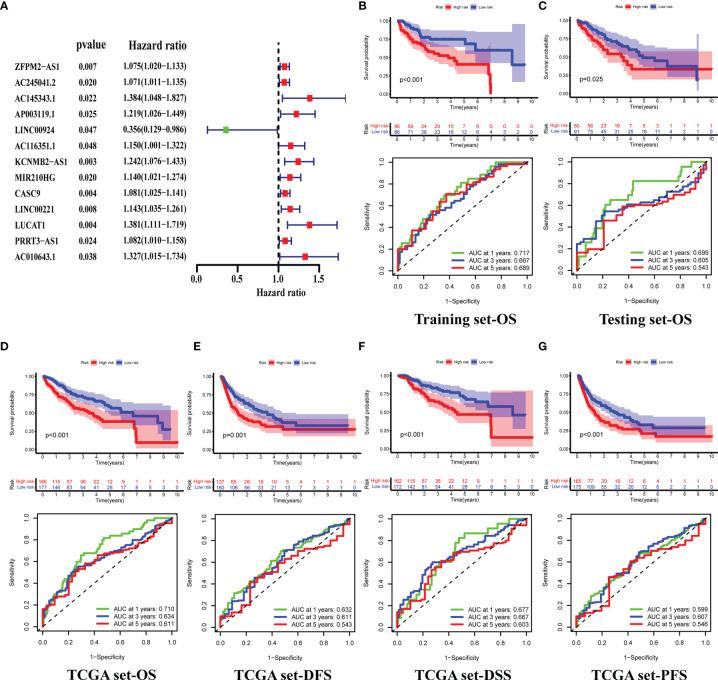
Combining the lncRNA expression profiles and somatic mutation profiles in The Cancer Genome Atlas database, we identified GI-related lncRNAs (GILncRNAs) and obtained the prognosis-related GILncRNAs through univariate regression analysis. These lncRNAs obtained risk coefficients through multivariate regression analysis for constructing GI-associated lncRNA signature (GILncSig). ROC curves were used to evaluate signature performance. The International Cancer Genomics Consortium (ICGC) cohort, and experiments were used for signature external validation. Immunotherapy efficacy, tumor microenvironments, the half-maximal inhibitory concentration (IC50), and immune infiltration were compared between the high- and low-risk groups with TIDE, ESTIMATE, pRRophetic, and ssGSEA program.
RESULTS
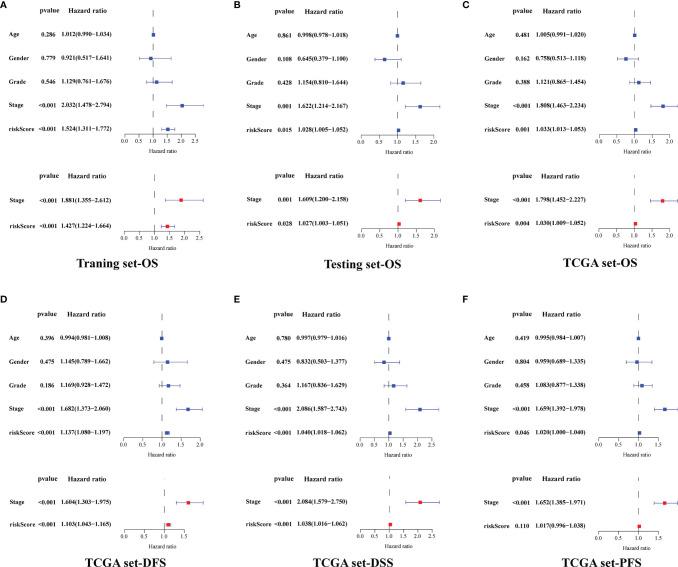
Five GILncRNAs were used to construct a GILncSig. It was confirmed that the GILncSig has good prognostic evaluation performance for patients with HCC by drawing a time-dependent ROC curve. Patients were divided into high- and low-risk groups according to the GILncSig risk score. The prognosis of the low-risk group was significantly better than that of the high-risk group. Independent prognostic analysis showed that the GILncSig could independently predict the prognosis of patients with HCC. In addition, the GILncSig was correlated with the mutation rate of the HCC genome, indicating that it has the potential to measure the degree of genome instability. In GILncSig, LUCAT1 with the highest risk factor was further validated as a risk factor for HCC . The ESTIMATE analysis showed a significant difference in stromal scores and ESTIMATE scores between the two groups. Multiple immune checkpoints had higher expression levels in the high-risk group. The ssGSEA results showed higher levels of tumor-antagonizing immune cells in the low-risk group compared with the high-risk group. Finally, the GILncSig score was associated with chemotherapeutic drug sensitivity and immunotherapy efficacy of patients with HCC.
CONCLUSION
Our research indicates that GILncSig can be used for prognostic evaluation of patients with HCC and provide new insights for clinical decision-making and potential therapeutic strategies.
背景
基因组不稳定性(GI)在包括肝细胞癌在内的各种癌症的发展中起着至关重要的作用。因此,利用与基因组不稳定性相关的长非编码 RNA 构建 HCC 患者的预后标志物是有意义的。
方法
结合 The Cancer Genome Atlas 数据库中的 lncRNA 表达谱和体细胞突变谱,我们鉴定了与 GI 相关的 lncRNA(GILncRNA),并通过单因素回归分析获得了与预后相关的 GILncRNA。通过多因素回归分析这些 lncRNA 获得风险系数,构建 GI 相关 lncRNA 标志物(GILncSig)。ROC 曲线用于评估标志物性能。使用国际癌症基因组联盟(ICGC)队列和实验进行标志物外部验证。使用 TIDE、ESTIMATE、pRRophetic 和 ssGSEA 程序比较高风险组和低风险组之间的免疫治疗疗效、肿瘤微环境、半最大抑制浓度(IC50)和免疫浸润。
结果
利用五个 GILncRNA 构建了一个 GILncSig。通过绘制时间依赖性 ROC 曲线,证实 GILncSig 对 HCC 患者具有良好的预后评估性能。根据 GILncSig 风险评分将患者分为高风险组和低风险组。低风险组的预后明显优于高风险组。独立预后分析表明,GILncSig 可以独立预测 HCC 患者的预后。此外,GILncSig 与 HCC 基因组的突变率相关,表明它具有衡量基因组不稳定性程度的潜力。在 GILncSig 中,风险因素最高的 LUCAT1 进一步验证为 HCC 的风险因素。ESTIMATE 分析显示两组间基质评分和 ESTIMATE 评分有显著差异。高风险组中多个免疫检查点的表达水平较高。ssGSEA 结果显示,低风险组中肿瘤拮抗免疫细胞的水平高于高风险组。最后,GILncSig 评分与 HCC 患者化疗药物敏感性和免疫治疗疗效相关。
结论
我们的研究表明,GILncSig 可用于 HCC 患者的预后评估,并为临床决策和潜在治疗策略提供新的见解。





 Zotero 插件