
一种新型硫化氢荧光探针的传感机制:光致电子转移与激发态分子内质子转移的无效性
Sensing mechanism of a new fluorescent probe for hydrogen sulfide: photoinduced electron transfer and invalidity of excited-state intramolecular proton transfer.
作者信息
Liu Xiumin, Qi Yutai, Pu Shenhan, Wang Yi, Gao Ziqing
机构信息
School of Biological Engineering, Dalian Polytechnic University Dalian 116034 P. R. China
Collaborative Innovation Center of Chemistry for Energy Materials, College of Chemistry and Chemical Engineering, Xiamen University Xiamen 361005 P. R. China.
出版信息
RSC Adv. 2021 Jun 23;11(36):22214-22220. doi: 10.1039/d1ra02511b. eCollection 2021 Jun 21.
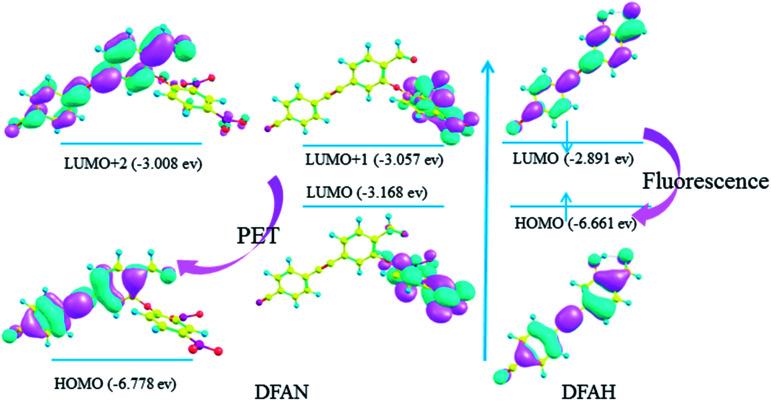
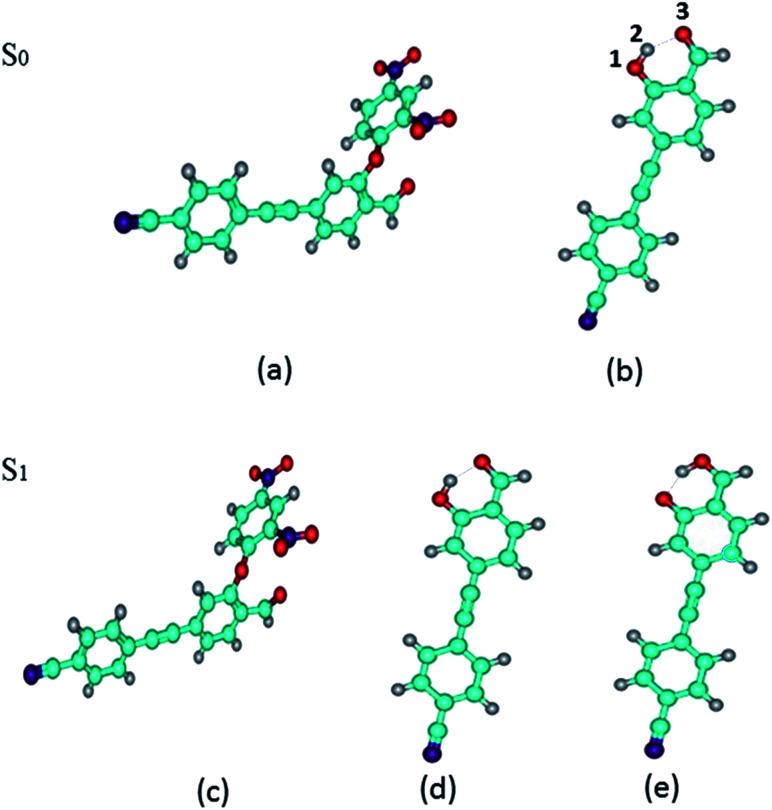
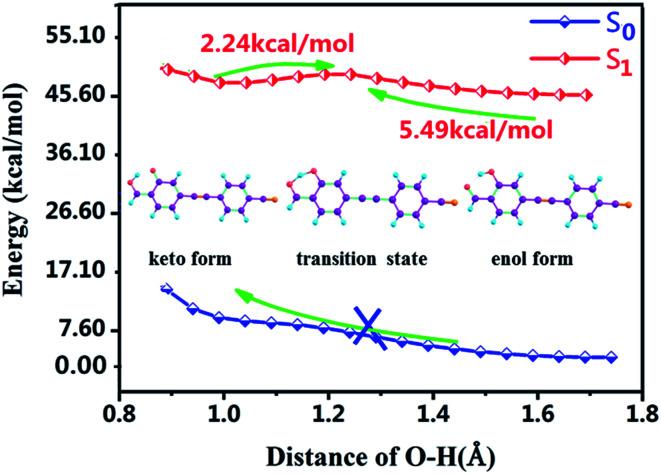
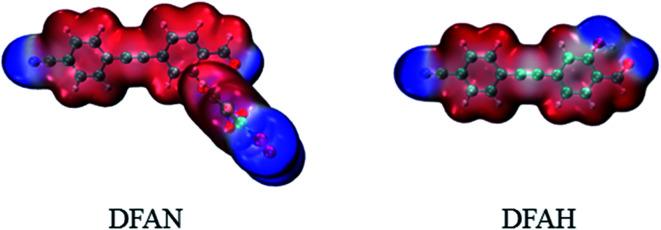
It is of great significance for biological research to develop efficient detection methods of hydrogen sulfide (HS). When DFAN reacts with HS, 2,4-dinitrophenyl ether group acting as an electron acceptor generates a hydroxyl-substituted 2,4-dinitrophenyl ether group, resulting in the disappearance of photoinduced electron transfer (PET), and the new formed DFAH can be observed, while being accompanied by a significant fluorescence. In the present study, the PET sensing mechanism of probe DFAN and the excited state intramolecular proton transfer (ESIPT) process of DFAH have been explored in detail based on the density functional theory (DFT) and time-dependent density functional theory (TD-DFT) methods. Our theoretical results show that the fluorescence quenching of DFAN is caused by the PET mechanism, and the result of ESIPT mechanism is not due to the large Stokes shift fluorescence emission of DFAH. We also optimized the geometric structure of the transition state of DFAH. The frontier molecular orbitals and potential barrier show that the ESIPT process does not easy occur easily for DFAH. The enol structure of DFAH is more stable than that of the keto structure. The absence of the PET process resulted in the enol structure emitting strong fluorescence, which is consistent with the single fluorescence in the experiment. Above all, our calculations are sufficient to verify the sensing mechanism of HS using DFAN.
开发高效的硫化氢(HS)检测方法对生物学研究具有重要意义。当DFAN与HS反应时,作为电子受体的2,4-二硝基苯基醚基团会生成羟基取代的2,4-二硝基苯基醚基团,导致光致电子转移(PET)消失,并可观察到新形成的DFAH,同时伴随着显著的荧光。在本研究中,基于密度泛函理论(DFT)和含时密度泛函理论(TD-DFT)方法,详细探究了探针DFAN的PET传感机制以及DFAH的激发态分子内质子转移(ESIPT)过程。我们的理论结果表明,DFAN的荧光猝灭是由PET机制引起的,而ESIPT机制的结果并非源于DFAH的大斯托克斯位移荧光发射。我们还优化了DFAH过渡态的几何结构。前沿分子轨道和势垒表明,DFAH的ESIPT过程不容易发生。DFAH的烯醇结构比酮结构更稳定。PET过程的缺失导致烯醇结构发出强烈荧光,这与实验中的单一荧光一致。综上所述,我们的计算足以验证使用DFAN检测HS的传感机制。
 Zotero 插件