
使用真皮生物标志物贴片进行微创皮肤转录组提取
Minimally Invasive Skin Transcriptome Extraction Using a Dermal Biomarker Patch.
作者信息
Ibrahim Sherrif F, Taft Bradford J, Wang Yipeng, Lee Byung-In, Andrade Eric, Abaya Christian, Pramanick Shreya, Mannath Thejus, Hurley Katherine A, Mahmood Tahir A, Dickerson Tobin J
机构信息
Department of Dermatology, University of Rochester, 40 Celebration Drive, College Town, Rochester, NY, 14620, USA.
Mindera Corporation, 5795 Kearny Villa Road, San Diego, CA, 92123, USA.
出版信息
Dermatol Ther (Heidelb). 2022 Jun;12(6):1313-1323. doi: 10.1007/s13555-022-00733-x. Epub 2022 Apr 30.
INTRODUCTION
Advances in the scientific understanding of the skin and characteristic genomic dermal signatures continue to develop rapidly. Nonetheless, skin diagnosis remains predicated on a subjective visual examination, frequently followed by biopsy and histology. These procedures often are not sufficiently sensitive, and in the case of many inflammatory diseases, biopsies are not justified, creating a situation where high-quality samples can be difficult to obtain. The wealth of molecular information available and the pace at which new data are acquired suggest that methods for minimally invasive biomarker collection could dramatically alter our understanding of skin disease and positively impact treatment paradigms.
METHODS
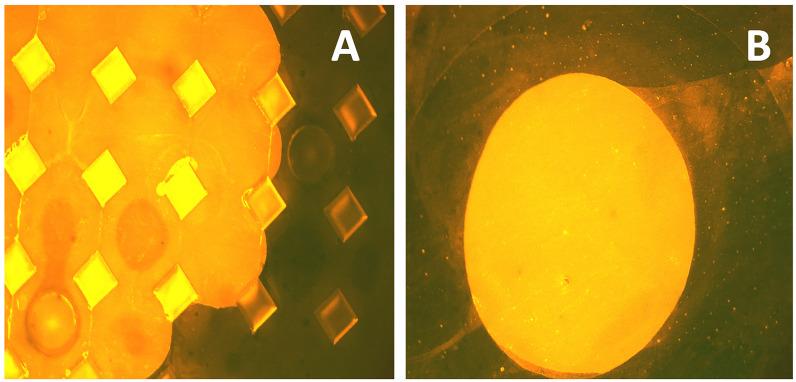
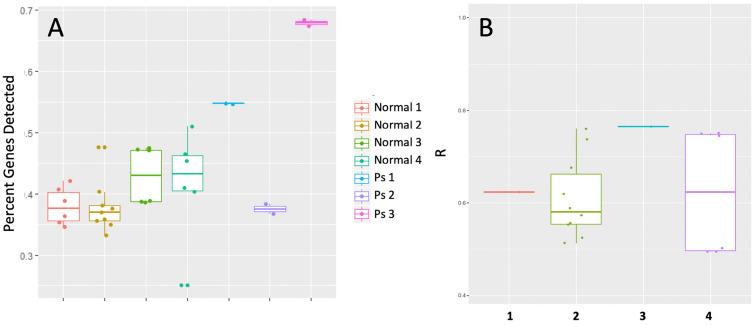
A chemical method was optimized to covalently modify custom dermal patches with single-stranded DNA that could bind to messenger RNA. These patches were applied to ex vivo skin samples and penetration evaluated by histological methods. Patches were then applied to both the skin of normal human subjects (lower arm) as well as lesional skin of psoriasis patients, and the transcriptome captured (N = 7; 33 unique samples). Standard RNA-Seq processing was performed to assess the gene detection rate and assessments made of the reproducibility of the extraction procedure as well as the overlap with matched punch biopsy samples from the same patient.
RESULTS
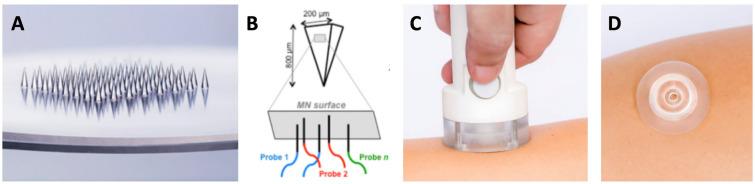
We have developed a dermal biomarker patch (DBP) designed to be minimally invasive and extract the dermal transcriptome. Using this platform, we have demonstrated successful molecular analysis from healthy human skin and psoriatic lesions, replicating the molecular information captured with punch biopsy.
CONCLUSION
This DBP enables an unprecedented ability to monitor the molecular "fingerprint" of the skin over time or with various interventions, and generate previously inaccessible rich datasets. Furthermore, use of the DBP could be favored by patients relative to biopsy by limiting pain resulting from biopsy procedures. Given the large dynamic range observed in psoriatic skin, analysis of complex phenotypes is now possible, and the power of machine-learning methods can be brought to bear on dermatologic disease.
引言
对皮肤的科学认识以及特征性基因组皮肤特征的进展仍在迅速发展。尽管如此,皮肤诊断仍然基于主观的视觉检查,通常随后进行活检和组织学检查。这些程序往往不够灵敏,而且在许多炎症性疾病中,活检并不合理,导致难以获得高质量样本的情况。现有的大量分子信息以及获取新数据的速度表明,微创生物标志物采集方法可能会极大地改变我们对皮肤疾病的理解,并对治疗模式产生积极影响。
方法
优化了一种化学方法,用能与信使核糖核酸结合的单链脱氧核糖核酸对定制的皮肤贴片进行共价修饰。将这些贴片应用于离体皮肤样本,并通过组织学方法评估其渗透性。然后将贴片应用于正常人类受试者(下臂)的皮肤以及银屑病患者的皮损处,并捕获转录组(N = 7;33个独特样本)。进行标准的核糖核酸测序处理以评估基因检测率,并对提取程序的可重复性以及与同一患者匹配的打孔活检样本的重叠情况进行评估。
结果
我们开发了一种旨在实现微创并提取皮肤转录组的皮肤生物标志物贴片(DBP)。利用这个平台,我们已证明能够从健康人类皮肤和银屑病皮损处成功进行分子分析,复制了通过打孔活检捕获的分子信息。
结论
这种DBP使我们有前所未有的能力随着时间推移或通过各种干预措施监测皮肤的分子“指纹”,并生成以前无法获得的丰富数据集。此外,相对于活检,患者可能更倾向于使用DBP,因为它限制了活检程序带来的疼痛。鉴于在银屑病皮肤中观察到的较大动态范围,现在有可能对复杂表型进行分析,并且可以将机器学习方法的力量应用于皮肤病学疾病。



 Zotero 插件