
通过发酵过程提高全细胞生物催化剂的催化性能。
Improving the catalytic performance of whole-cell biocatalysts by fermentation process.
作者信息
Wang Denggang, Chen Meiqi, Zeng Xin, Li Wenjie, Liang Shuli, Lin Ying
机构信息
Guangdong Key Laboratory of Fermentation and Enzyme Engineering, School of Biology and Biological Engineering, South China University of Technology Panyu Guangzhou 510006 People's Republic of China
出版信息
RSC Adv. 2021 Nov 11;11(57):36329-36339. doi: 10.1039/d1ra06253k. eCollection 2021 Nov 4.
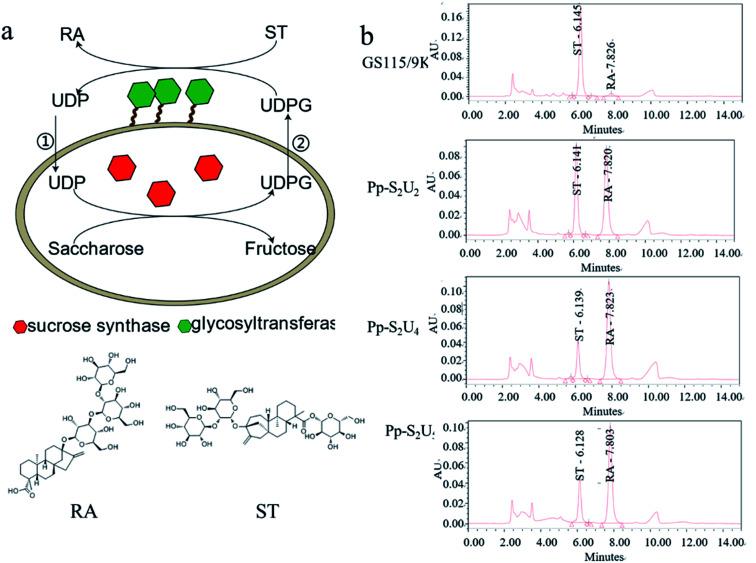
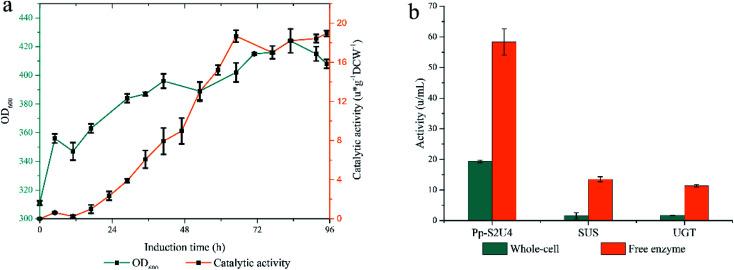
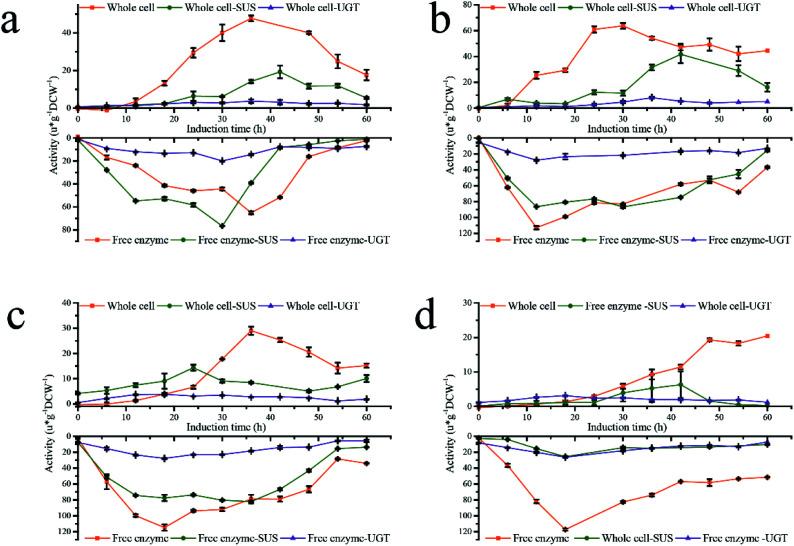
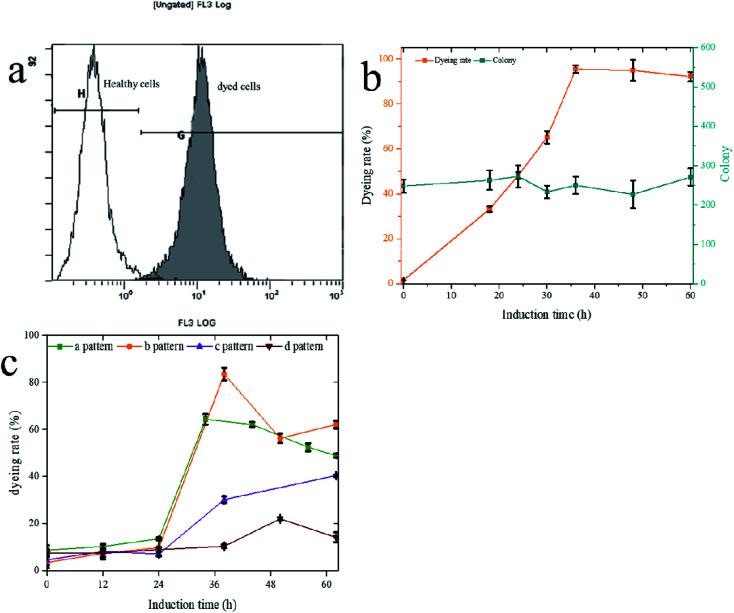
Whole-cell biocatalysts have a wide range of applications in many fields. However, the transport of substrates is tricky when applying whole-cell biocatalysts for industrial production. In this research, whole-cell biocatalysts were constructed for A synthesis. Sucrose synthase was expressed intracellularly while UDP-glycosyltransferase was displayed on the cell wall surface simultaneously. As an alternative method, a fermentation process is applied to relieve the substrate transport-limitation of whole-cell biocatalysts. This fermentation process was much simpler, more energy-saving, and greener than additional operating after collecting cells to improve the catalytic ability of whole-cell biocatalysts. Compared with the general fermentation process, the protein production capacity of cells did not decrease. Meanwhile, the activity of whole-cell biocatalysts was increased to 262%, which indicates that the permeability and space resistance were improved to relieve the transport-limitations. Furthermore, the induction time was reduced from 60 h to 36 h. The fermentation process offered significant advantages over traditional permeabilizing reagent treatment and ultrasonication treatment based on the high efficiency and simplicity.
全细胞生物催化剂在许多领域有着广泛的应用。然而,将全细胞生物催化剂应用于工业生产时,底物的运输是个棘手的问题。在本研究中,构建了用于A合成的全细胞生物催化剂。蔗糖合酶在细胞内表达,而尿苷二磷酸糖基转移酶同时展示在细胞壁表面。作为一种替代方法,应用发酵过程来缓解全细胞生物催化剂的底物运输限制。与收集细胞后进行额外操作以提高全细胞生物催化剂的催化能力相比,该发酵过程更简单、更节能且更环保。与一般发酵过程相比,细胞的蛋白质生产能力没有下降。同时,全细胞生物催化剂的活性提高到了262%,这表明通透性和空间阻力得到改善,从而缓解了运输限制。此外,诱导时间从60小时减少到了36小时。基于高效性和简便性,该发酵过程比传统的透化剂处理和超声处理具有显著优势。




 Zotero 插件