
心肌特异性肌钙蛋白的代谢途径:从基础研究到诊断作用(综述)
Metabolic Pathway of Cardiospecific Troponins: From Fundamental Aspects to Diagnostic Role (Comprehensive Review).
作者信息
Chaulin Aleksey M
机构信息
Department of Cardiology and Cardiovascular Surgery, Department of Clinical Chemistry, Samara State Medical University, Samara, Russia.
Samara Regional Clinical Cardiological Dispensary, Samara, Russia.
出版信息
Front Mol Biosci. 2022 Apr 19;9:841277. doi: 10.3389/fmolb.2022.841277. eCollection 2022.
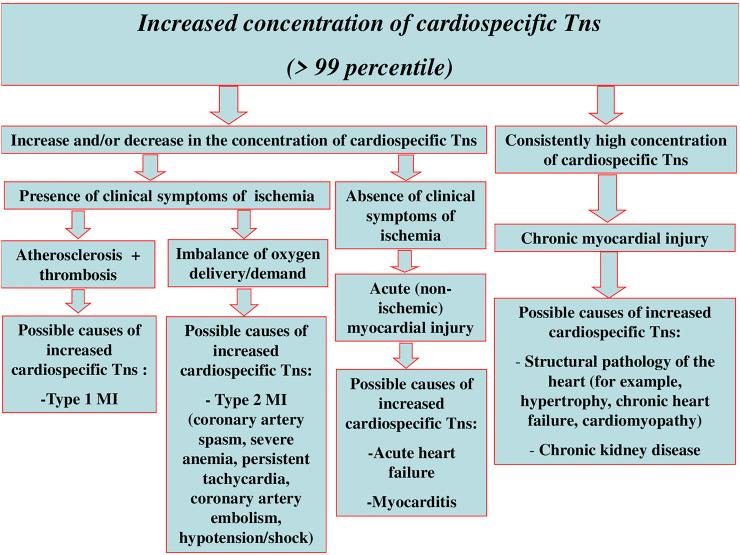
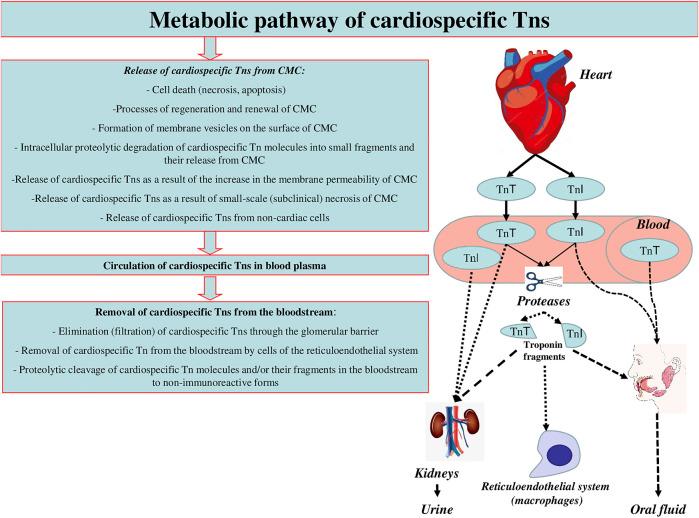
Many molecules of the human body perform key regulatory functions and are widely used as targets for the development of therapeutic drugs or as specific diagnostic markers. These molecules undergo a significant metabolic pathway, during which they are influenced by a number of factors (biological characteristics, hormones, enzymes, etc.) that can affect molecular metabolism and, as a consequence, the serum concentration or activity of these molecules. Among the most important molecules in the field of cardiology are the molecules of cardiospecific troponins (Tns), which regulate the processes of myocardial contraction/relaxation and are used as markers for the early diagnosis of ischemic necrosis of cardiomyocytes (CMC) in myocardial infarction (MI). The diagnostic value and diagnostic capabilities of cardiospecific Tns have changed significantly after the advent of new (highly sensitive (HS)) detection methods. Thus, early diagnostic algorithms of MI were approved for clinical practice, thanks to which the possibility of rapid diagnosis and determination of optimal tactics for managing patients with MI was opened. Relatively recently, promising directions have also been opened for the use of cardiospecific Tns as prognostic markers both at the early stages of the development of cardiovascular diseases (CVD) (arterial hypertension (AH), heart failure (HF), coronary heart disease (CHD), etc.), and in non-ischemic extra-cardiac pathologies that can negatively affect CMC (for example, sepsis, chronic kidney disease (CKD), chronic obstructive pulmonary disease (COPD), etc.). Recent studies have also shown that cardiospecific Tns are present not only in blood serum, but also in other biological fluids (urine, oral fluid, pericardial fluid, amniotic fluid). Thus, cardiospecific Tns have additional diagnostic capabilities. However, the fundamental aspects of the metabolic pathway of cardiospecific Tns are definitively unknown, in particular, specific mechanisms of release of Tns from CMC in non-ischemic extra-cardiac pathologies, mechanisms of circulation and elimination of Tns from the human body, mechanisms of transport of Tns to other biological fluids and factors that may affect these processes have not been established. In this comprehensive manuscript, all stages of the metabolic pathway are consistently and in detail considered, starting from release from CMC and ending with excretion (removal) from the human body. In addition, the possible diagnostic role of individual stages and mechanisms, influencing factors is analyzed and directions for further research in this area are noted.
人体中的许多分子执行关键的调节功能,被广泛用作治疗药物开发的靶点或特定的诊断标志物。这些分子经历重要的代谢途径,在此过程中它们受到许多因素(生物学特性、激素、酶等)的影响,这些因素会影响分子代谢,进而影响这些分子的血清浓度或活性。在心脏病学领域最重要的分子中,有心脏特异性肌钙蛋白(Tns)分子,它调节心肌收缩/舒张过程,并用作心肌梗死(MI)中心肌细胞(CMC)缺血性坏死早期诊断的标志物。新的(高灵敏度(HS))检测方法出现后,心脏特异性Tns的诊断价值和诊断能力发生了显著变化。因此,MI的早期诊断算法被批准用于临床实践,借此开启了快速诊断和确定MI患者最佳治疗策略的可能性。相对较近的时候,心脏特异性Tns作为心血管疾病(CVD)(动脉高血压(AH)、心力衰竭(HF)、冠心病(CHD)等)发展早期以及可对CMC产生负面影响的非缺血性心脏外病理状况(例如脓毒症、慢性肾病(CKD)、慢性阻塞性肺疾病(COPD)等)的预后标志物的应用也有了前景广阔的方向。最近的研究还表明,心脏特异性Tns不仅存在于血清中,还存在于其他生物体液(尿液、口腔液、心包液、羊水)中。因此,心脏特异性Tns具有额外的诊断能力。然而,心脏特异性Tns代谢途径的基本方面尚不清楚,特别是在非缺血性心脏外病理状况下Tns从CMC释放的具体机制、Tns在人体中的循环和清除机制、Tns转运到其他生物体液的机制以及可能影响这些过程的因素尚未明确。在这篇综合性手稿中,从CMC释放开始到人体排泄(清除)结束,对代谢途径的各个阶段进行了连贯且详细的探讨。此外,分析了各个阶段和机制、影响因素可能的诊断作用,并指出了该领域进一步研究的方向。

 Zotero 插件