
补充小分子大豆蛋白衍生肽对减轻大鼠模型烧伤损伤诱导的炎症和加速伤口愈合的作用。
Effect of small molecular weight soybean protein-derived peptide supplementation on attenuating burn injury-induced inflammation and accelerating wound healing in a rat model.
作者信息
Zhao Fen, Liu Wei, Yu Yonghui, Liu Xinqi, Yin Huinan, Liu Lingying, Yi Guofu
机构信息
Beijing Advanced Innovation Center for Food Nutrition and Human Health, Beijing Engineering and Technology Research Center of Food Additives, Beijing Technology and Business University Beijing 100048 China
Burn Institute, The First Affiliated Hospital of PLA General Hospital Beijing 100048 China.
出版信息
RSC Adv. 2019 Jan 9;9(3):1247-1259. doi: 10.1039/c8ra09036j.
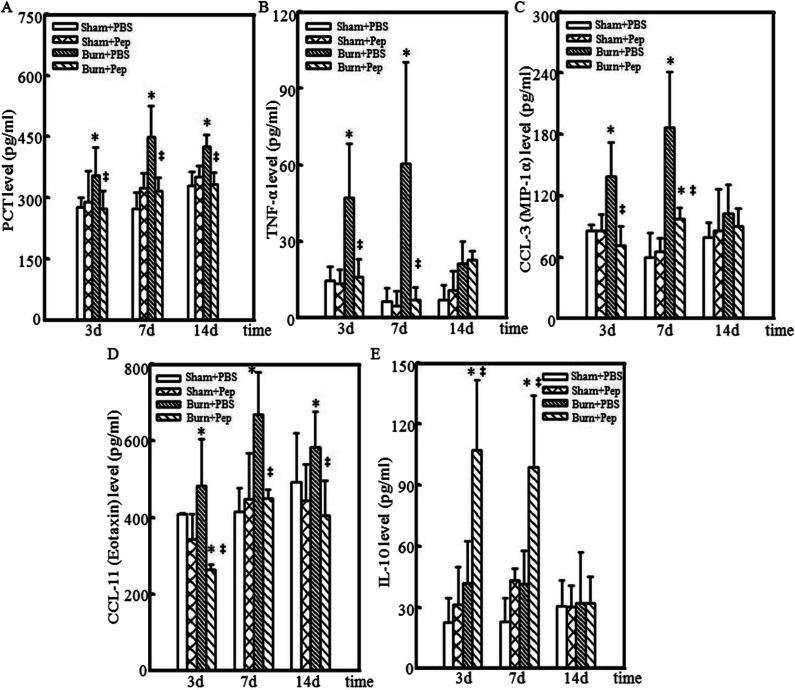
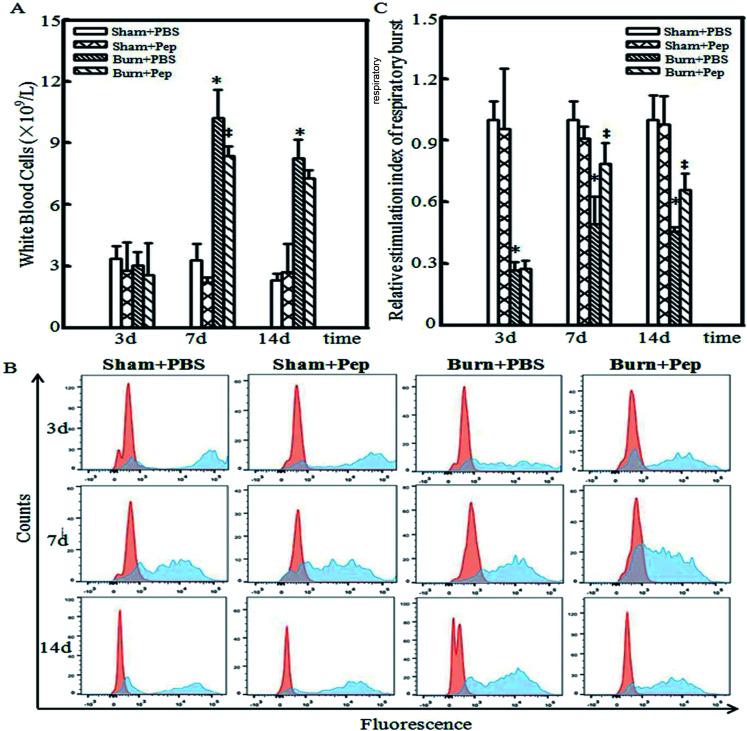
The populations most afflicted by burn injuries have limited abilities to support the significant specialized requirements and costs for acute and long-term burn injury care. This article describes the results of optimizing the use of readily absorbed small molecular weight soybean protein enzymolysis-derived peptide to attenuate rat burn injury-induced inflammation and accelerate wound healing. A major full-thickness 30% total body surface area burn-injury rat model was utilized and the systemic white blood cell (WBC) counts, the relative level of stimulation index of respiratory burst, and the inflammatory markers procalcitonin (PCT), tumor necrosis factor-α (TNF-α), chemokine (C-C motif) ligand 3 (CCL-3), chemokine (C-C motif) ligand 11 (CCL-11) and interleukin-10 (IL-10) were assessed. The burn injury-induced neutrophil and macrophage immune cell infiltration of the cutaneous tissues was detected by immunohistochemical analysis of the protein markers myeloperoxidase (MPO) and cluster of differentiation 68 (CD-68). The local induction of the burn injury-induced toll-like receptor 4/nuclear factor kappa-light-chain-enhancer of activated B (TLR4/NF-κB) signaling pathway in the effected cutaneous tissues was determined by the quantification of the protein expression of TLR4 and phosphorylated NF-κB/p65 using Western blots. In addition, burn wound size and healing rate were assessed biweekly for 8 weeks by imaging and measuring the burn wound surface area, and the angiogenesis protein marker of cluster of differentiation 31 (CD-31) expression in cutaneous tissues was also detected by immunohistochemical analysis. The results showed that nutrient supplementation with optimized readily absorbed small molecular weight soybean protein-derived peptide resulted in a dramatic anti-inflammatory effect as evidenced by the significant increase in the burn injury-induced systemic white blood cell counts and their relative level of stimulation index of respiratory burst, reduction in the burn injury-induced activation of NF-κB transcriptional signaling pathways, significant reduction in the local burn injury-induced cutaneous infiltration of neutrophils and macrophages at all measured time points, reduction in wound size and improved rate of burn injury wound healing with increased CD-31 protein expression. These results indicated that dietary supplementation with small molecular weight soybean-derived peptides could be used as an adjunct therapy in burn injury management to reduce inflammation and improve overall patient outcomes.
受烧伤影响最严重的人群,在满足急性和长期烧伤护理的大量特殊需求及费用方面能力有限。本文描述了优化使用易于吸收的小分子大豆蛋白酶解衍生肽来减轻大鼠烧伤诱导的炎症并加速伤口愈合的结果。使用了一个主要的全身表面积30%的全层烧伤大鼠模型,并评估了全身白细胞(WBC)计数、呼吸爆发刺激指数的相对水平以及炎症标志物降钙素原(PCT)、肿瘤坏死因子-α(TNF-α)、趋化因子(C-C基序)配体3(CCL-3)、趋化因子(C-C基序)配体11(CCL-11)和白细胞介素-10(IL-10)。通过对蛋白质标志物髓过氧化物酶(MPO)和分化簇68(CD-68)进行免疫组织化学分析,检测烧伤诱导的皮肤组织中中性粒细胞和巨噬细胞免疫细胞浸润情况。通过蛋白质印迹法对TLR4和磷酸化NF-κB/p65的蛋白质表达进行定量,确定烧伤诱导的Toll样受体4/活化B细胞核因子κ轻链增强子(TLR4/NF-κB)信号通路在受影响皮肤组织中的局部诱导情况。此外,通过成像和测量烧伤创面面积,每两周评估一次烧伤创面大小和愈合率,持续8周,并且还通过免疫组织化学分析检测皮肤组织中分化簇31(CD-31)表达的血管生成蛋白标志物。结果表明,补充优化的易于吸收的小分子大豆衍生肽营养物质具有显著的抗炎作用,这表现为烧伤诱导的全身白细胞计数及其呼吸爆发刺激指数相对水平显著增加、烧伤诱导的NF-κB转录信号通路激活减少、在所有测量时间点局部烧伤诱导的皮肤中性粒细胞和巨噬细胞浸润显著减少、伤口大小减小以及烧伤创面愈合率提高且CD-31蛋白表达增加。这些结果表明,补充小分子大豆衍生肽可作为烧伤治疗的辅助疗法,以减轻炎症并改善患者总体预后。
 Zotero 插件