
超灵敏双功能纳米探针:肽驱动纳米颗粒的自组装实现肿瘤荧光成像与治疗
Super-sensitive bifunctional nanoprobe: Self-assembly of peptide-driven nanoparticles demonstrating tumor fluorescence imaging and therapy.
作者信息
Xiao Han, Zhang Rui, Fan Xiaobo, Jiang Xinglu, Zou Mingyuan, Yan Xuejiao, Hao Haiping, Wu Guoqiu
机构信息
Medical School, Southeast University, Nanjing 210009, China.
Department of Clinical Laboratory, the Fifth Affiliated Hospital of Sun Yat-sen University, Zhuhai 519000, China.
出版信息
Acta Pharm Sin B. 2022 Mar;12(3):1473-1486. doi: 10.1016/j.apsb.2021.07.020. Epub 2021 Jul 26.
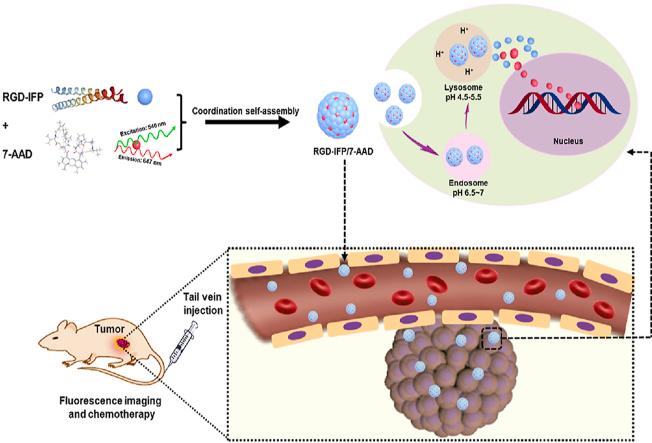
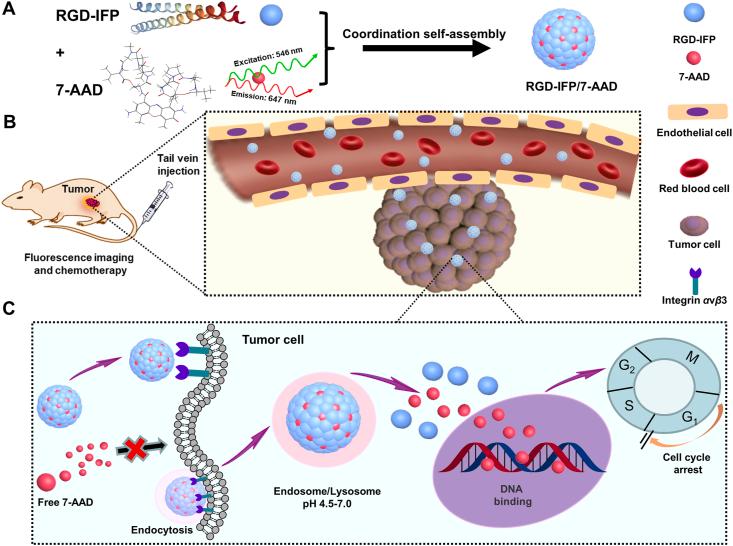
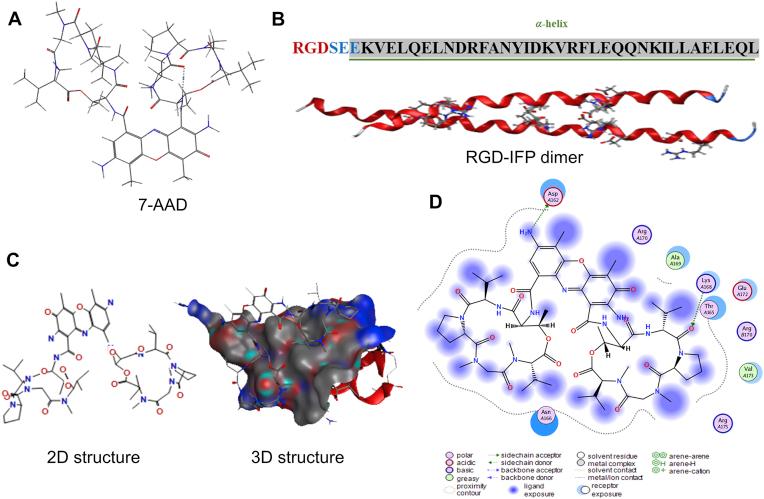
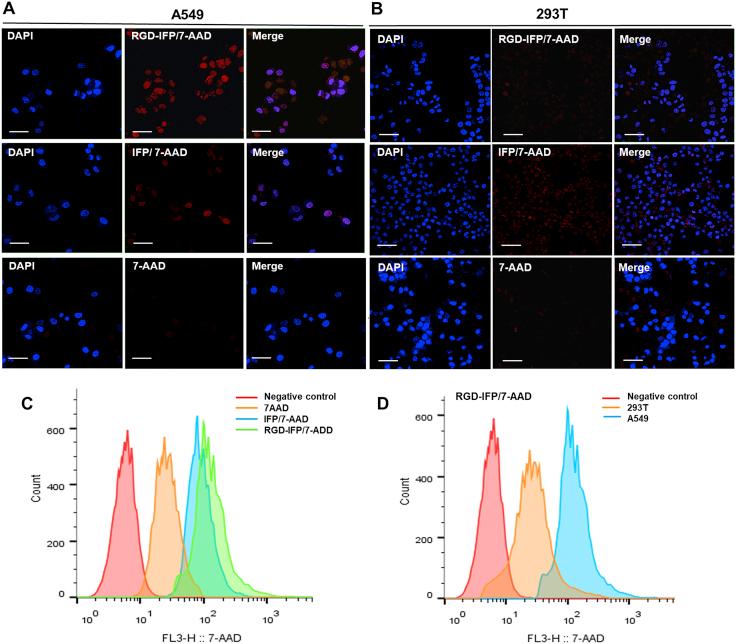
The development of nanomedicine has recently achieved several breakthroughs in the field of cancer treatment; however, biocompatibility and targeted penetration of these nanomaterials remain as limitations, which lead to serious side effects and significantly narrow the scope of their application. The self-assembly of intermediate filaments with arginine-glycine-aspartate (RGD) peptide (RGD-IFP) was triggered by the hydrophobic cationic molecule 7-amino actinomycin D (7-AAD) to synthesize a bifunctional nanoparticle that could serve as a fluorescent imaging probe to visualize tumor treatment. The designed RGD-IFP peptide possessed the ability to encapsulate 7-AAD molecules through the formation of hydrogen bonds and hydrophobic interactions by a one-step method. This fluorescent nanoprobe with RGD peptide could be targeted for delivery into tumor cells and released in acidic environments such as endosomes/lysosomes, ultimately inducing cytotoxicity by arresting tumor cell cycling with inserted DNA. It is noteworthy that the RGD-IFP/7-AAD nanoprobe tail-vein injection approach demonstrated not only high tumor-targeted imaging potential, but also potent antitumor therapeutic effects . The proposed strategy may be used in peptide-driven bifunctional nanoparticles for precise imaging and cancer therapy.
近年来,纳米医学在癌症治疗领域取得了多项突破;然而,这些纳米材料的生物相容性和靶向穿透性仍然是限制因素,会导致严重的副作用,并显著缩小其应用范围。疏水性阳离子分子7-氨基放线菌素D(7-AAD)触发了中间丝与精氨酸-甘氨酸-天冬氨酸(RGD)肽(RGD-IFP)的自组装,以合成一种双功能纳米颗粒,该颗粒可作为荧光成像探针来可视化肿瘤治疗。所设计的RGD-IFP肽能够通过一步法形成氢键和疏水相互作用来包裹7-AAD分子。这种带有RGD肽的荧光纳米探针可以靶向递送至肿瘤细胞,并在内体/溶酶体等酸性环境中释放,最终通过插入DNA来阻止肿瘤细胞周期,从而诱导细胞毒性。值得注意的是,RGD-IFP/7-AAD纳米探针尾静脉注射方法不仅显示出高肿瘤靶向成像潜力,而且还具有强大的抗肿瘤治疗效果。所提出的策略可用于肽驱动的双功能纳米颗粒,以实现精确成像和癌症治疗。





 Zotero 插件