
在疫情和疫苗推出一年后,公众对食品安全和健康风险的认知有何变化?
How has public perception of food safety and health risks changed a year after the pandemic and vaccines roll out?
作者信息
Faour-Klingbeil Dima, Osaili Tareq M, Al-Nabulsi Anas A, O Taybeh Asma', Jemni Monia, Todd Ewen C D
机构信息
DFK for Safe Food Environment, 30559, Hannover, Germany.
Department of Nutrition and Food Technology, Faculty of Agriculture, Jordan University of Science and Technology, P.O. Box 3030, Irbid, 22110, Jordan.
出版信息
Food Control. 2022 Sep;139:109073. doi: 10.1016/j.foodcont.2022.109073. Epub 2022 May 4.
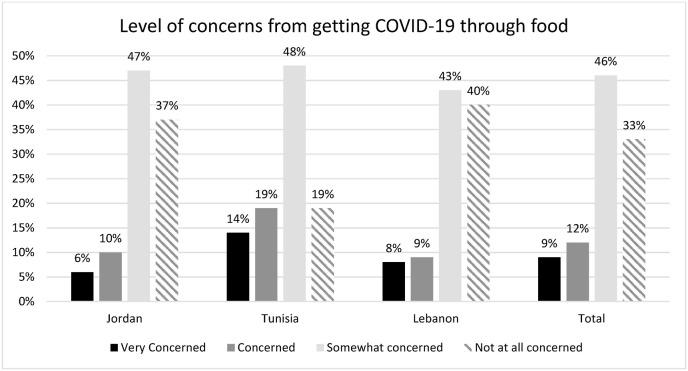
The recent coronavirus pandemic (COVID-19) has caused unprecedented turmoil and spurred fears that have profoundly changed the public's social and health behaviours, including the perception of food safety risks. One year after the pandemic and the global vaccination campaign, the public perception of food safety and the changes in their hygiene behaviour, health risks concerns, and trust were studied in Jordan, Lebanon, and Tunisia using a cross-sectional online survey. The results of 538 subjects showed a rise in the frequency of hygiene practices, notably in handwashing. Sixty-four percent of the participants were vaccinated, a proportion made up mainly of the Jordanians and Lebanese. For 66% and 64% of the two population groups, respectively, there were no longer trust concerns about COVID-19 health risks following vaccination, whereas the worries about getting COVID-19 persisted for others. Only 47% of participants trusted eating food prepared by vaccinated food handlers. A great majority of the Tunisians (81%) showed varying degrees of concern about COVID-19 transmission from food and the lowest vaccination rate (33%). The current study demonstrated that the impact of vaccination policy positively affects public perception of food-related risks during the pandemic. On the other hand, 33% of the surveyed Jordanians and Tunisians lost trust in the health authorities' management of the pandemic, and 45% of the Lebanese still don't trust them. Communication strategies on health and food safety with the public still represent a challenge for these and probably other countries in the Middle East and North Africa (MENA). Strategies for building and maintaining public trust are crucial to curb persistent fear of food, hence, avoiding potential stigmatization affecting the food economy by promoting health awareness and positive changes in food safety perceptions for safer practices.
近期的冠状病毒大流行(COVID-19)造成了前所未有的混乱,并引发了种种担忧,这些担忧深刻改变了公众的社会和健康行为,包括对食品安全风险的认知。在大流行及全球疫苗接种运动开展一年后,在约旦、黎巴嫩和突尼斯通过横断面在线调查研究了公众对食品安全的认知以及他们在卫生行为、健康风险担忧和信任方面的变化。538名受试者的结果显示,卫生习惯的频率有所上升,尤其是洗手。64%的参与者接种了疫苗,这一比例主要由约旦人和黎巴嫩人构成。对于这两个人口群体,分别有66%和64%的人在接种疫苗后不再担心COVID-19的健康风险,而其他人对感染COVID-19的担忧依然存在。只有47%的参与者信任由接种过疫苗的食品处理人员准备的食物。绝大多数突尼斯人(81%)对COVID-19通过食物传播表现出不同程度的担忧,且疫苗接种率最低(33%)。当前的研究表明,疫苗接种政策的影响在大流行期间对公众对与食物相关风险的认知产生了积极影响。另一方面,33%的受访约旦人和突尼斯人对卫生当局应对大流行的管理失去了信任,45%的黎巴嫩人仍然不信任他们。与公众就健康和食品安全开展沟通策略对这些国家以及中东和北非(MENA)其他可能的国家而言仍是一项挑战。建立和维持公众信任的策略对于抑制对食物的持续恐惧至关重要,因此,通过提高健康意识和促使食品安全认知产生积极变化以实现更安全的做法,避免潜在的污名化影响食品经济。




 Zotero 插件